
Ghewar: The Complete Authentic Guide to Rajasthan’s Most Beloved Sweet
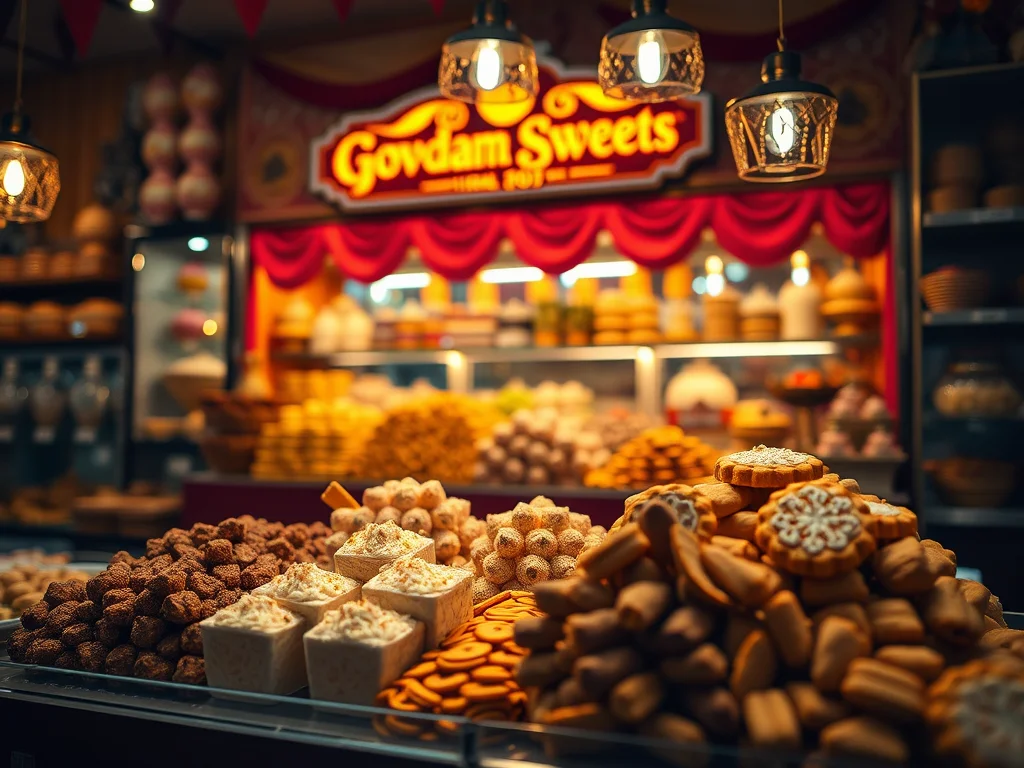
This ghewar complete guide covers everything about Ghewar (also spelled Ghevar or घेवर in Hindi) — Rajasthan’s most iconic festival sweet — a crispy, golden honeycomb disc prepared by skilled halwais using pure buffalo milk desi ghee, wheat flour, and sugar syrup, celebrated every monsoon season across Jaipur’s Gangori Bazaar near Govind Dev Ji Temple. From six varieties and seven authenticity tests to festival traditions, storage rules, and pan-India ordering, this ghewar complete guide is the only reference any buyer, gift-sender, or food lover needs. Govindam Sweets has served this heritage sweet with 100% pure buffalo milk desi ghee since its founding by Rajendra Singh Tanwar in Jaipur’s historic sweet district.
| Question | Quick Answer |
|---|---|
| What is Ghewar? | A crispy honeycomb disc sweet from Rajasthan — made with desi ghee, wheat flour, and sugar syrup |
| How many types of Ghewar exist? | Six core varieties — Plain, Malai, Paneer, Rabri, Mawa, and Dry Fruit |
| When is Ghewar season? | Shravan month through Raksha Bandhan — July to August every year |
| How do I identify authentic Ghewar? | Check honeycomb structure, ghee aroma, colour, melt quality, density, and sourcing transparency |
| Where to buy the best Ghewar in Jaipur? | Govindam Sweets — near Govind Dev Ji Temple, Gangori Bazaar, Pink City, Jaipur |
| Can Ghewar be ordered online? | Yes — pan-India delivery from Govindam Sweets via +91-7976304072 or www.govindam.co.in |
Table of Contents
- Ghewar Complete Guide — What Is Ghewar?
- Types of Ghewar — Complete Variant Guide
- 7 Signs of Authentic Ghewar — Buying Checklist
- Ghewar and Festivals — When to Buy
- Ghewar Storage — How Long Does It Last?
- Ghewar Comparison Table
- Where to Buy the Best Ghewar in Jaipur
- Ghewar FAQs
Ghewar Complete Guide — What Is Ghewar?
Ghewar is Rajasthan’s most beloved festival sweet — a large, crispy honeycomb disc made by pouring a thin batter of wheat flour and pure buffalo milk desi ghee into hot oil in a steady circular motion, building layer upon layer of golden cellular structure that is then soaked in sugar syrup and finished with cream, mawa, or dry fruits. No other Indian sweet shares its structure, its seasonal identity, or its five centuries of unbroken heritage in the royal kitchens and bazaar halwais of Jaipur. Every part of this ghewar complete guide is sourced directly from the halwai tradition and the experience of Govindam Sweets in Gangori Bazaar, near Govind Dev Ji Temple.
Origin and History of Ghewar in Rajasthan
The history of Ghewar runs through the heart of Rajputana. Historical records place this sweet inside Jaipur’s royal household kitchens as far back as the sixteenth century, where it was prepared for the royal family during the Shravan month and presented to daughters and sisters as a gift of prosperity during Teej. The word Ghewar connects to a Sanskrit root meaning richness and abundance — a fitting name for a sweet that represented generosity and familial love across generations of Rajasthani families.
The craft passed from halwai families to their children entirely through hands-on practice — no written recipe, no standardised method. The specific wrist rotation, the precise batter consistency, the temperature of the desi ghee, and the timing of the circular pour were all embodied skills. Govindam Sweets, located near Govind Dev Ji Temple in Gangori Bazaar, operates within the same cultural and geographic district where this heritage craft has been practised without interruption for generations. The City Palace area and J.D.A. Market, where the shop stands today, remain the authentic heart of Jaipur’s traditional mithai culture.
Ghewar spread beyond Rajasthan into Haryana, western Uttar Pradesh, and parts of Madhya Pradesh over time — but every culinary historian acknowledges Jaipur’s Gangori Bazaar as its true origin and gold standard. The difference that has always separated Jaipur’s Ghewar from every other version is one ingredient — 100% pure buffalo milk desi ghee, used without substitution at every stage.
Why Ghewar Is a Monsoon Sweet
Ghewar is not made year-round, and this is not simply a tradition — it is a production reality grounded in technique. The preparation depends on the specific atmospheric humidity that arrives with the Shravan monsoon. That moisture in the July and August air helps the thin batter maintain the surface tension required to form the fine, interlocked honeycomb cells as it hits the hot ghee. In dry conditions, those cells collapse, merge, or fail to form entirely, producing a disc that lacks the characteristic open, crispy interior that defines a properly made Ghewar.
Beyond the technical dependency, Ghewar belongs to the Shravan calendar in a way that is inseparable from its cultural meaning. Teej falls in Shravan, Raksha Bandhan follows within the same window, and Sinjara — the eve of Teej — is the single highest-demand day for Ghewar across all of Jaipur. The Gangori Bazaar and J.D.A. Market area, where Govindam Sweets operates near Govind Dev Ji Temple, sees the entire city converge for fresh Ghewar in the fortnight before these festivals. Traditional halwais here hold firmly that the natural Shravan humidity produces a quality no off-season kitchen can replicate.
Ghewar vs Other Indian Sweets — What Makes It Unique
Ghewar occupies a structural and cultural category entirely its own within Indian mithai. Where most traditional sweets are dense, compact, and uniform, Ghewar is large, open, and architecturally complex. The table below places Ghewar alongside the most familiar Indian sweets to show exactly what makes it different from every alternative.
| Feature | Ghewar | Barfi | Laddu | Jalebi | Halwa |
|---|---|---|---|---|---|
| Texture | Crispy open honeycomb disc | Dense and fudge-like | Compact and round | Crispy spiral | Soft and dense |
| Base Ingredient | Wheat flour and pure desi ghee | Milk solids — khoya | Flour or besan and ghee | Fermented maida batter | Semolina or flour |
| Seasonal Availability | Monsoon only — traditional | Year-round | Year-round | Year-round | Year-round |
| Primary Occasion | Teej and Raksha Bandhan | Diwali and weddings | All auspicious occasions | Breakfast and festivals | Winter and celebration |
| Origin Region | Rajasthan — Jaipur primary | Pan-India | Pan-India | UP and Rajasthan | Pan-India |
| Topping Varieties | Malai, mawa, rabri, dry fruits | None typically | None typically | Sugar syrup only | None |
For the complete range of heritage Rajasthani sweets alongside Ghewar, explore the full Rajasthani Special collection at Govindam Sweets.
Types of Ghewar — Complete Variant Guide
Six distinct Ghewar varieties are made and sold at authentic mithai shops in Jaipur. Every variety at Govindam Sweets in Gangori Bazaar uses the same base disc made with 100% pure buffalo milk desi ghee — the foundation never changes regardless of what goes on top. The six varieties differ in topping, richness level, shelf life, and the occasion for which each is best suited. Understanding all six is the core of any real ghewar complete guide.
Plain Ghewar — Sada Ghewar
Plain Ghewar, called Sada Ghewar, is the purest test of a halwai’s craft. There are no toppings — only the disc, the ghee, and the sugar syrup. Every quality indicator is fully visible and unmasked: the open honeycomb interior, the even golden amber colour, the clean ghee aroma, the crisp texture that holds without crumbling. When food writers and culinary experts evaluate a sweet shop’s Ghewar capability, this is the variety they taste first because nothing is hidden.
Sada Ghewar pairs naturally with hot chai. It is the longest-lasting variety — no dairy topping means it holds crispness and aroma for 2 to 3 days at room temperature. For casual gifting during the early Shravan season or for buyers who want to assess quality before ordering a premium variety, Plain Ghewar is always the right starting point.
Malai Ghewar — The Cream Classic
Malai Ghewar is the most popular variety in Jaipur without question. A thick, generous layer of fresh cream — hand-churned malai from buffalo milk — is spread across the warm disc immediately before serving. The contrast between the hot, crispy disc and the cold, rich malai creates the flavour experience that most Jaipur residents mean when they say “Ghewar season is here.”
This variety must be consumed the same day — ideally within 4 to 6 hours of purchase — because the malai begins softening the disc once applied. Govindam Sweets near Govind Dev Ji Temple prepares Malai Ghewar in fresh batches throughout the day during the Teej and Sinjara festival window, ensuring that every customer receives a disc that is still warm from the kitchen when the cream is applied.
Paneer Ghewar — Jaipur’s Specialty
Paneer Ghewar is a Jaipur-specific preparation that few sweet shops outside Rajasthan make with any authenticity. Fresh paneer — soft, crumbled cottage cheese from buffalo milk — is pressed and layered onto the disc with a thin sugar glaze. The result is a richer, more filling sweet with a subtly savoury note that counterbalances the sweetness of the syrup in a way that neither Malai nor Mawa can achieve.
This variety is a genuine discovery for first-time visitors to the City Palace area and Gangori Bazaar. Local Jaipur buyers frequently choose it for gifting to older family members who find Malai and Mawa varieties too heavy. Its shelf life sits between the two extremes — fresher than Malai but less forgiving than Mawa.
Rabri Ghewar — The Festival Favourite
Rabri Ghewar is prepared by ladling slow-reduced sweetened milk — thick, layered, textured rabri — over the warm Ghewar disc. Rabri is made by simmering full-fat buffalo milk on low heat for several hours until it reduces to roughly one-third its original volume. The process cannot be rushed or substituted. The depth of flavour in a well-made Rabri Ghewar is entirely dependent on the patience and quality of the rabri, which is why this variety instantly separates a premium shop from a shortcut operation.
At Govindam Sweets, all rabri is prepared in-house from the same buffalo milk supply used across every preparation in the kitchen. This variety is the standard choice when the gifting occasion calls for deeply indulgent sweets — large joint family celebrations, wedding mithai distribution, or premium festival presentations.
Mawa Ghewar — Rich and Dense
Mawa Ghewar uses khoya — milk solids produced by reducing milk until it is nearly dry — as its topping. The mawa is crumbled or firmly pressed onto the disc and finished with pistachios, slivered almonds, and silver foil on premium packs. This is the most visually arresting variety in the range and the standard choice for premium gifting boxes, wedding orders, and any presentation where appearance matters as much as taste.
Mawa Ghewar has the best shelf life among the cream and dairy-topped varieties because the khoya topping contains minimal free moisture. Refrigerated correctly, it stays in excellent condition for 5 to 6 days. For advance festival orders and for buyers ordering Ghewars online for courier delivery to other cities, Mawa Ghewar is the most dependable choice.
Dry Fruit Ghewar — The Premium Choice
Dry Fruit Ghewar is the most premium product in the Ghewar range. The disc is covered with a generous, carefully arranged layer of cashews, pistachios, almonds, and raisins — sometimes finished with a saffron-infused glaze and silver foil. This variety carries the highest price and is the standard product for corporate gifting hampers, luxury wedding boxes, and premium festival orders where presentation is the primary consideration.
The dry fruit garnish contributes visual richness and textural contrast without adding moisture, which means this variety packages and ships exceptionally well. For customers ordering Ghewar from Govindam Sweets for pan-India delivery — whether for Diwali, Raksha Bandhan, or corporate distribution — Dry Fruit Ghewar offers the best combination of premium presentation, shelf life, and courier reliability.
7 Signs of Authentic Ghewar — Ghewar Complete Guide Buying Checklist
Authentic Ghewar made with pure desi ghee behaves, smells, and looks completely differently from oil-fried or shortcut preparations. These seven tests can be performed in 30 seconds at any shop counter. Every serious buyer should know them before spending money on Ghewar — especially during the peak festival season when demand is high and quality varies significantly across Jaipur’s markets.
The Honeycomb Structure Test
Hold the disc up to natural light or angle it under a shop lamp. A properly made Ghewar disc has an open, even honeycomb interior with cells of consistent size throughout the disc. You should be able to see partial light transmission through sections of the disc. If the interior is dense, filled, uniform, or collapsed into a solid mass, the batter was too thick or the oil temperature was inconsistent during frying. This is the fastest and most reliable visible quality check available before purchase.
The Pure Ghee Aroma Test
Pure buffalo milk desi ghee has a layered, warm, nutty fragrance that is unmistakable to anyone who has experienced it. When a fresh Plain Ghewar disc is broken open, the interior should release that fragrance immediately and strongly. A flat smell, an oily neutral odour, or a synthetic sweetness indicates refined oil, partial vanaspati, or artificial flavouring in the base. No topping or garnish applied after frying can cover this test — the base disc is what carries the truth about the fat used.
The Freshness and Colour Test
An authentic Ghewar disc made on the day of purchase with quality ingredients has an even golden amber colour across the entire surface and cross-section. Uneven dark patches indicate old oil reuse or inconsistent frying temperature. A pale yellow or whitish disc indicates insufficient ghee content or an incomplete fry. The colour must be warm, consistent, and golden throughout — the same shade top, bottom, and interior. Any patchiness is a disqualifier.
The Melt Test
Place a small piece of Plain Ghewar directly on the tongue without biting. Authentic desi ghee preparations dissolve cleanly and completely at body temperature. The crispness collapses into a layered sweetness with no greasy residue, no coating, and no film left on the palate. A sticky, coated, or oily sensation that lingers on the tongue confirms that vanaspati or refined oil was used in the preparation. This test takes 10 seconds and is the most reliable indicator of fat quality.
The Density Test
A Ghewar disc made with correct technique is significantly lighter than it appears. A standard 8-inch disc should feel almost surprising in its lightness when lifted from a tray. This low density is a direct result of the rapid circular pour that builds air pockets and open cells throughout the structure during frying. A disc that feels dense, heavy, or solid relative to its diameter tells you immediately that the cellular structure failed during production — whether due to wrong batter consistency, incorrect temperature, or rushed preparation.
The Sourcing Transparency Test
Ask the person behind the counter one direct question: what ghee do you use and where does it come from? A shop that has genuine quality standards will answer immediately, specifically, and confidently. At Govindam Sweets in Gangori Bazaar near Govind Dev Ji Temple, the answer has been the same since the shop’s founding by Rajendra Singh Tanwar: 100% pure buffalo milk desi ghee, no blending, no partial oil substitution, and no refined oil at any stage of any preparation. Any evasive, vague, or indirect answer tells you everything you need to know about where shortcuts are being taken.
| Quality Test | What Authentic Looks Like | Reject If You See This |
|---|---|---|
| Honeycomb Structure | Open, even cells — partial light transmission visible | Dense, collapsed, or filled interior |
| Ghee Aroma | Warm, nutty, layered fragrance on breaking | Flat, oily, neutral, or synthetic smell |
| Colour | Even golden amber throughout | Dark patches, pale yellow, or uneven tone |
| Melt Test | Dissolves cleanly — no residue on palate | Greasy coating or sticky film remaining |
| Weight | Light relative to disc size | Heavy and dense for its diameter |
| Sourcing Answer | “100% pure buffalo milk desi ghee” | Vague, evasive, or mixed-source answer |
Ghewar and Festivals — When to Buy Ghewar in Jaipur
Ghewar is not simply a sweet — it is the edible centre of Rajasthan’s entire monsoon festival calendar. Every major celebration between July and August revolves around Ghewar in some form. Knowing which festival requires which variety, and placing your order the right number of days in advance, is the difference between receiving fresh Ghewar at peak quality and settling for a rushed last-hour batch during the chaos of the final market day.
Ghewar for Teej — Monsoon Festival
Teej falls on the third day of the bright half of Shravan — typically between late July and early August depending on the Hindu calendar that year. It is the single most important Ghewar occasion in all of Rajasthan. Married women return to their natal homes, and the most significant gift their families present is Ghewar — specifically Malai or Mawa Ghewar in decorated presentation boxes. The ritual is called Sinjara, which formally refers to the eve of Teej but is now used broadly across Jaipur to describe the entire gifting occasion in the days surrounding the festival.
The Gangori Bazaar and J.D.A. Market area near Govind Dev Ji Temple — where Govindam Sweets is located — sees the highest single-day footfall of the entire year on Sinjara morning. Every premium variety sells out in the first few hours. Placing your Teej order at least 5 to 7 days in advance at +91-7976304072 or through www.govindam.co.in guarantees your preferred variety, your chosen size, and a freshly prepared batch rather than carryover stock.
Ghewar for Raksha Bandhan
Raksha Bandhan follows within one to two weeks of Teej in the same Shravan window. The tradition of brothers gifting Ghewar to sisters is a specifically Rajasthani custom that has spread across India with the Marwari diaspora and is now practised by Indian communities internationally. For Raksha Bandhan gifting, Mawa and Dry Fruit varieties are the standard choices — both travel well, present beautifully in gift boxes, and hold their quality during courier transit across India.
Buyers outside Rajasthan ordering Ghewars from Govindam Sweets for Raksha Bandhan delivery should place orders 7 to 10 days before the festival date to account for production scheduling and courier transit. Contact +91-7976304072 directly or visit www.govindam.co.in to confirm delivery timelines, packaging options, and available varieties for your destination city.
Ghewar for Sinjara and Shravan Month
Sinjara is the peak day. The entire city of Jaipur participates in Ghewar gifting on this day — families, businesses, and neighbours all exchange the sweet in the days surrounding Teej. Govindam Sweets prepares continuous fresh batches from early morning through the evening on Sinjara, with Malai Ghewar accounting for the highest volume of any single day in the year.
The broader Shravan month — all four to five weeks of it — also carries casual neighbourhood and workplace Ghewar gifting. Plain Ghewar in smaller 4 to 6 inch disc sizes suits this casual format best. It is the most economical option, the easiest to carry without packaging, and the one with the longest shelf life for last-minute purchases. Explore the complete Festival Special collection at Govindam Sweets for the full seasonal gifting range beyond Ghewar alone.
Ghewar Storage — How Long Does Ghewar Last?
Ghewar storage follows one fundamental rule: moisture is the only real enemy. Pure desi ghee is a natural preservative — it resists oxidation and moisture absorption — which gives an authentic Ghewar a natural freshness window that no artificial-additive product can match for honest eating quality. The challenge is protecting that window by keeping the disc away from humidity, condensation, and airtight enclosure.
Plain Ghewar Shelf Life
Plain Ghewar holds the longest shelf life of all six varieties precisely because it carries no dairy topping that introduces free moisture. Stored in a loose, open container — never sealed airtight — in a cool, dry place away from direct sunlight, Plain Ghewar remains crispy, fragrant, and fully enjoyable for 2 to 3 days at room temperature. Refrigerated in a dry container with a breathable cover, it holds quality for 5 to 7 days.
Dry Fruit Ghewar shares the same shelf life profile as Plain Ghewar because the garnish adds no moisture. Both are the most courier-reliable varieties for long-distance delivery and the most sensible choice for advance gifting where same-day consumption is not guaranteed.
Malai and Rabri Ghewar Shelf Life
Malai and Rabri Ghewar have the shortest shelf life because both toppings carry significant free moisture that begins softening the disc immediately after application. Malai Ghewar must be consumed within 4 to 6 hours of purchase for the best eating experience — the contrast between crispy disc and cold cream that defines the variety disappears once the disc absorbs too much moisture. Refrigeration extends this to 1 to 2 days at most, but the eating quality drops meaningfully after the first few hours.
Rabri Ghewar follows a similar pattern — consume within the same day for the full experience, with refrigeration extending viability to 2 to 3 days. Neither variety is suitable for courier delivery outside Jaipur. Both are best experienced at the point of purchase or collected in-store for same-day serving.
How to Store Ghewar at Home
Four rules apply to every Ghewar variety without exception. First, never wrap Ghewar tightly in plastic film or seal it in an airtight container — trapped moisture is the fastest route to a soft, structurally compromised disc. Second, avoid refrigerating Plain or Dry Fruit Ghewar unless genuinely necessary — the cold environment introduces condensation when the disc is removed and returned to room temperature. Third, always use a clean, dry hand or utensil when handling stored Ghewar — wet contact introduces moisture directly. Fourth, keep the storage container away from strong-smelling foods, as desi ghee readily absorbs surrounding aromas.
| Variety | Room Temperature | Refrigerated | Notes |
|---|---|---|---|
| Plain and Dry Fruit | 2–3 days | 5–7 days | Loose breathable container — never airtight |
| Malai | 4–6 hours maximum | 1–2 days | Best consumed same day as purchase |
| Paneer | 1–2 days | 3–4 days | Loosely covered — away from strong odours |
| Rabri | Same day | 2–3 days | Consume same day for full quality |
| Mawa | 2–3 days | 5–6 days | Breathable cover — not sealed |
| Dry Fruit | 2–3 days | 6–7 days | Best variety for advance orders and delivery |
Ghewar Comparison Table — Ghewar Complete Guide Variant Reference
Variant vs Taste vs Shelf Life vs Best For
The table below covers all six Ghewar varieties across five decision-relevant dimensions. Use it to match the right variety to your occasion, your timeline, and your storage situation before placing an order with Govindam Sweets in Jaipur.
| Variety | Topping | Taste Profile | Shelf Life Room Temp | Shelf Life Refrigerated | Best For |
|---|---|---|---|---|---|
| Plain — Sada | None | Clean, crispy, pure ghee sweetness | 2–3 days | 5–7 days | Quality tasting, everyday gifting, early Shravan |
| Malai | Fresh buffalo milk cream | Rich, cool, cream-forward contrast | 4–6 hours | 1–2 days | Teej, Sinjara, same-day serving |
| Paneer | Fresh cottage cheese | Subtly savoury, balanced, filling | 1–2 days | 3–4 days | Gifting to elders, Jaipur visitors |
| Rabri | Slow-reduced sweetened milk | Deep, indulgent, layered milk richness | Same day | 2–3 days | Premium festival gifting |
| Mawa | Khoya and dry fruit garnish | Rich, dense, celebratory | 2–3 days | 5–6 days | Wedding orders, advance gifting |
| Dry Fruit | Cashews, pistachios, almonds, saffron | Premium, layered, festive | 2–3 days | 6–7 days | Corporate gifting, courier delivery |
Where to Buy the Best Ghewar in Jaipur
The finest Ghewar in Jaipur is concentrated in the heritage district of Gangori Bazaar, J.D.A. Market, and the streets surrounding the City Palace area near Govind Dev Ji Temple. The table below covers the most recommended Ghewar sources in Jaipur with verifiable details.
| Shop | Location | Specialty | Third-Party Recognition |
|---|---|---|---|
| Govindam Sweets | Near Govind Dev Ji Temple, Gangori Bazaar, J.D.A. Market, Pink City, Jaipur – 302003 | All six varieties — 100% pure buffalo milk desi ghee — zero oil substitution | Featured by Slurrp; rated 4.7 stars on Justdial with 500+ verified reviews; listed on Wanderlog |
| LMB — Laxmi Misthan Bhandar | Johari Bazaar, Jaipur | Traditional mithai — long-standing family operation | Widely cited in Jaipur food guides |
| Rawat Mishtan Bhandar | Sindhi Camp, Jaipur | Seasonal Ghewar alongside Pyaaz Kachori | Popular with local residents |
Why Govindam’s Ghewar Is Different
Three things distinguish Govindam Sweets from every other Ghewar source in Jaipur. The first is location — within 200 metres of the East Gate of Govind Dev Ji Temple, in the exact district where Jaipur’s Ghewar tradition has been practised without interruption for generations. The second is turnover — the combination of temple visitor footfall, Pink City tourist traffic, and festival season locals means every batch is fresh, never held over from a previous production run. The third is the ingredient commitment — 100% pure buffalo milk desi ghee in every preparation, on every day, in every variety, with no exceptions regardless of cost or demand pressure.
Founder Rajendra Singh Tanwar built Govindam Sweets on one operating principle: the ingredient standard does not move. That standard has been independently recognised by Slurrp, validated by 500+ verified reviews on Justdial at a 4.7-star rating, and recommended by travellers on Wanderlog. The Dry Fruits Sweets range alongside Ghewar carries the same non-negotiable standard across every product.
Order Ghewar Online — Pan-India Delivery
Govindam Sweets dispatches selected Ghewar varieties pan-India from Gangori Bazaar, Jaipur. Every order is packed fresh on the day of dispatch in courier-safe dry packaging designed to protect the disc structure and prevent moisture contact during transit.
| Order Channel | Details |
|---|---|
| Website | www.govindam.co.in — browse all varieties and pack sizes |
| Phone and WhatsApp | +91-7976304072 — direct order placement and delivery confirmation |
| info@govindam.co.in — bulk orders, wedding enquiries, corporate gifting |
Mawa and Dry Fruit Ghewar are the most delivery-compatible varieties. Malai and Rabri varieties are recommended for in-store collection or same-day local delivery only. For Teej and Raksha Bandhan festival orders outside Jaipur, place orders at least 7 to 10 days before the required delivery date. Shop Now at Govindam Sweets and order fresh Ghewar directly from the heritage sweet district of Jaipur’s Pink City.
Ghewar FAQs — Ghewar Complete Guide Common Questions
What is Ghewar and why is it considered Rajasthan’s most iconic traditional sweet?
Ghewar is a crispy honeycomb disc sweet made from wheat flour, pure buffalo milk desi ghee, and sugar syrup — crafted by trained halwais using a specific circular pouring technique that builds its distinctive open cellular structure. It is Rajasthan’s most iconic traditional sweet because of its five-century heritage in Jaipur’s royal kitchens, its central role in Teej and Raksha Bandhan gifting traditions, and the technical skill required to produce it correctly.
How is traditional authentic Ghewar made using pure desi ghee in Jaipur?
Traditional Ghewar is made by whisking a thin batter of wheat flour, milk, and water, then pouring it in a rapid circular motion into a deep vessel of hot pure desi ghee. The pour builds a honeycomb disc layer by layer. The disc is drained, soaked in sugar syrup, and finished with toppings. At Govindam Sweets, only 100% pure buffalo milk desi ghee is used throughout — no refined oil or substitution at any stage.
What is the difference between Plain Ghewar, Malai Ghewar, and Mawa Ghewar varieties?
Plain Ghewar has no topping — just the crispy disc in sugar syrup, best for tasting quality and everyday gifting. Malai Ghewar is covered with fresh buffalo milk cream and must be consumed within hours. Mawa Ghewar is topped with thick reduced milk solids and dry fruit garnish — richer, more shelf-stable, and the standard choice for advance gifting and courier delivery across India.
Where can I buy the best authentic Ghewar in Jaipur near Govind Dev Ji Temple?
Govindam Sweets is located near Govind Dev Ji Temple, Gangori Bazaar, J.D.A. Market, Pink City, Jaipur – 302003, within 200 metres of the East Gate. The shop is featured by Slurrp as one of Jaipur’s top Ghewar destinations and rated 4.7 stars on Justdial with 500+ verified reviews. Visit in-store or order via +91-7976304072.
When is the best time to buy Ghewar for Teej festival and how far in advance should I order?
Order Ghewar for Teej at least 5 to 7 days before the festival date to secure your preferred variety and size. Sinjara — the day before Teej — is the single peak Ghewar day in Jaipur’s entire calendar, and walk-in availability of premium varieties is severely limited. Advance ordering from Govindam Sweets at +91-7976304072 or through www.govindam.co.in is the only reliable way to guarantee a fresh-batch order.
Is Govindam Sweets FSSAI certified and can Ghewar be trusted as safe for the whole family?
Yes, Govindam Sweets is FSSAI certified — licence verification is available upon request. All Ghewar preparations use 100% pure buffalo milk desi ghee with no artificial colours, synthetic flavours, vegetable oil substitutes, or preservatives. The 4.7-star rating on Justdial with 500+ verified reviews reflects consistent quality for families, festival shoppers, and regular buyers throughout the year.
Can Ghewar be ordered online from Govindam Sweets as a Raksha Bandhan or wedding gift?
Yes, Mawa Ghewar and Dry Fruit Ghewar from Govindam Sweets are available for pan-India delivery in premium gift packaging. Contact +91-7976304072 or email info@govindam.co.in to arrange bulk quantities, custom box sizes, and delivery schedules for Raksha Bandhan, weddings, and corporate gifting events.
How long does Ghewar stay fresh after purchase and what is the correct storage method?
Plain and Dry Fruit Ghewar stay fresh for 2 to 3 days at room temperature and up to 7 days refrigerated in a dry, loosely covered container. Malai and Rabri Ghewar must be consumed within 4 to 6 hours of purchase for the best quality. Never seal any Ghewar variety in an airtight container — trapped moisture destroys the honeycomb structure permanently and cannot be reversed.
This ghewar complete guide covers everything a first-time buyer, festival shopper, or long-distance gift-sender needs. No other Indian sweet combines structural craftsmanship, cultural ceremony, and pure ingredient integrity the way authentic Ghewar has in Rajasthan’s heritage tradition for five centuries. Govindam Sweets serves all six varieties daily, prepared with 100% pure buffalo milk desi ghee, featured by Slurrp, rated 4.7 stars on Justdial with 500+ verified reviews, and recommended on Wanderlog.
Visit or Order from Govindam Sweets:
Near Govind Dev Ji Temple, Gangori Bazaar, J.D.A. Market, Pink City, Jaipur, Rajasthan – 302003 Phone and WhatsApp: +91-7976304072 Email: info@govindam.co.in Website: www.govindam.co.in Shop Now: https://govindam.co.in/jaipur-mithai-snacks-shop/
Author Bio
Rajendra Singh Tanwar is a Rajasthan-based hospitality entrepreneur with 10+ years of experience in Rajasthani cuisine, traditional sweets, and cultural hospitality businesses. He is the founder of a multi-brand culinary group focused on preserving authentic regional flavours, including Govindam Sweets near Govind Dev Ji Temple, Jaipur. Author Profile: https://www.facebook.com/rajendra.tanwar/
Brand Facts Box
| Field | Detail |
|---|---|
| Brand Name | Govindam Sweets |
| Founder | Rajendra Singh Tanwar |
| Address | Near Govind Dev Ji Temple, Gangori Bazaar, J.D.A. Market, Pink City, Jaipur, Rajasthan – 302003 |
| Nearest Landmark | 200 metres from the East Gate of Govind Dev Ji Temple |
| Phone and WhatsApp | +91-7976304072 |
| info@govindam.co.in | |
| Website | www.govindam.co.in |
| Core USP | 100% Pure Buffalo Milk Desi Ghee — no oils, no substitutions, ever |
| FSSAI Certification | FSSAI Certified — licence verification available upon request |
| Third-Party Recognition | Slurrp featured; Justdial 4.7 stars with 500+ reviews; Wanderlog listed |