
Posts
Laddu Calories & Nutrition — All Types Compared | Govindam

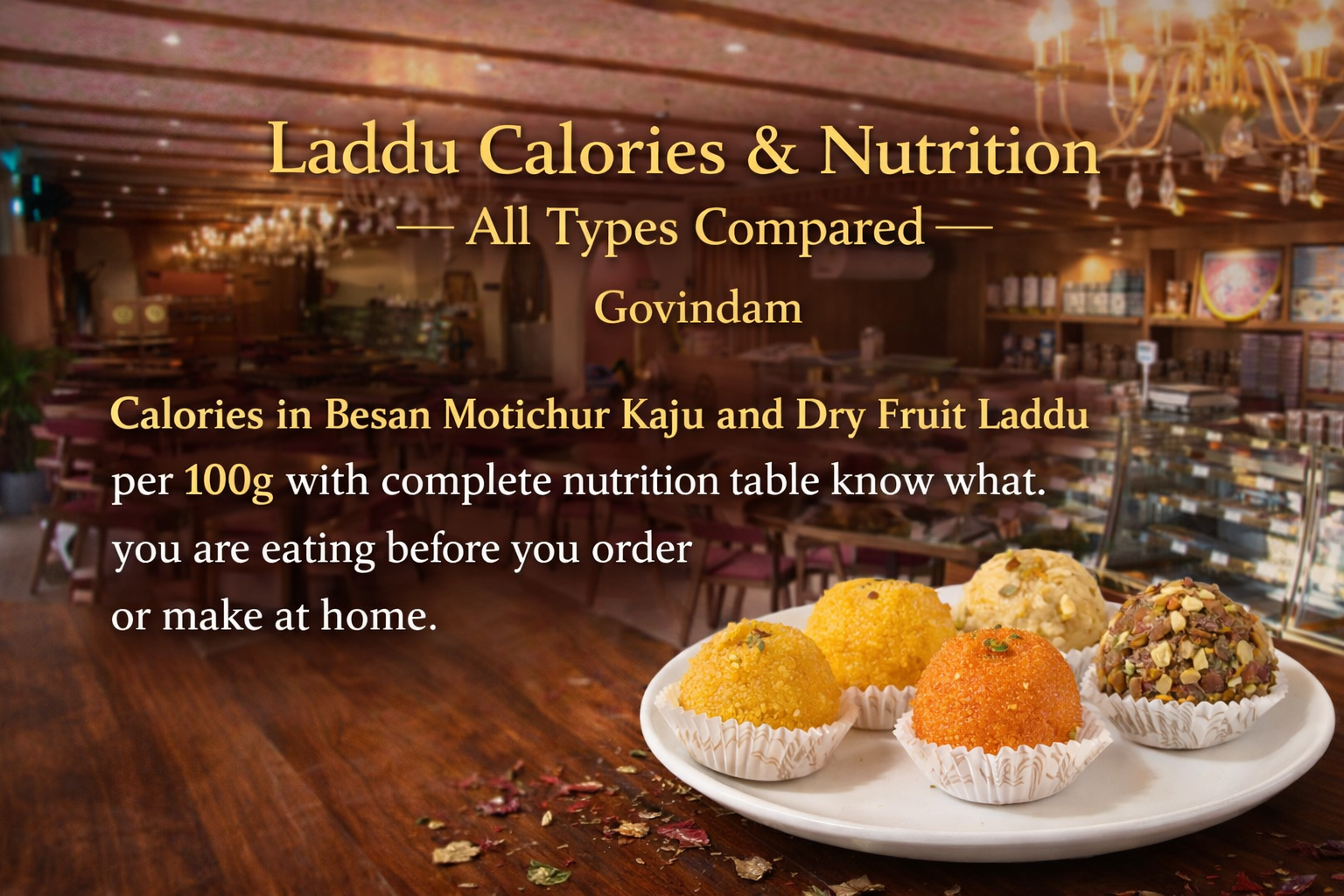
Laddu calories all types vary from approximately 380 kcal per 100g for Dry Fruit Laddu to 520 kcal for Kaju Laddu, with Besan Laddu at roughly 450 kcal and Motichur Ladoo at 410 kcal. This guide compares ladoo nutrition facts, examines the Ayurvedic perspective on traditional sweets, and helps you make informed choices when ordering from Govindam Sweets Jaipur.
Laddu Nutrition Facts — Calories, Fat and Health Guide for Every Variant
Understanding laddu calories all types before you eat, order, or gift is something most people skip — and then regret during festival season. Laddu (also spelled Laddoo or लड्डू in Hindi) is one of India’s oldest and most nutritionally diverse sweets, with calorie content ranging from under 380 kcal per 100g for a well-made Dry Fruit Laddu to over 520 kcal per 100g for a premium Kaju Laddu made with whole cashews and pure desi ghee. The difference between variants is not just flavour — it is the entire macronutrient profile.




This guide presents caloric and nutritional data for four major Laddu variants — Besan, Motichur, Kaju, and Dry Fruit — based on composition data from the National Institute of Nutrition (NIN), ICMR’s Nutritive Value of Indian Foods (2017 edition), and the USDA FoodData Central database for individual ingredient cross-referencing. All figures represent approximate values per 100 grams and are intended as a general reference. Individual preparation methods, ghee quantity, sugar ratios, and dry fruit inclusion will affect the final caloric and nutritional outcome of any given batch.
At Govindam Sweets near Govind Dev Ji Temple in Jaipur’s Gangori Bazaar, every Laddu variant is prepared with 100% pure buffalo milk desi ghee — a fat source that differs in composition from refined vegetable oil and carries distinct nutritional characteristics discussed further in the Ayurvedic section of this guide.



Amla Chunda
Price range: ₹299.00 through ₹650.00
Amla Pickle
Price range: ₹299.00 through ₹650.00
Anardana Goli
Original price was: ₹200.00.₹150.00Current price is: ₹150.00.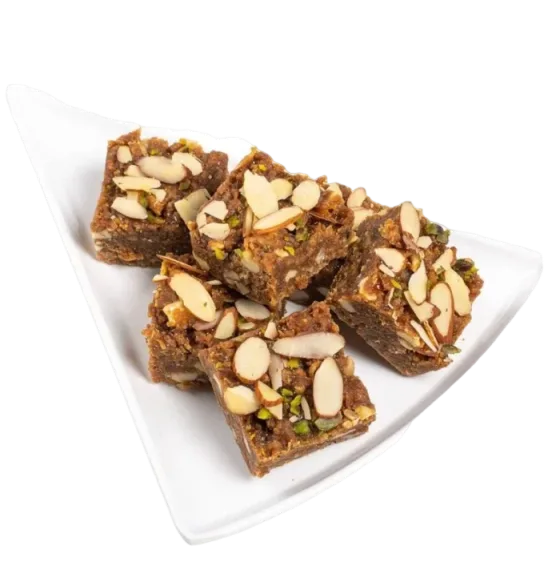
Authentic Dodha Barfi – Traditional Milk Sweet Delight
Original price was: ₹650.00.₹500.00Current price is: ₹500.00.
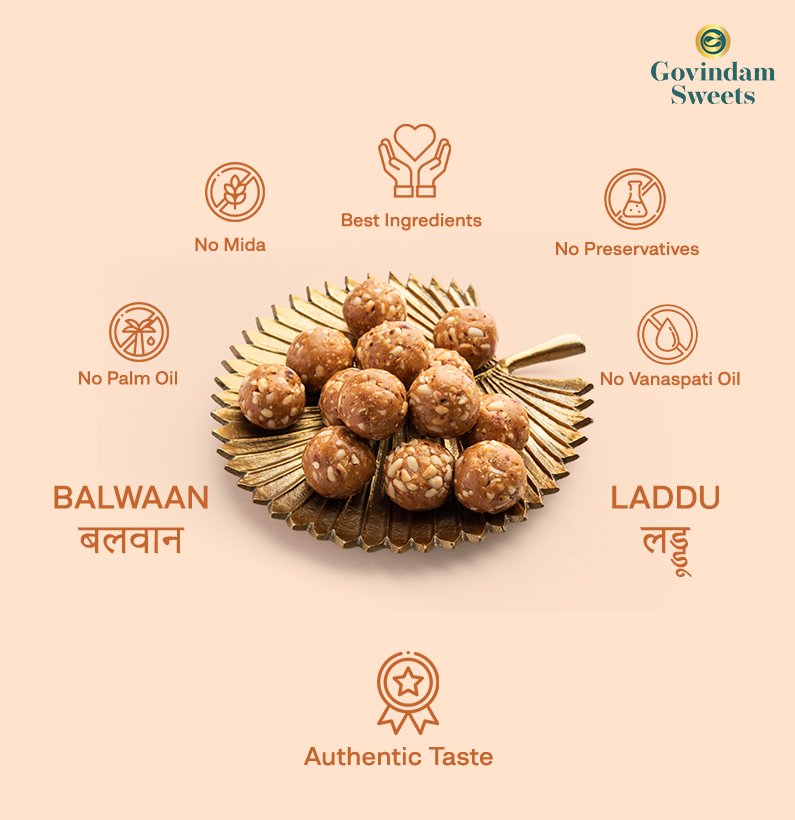
Balwan Laddu
Price range: ₹500.00 through ₹1,000.00
Besan Gatta
Original price was: ₹400.00.₹340.00Current price is: ₹340.00.
Besan Laddu
Price range: ₹270.00 through ₹540.00
Bikaneri Bhujia
Price range: ₹180.00 through ₹360.00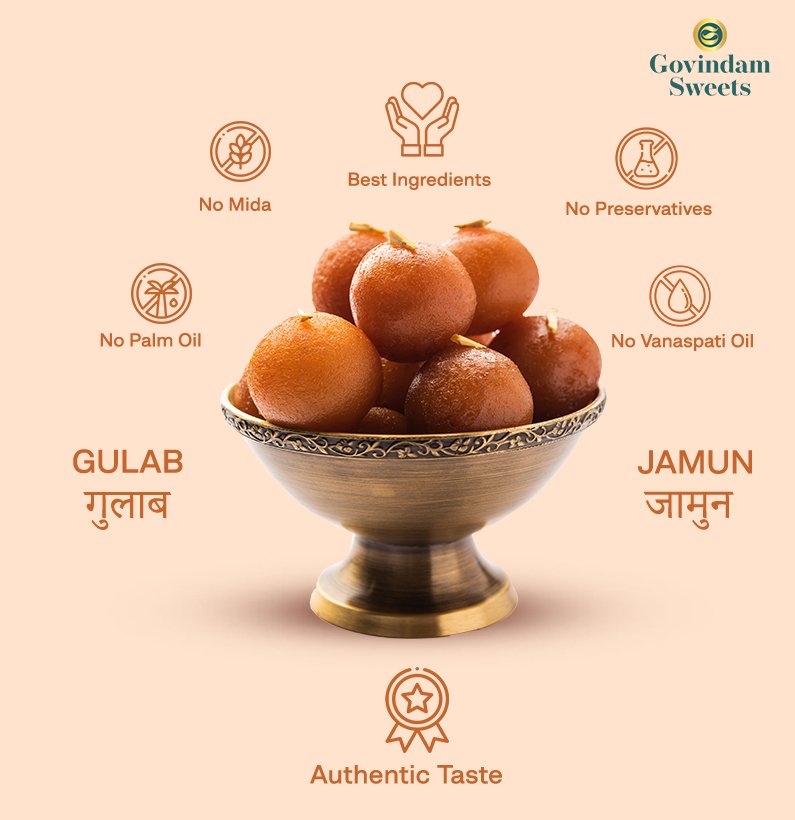
Black Gulab Jamun
Price range: ₹260.00 through ₹540.00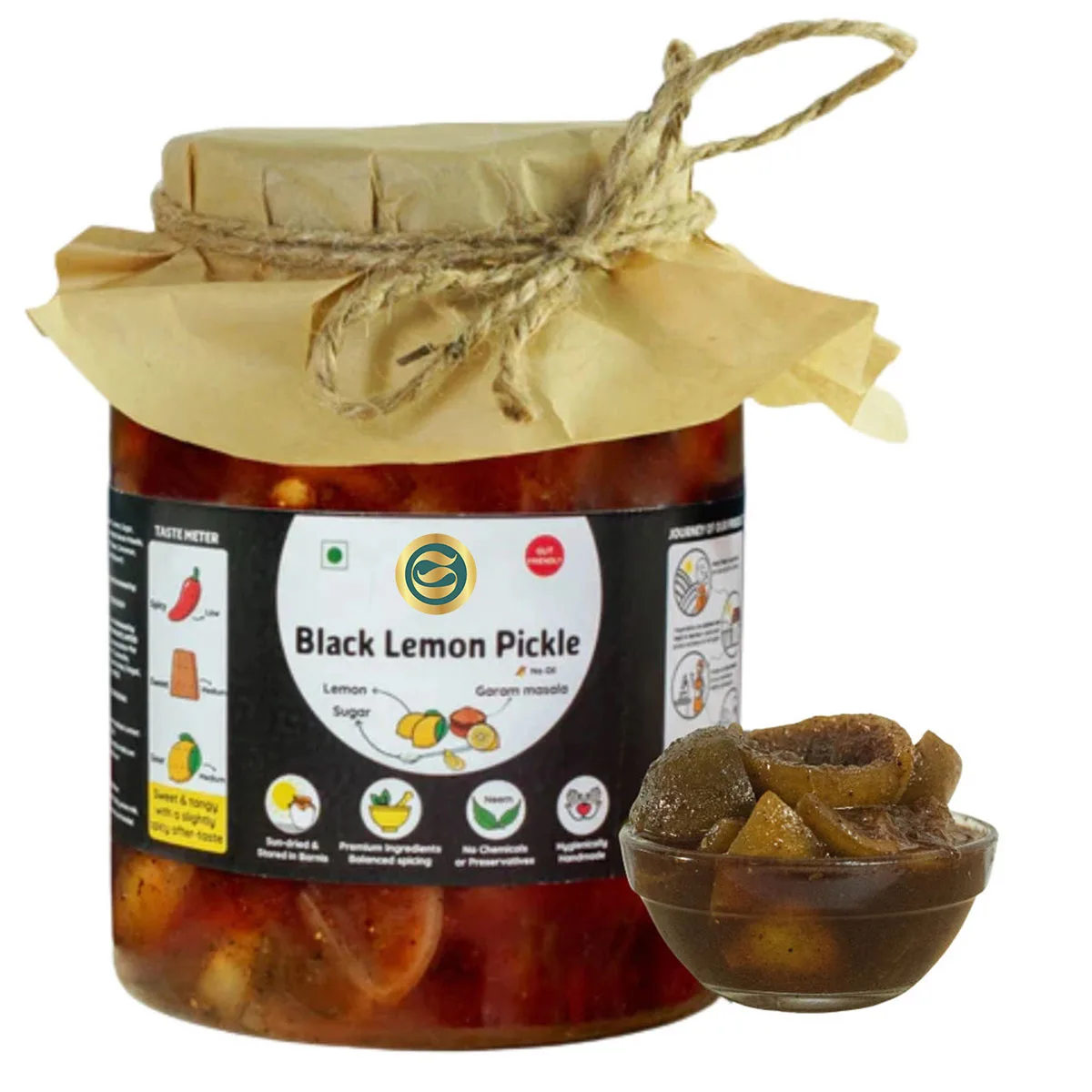
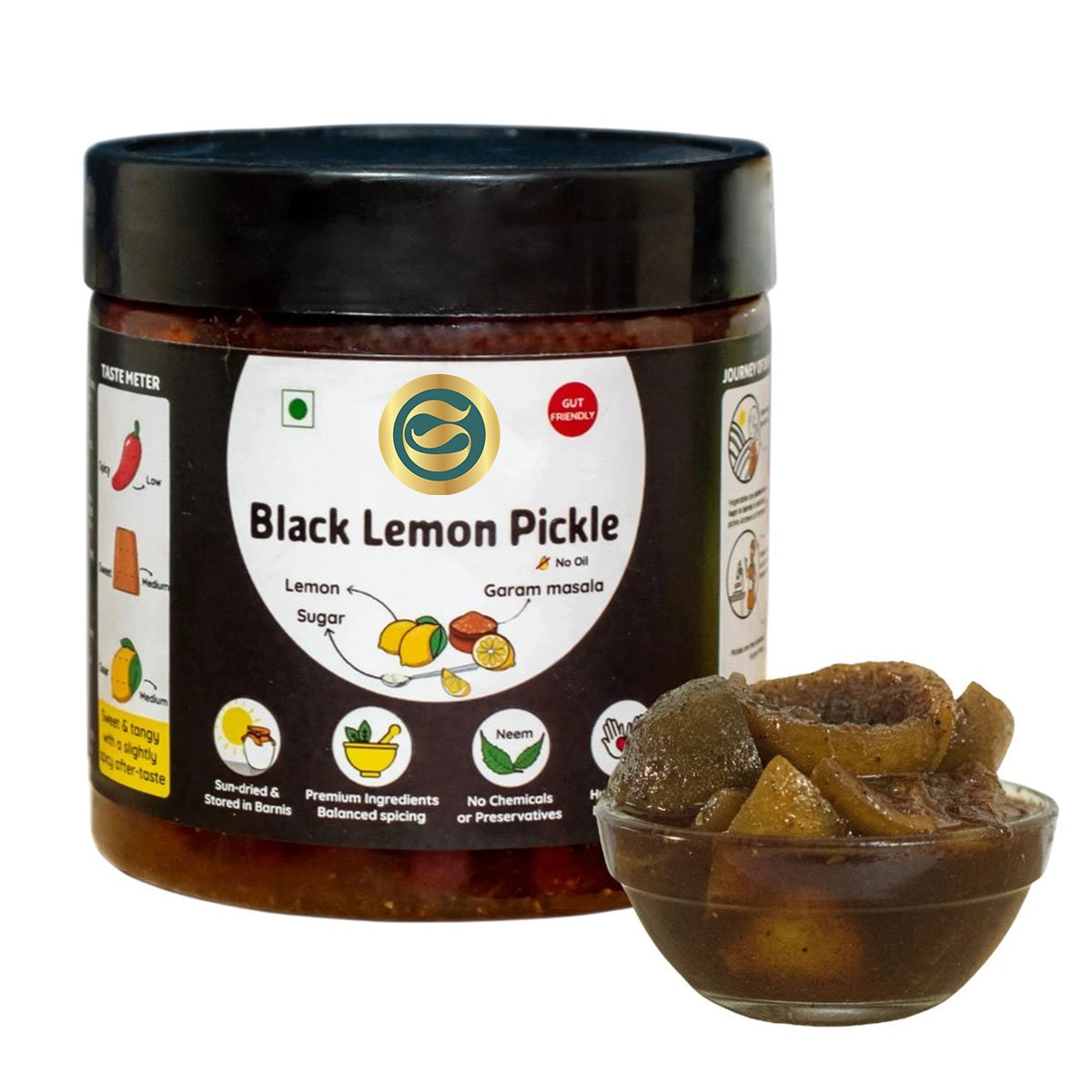
Black Lemon Pickle
Price range: ₹299.00 through ₹650.00Sources: National Institute of Nutrition (NIN), ICMR — Nutritive Value of Indian Foods, 2017. USDA FoodData Central, 2023. Individual nutritional values are approximate and based on standard preparation methods.
Quick Answers
| Question | Answer |
|---|---|
| How many calories are in a Besan Laddu (100g)? | Approximately 450 kcal per 100g, with around 18g fat, 62g carbohydrates, and 9g protein. |
| Which laddu has the highest calories? | Kaju Laddu at approximately 520 kcal per 100g due to the high fat content of whole cashews. |
| Is Dry Fruit Laddu the healthiest laddu option? | It offers the most micronutrients and fibre — approximately 380 kcal per 100g with higher protein. |
| How many calories are in one average-sized laddu? | One standard laddu weighs 35–50g, placing a single piece between 130–260 kcal depending on variant. |
| Is desi ghee in laddu better than vegetable oil? | Ayurvedic tradition and emerging research both suggest desi ghee has a different metabolic profile than refined oils. |
| Can people with diabetes eat laddu? | Consult a qualified physician or dietitian — laddu contains significant sugar and should be consumed in moderation. |
Table of Contents
- Laddu Calories Comparison Table — All Variants Per 100g
- Besan Laddu Nutrition Breakdown
- Motichur Ladoo Nutrition
- Kaju Laddu — Richest Calorie Variant
- Dry Fruit Laddu — The Healthiest Option
- Is Laddu Good for You? The Ayurvedic Perspective
- Frequently Asked Questions
Laddu Calories Comparison Table — All Variants Per 100g
The table below compares four major laddu calories all types across their primary macronutrients. All values are approximate and derived from standard preparation methods using pure desi ghee, refined sugar or jaggery, and respective core ingredients. Values will vary based on exact recipe, ghee quantity, and dry fruit inclusion.

Data reference: NIN ICMR Nutritive Value of Indian Foods (2017); USDA FoodData Central (2023). Values represent approximate per-100g composition for standard home and commercial preparation.
| Variant | Calories (kcal) | Protein (g) | Total Fat (g) | Carbohydrates (g) | Dietary Fibre (g) | Sugar (g) |
|---|---|---|---|---|---|---|
| Besan Laddu | ~450 | ~9 | ~18 | ~62 | ~4 | ~48 |
| Motichur Ladoo | ~410 | ~5 | ~14 | ~66 | ~1 | ~55 |
| Kaju Laddu | ~520 | ~12 | ~28 | ~58 | ~2 | ~44 |
| Dry Fruit Laddu | ~380 | ~8 | ~18 | ~48 | ~5 | ~36 |
Key observations from the comparison:
Motichur Ladoo carries the highest sugar content at approximately 55g per 100g despite being mid-range on calories — this reflects the high proportion of fried boondi and sugar syrup in its composition. Kaju Laddu is highest in calories and fat because of the natural fat content in whole cashews (approximately 44g fat per 100g of raw cashew, per USDA FoodData Central). Dry Fruit Laddu is lowest in sugar and highest in fibre among the four — making it the most complex nutritionally, though not the lowest in total calories. Besan Laddu offers the best balance of protein, fibre, and moderate fat for a traditional sweet preparation.
Single piece calorie reference (standard serving size 40g):
| Variant | Calories Per Piece (40g) | Pieces in 100g |
|---|---|---|
| Besan Laddu | ~180 kcal | 2.5 |
| Motichur Ladoo | ~164 kcal | 2.5 |
| Kaju Laddu | ~208 kcal | 2.5 |
| Dry Fruit Laddu | ~152 kcal | 2.5 |
For anyone tracking daily intake, a single Laddu of any variant represents approximately 7–10% of a standard 2,000 kcal adult daily requirement, based on ICMR Recommended Dietary Allowances (2020). A portion of two pieces — common for a festive serving — represents 14–20% of daily energy intake before accounting for any other food consumed.
Besan Laddu Nutrition Breakdown (~450 kcal per 100g)
Besan Laddu is the most nutritionally complete of the traditional ladoo nutrition facts spectrum, primarily because of the composition of gram flour (besan) as its base ingredient. Roasted chickpea flour contributes meaningful protein — approximately 22g per 100g of dry besan, per the NIN ICMR database — as well as dietary fibre and a range of B vitamins including folate, thiamine, and niacin. When combined with pure desi ghee and sugar in standard Laddu proportions, the finished product yields approximately 9g of protein per 100g — making Besan Laddu the highest-protein option among the four variants in this guide.
Macronutrient Profile of Besan Laddu
| Nutrient | Per 100g | Per 40g Piece | % Daily Value (2,000 kcal) |
|---|---|---|---|
| Calories | ~450 kcal | ~180 kcal | ~9% |
| Protein | ~9g | ~3.6g | ~7% |
| Total Fat | ~18g | ~7.2g | ~23% |
| Saturated Fat | ~8g | ~3.2g | ~40% |
| Carbohydrates | ~62g | ~24.8g | ~21% |
| Dietary Fibre | ~4g | ~1.6g | ~14% |
| Sugar | ~48g | ~19.2g | — |
Source: Approximate values calculated from NIN ICMR Nutritive Value of Indian Foods (2017) for gram flour, ghee, and sugar in standard Besan Laddu proportions. Saturated fat figure reflects pure desi ghee contribution.
What the Roasting Process Does to Besan
Roasting besan in desi ghee before forming the Laddu is not only a flavour step — it also affects nutritional availability. The Maillard reaction during roasting reduces the phytic acid content of chickpea flour, which can otherwise inhibit mineral absorption (zinc, iron, calcium). Research published in the Journal of Food Science and Technology (Mubarak, 2005) found that roasting significantly reduces phytic acid in legume flour preparations. Govindam Sweets roasts the besan base in pure buffalo milk desi ghee over a controlled flame — the resulting aroma and deep golden colour indicate proper Maillard development and reduced anti-nutrient content.
For the complete Laddu range at Govindam Sweets, contact +91-7976304072 or visit the shop near Govind Dev Ji Temple, Gangori Bazaar, Jaipur.
Motichur Ladoo Nutrition (~410 kcal per 100g)
Motichur Ladoo (मोतीचूर लड्डू) is the most sugar-dominant variant in this guide, with its soft, fine-grain boondi soaked in sugar syrup forming the bulk of the final sweet. Per 100g, Motichur Ladoo contributes approximately 55g of sugar — significantly higher than Besan or Kaju Laddu — which is an important consideration for anyone monitoring glycaemic load or total sugar intake during festivals.
Macronutrient Profile of Motichur Ladoo
| Nutrient | Per 100g | Per 40g Piece | % Daily Value (2,000 kcal) |
|---|---|---|---|
| Calories | ~410 kcal | ~164 kcal | ~8% |
| Protein | ~5g | ~2g | ~4% |
| Total Fat | ~14g | ~5.6g | ~18% |
| Saturated Fat | ~6g | ~2.4g | ~30% |
| Carbohydrates | ~66g | ~26.4g | ~22% |
| Dietary Fibre | ~1g | ~0.4g | ~4% |
| Sugar | ~55g | ~22g | — |
Source: Approximate values calculated from NIN ICMR data for gram flour boondi, sugar syrup, and ghee in standard Motichur Ladoo proportions.
The Role of Pure Desi Ghee in Motichur Ladoo
The key nutritional differentiator in a quality Motichur Ladoo is whether the boondi is fried in pure desi ghee or refined vegetable oil. Pure buffalo milk desi ghee contains conjugated linoleic acid (CLA), short-chain and medium-chain fatty acids, and fat-soluble vitamins A, D, E, and K. Research in the npj Science of Food (Patel et al., 2017) notes that the butyrate content of ghee from grass-fed and traditionally raised animals may support gut mucosal integrity when consumed in moderate quantities. At Govindam Sweets, all frying for Motichur preparation uses 100% pure buffalo milk desi ghee — no refined oils, no hydrogenated fats, and no artificial colours in the boondi preparation.
Note: This reference is provided as nutritional context. Consuming Motichur Ladoo for gut health purposes is not a dietary recommendation — consult a qualified nutritionist for personalised guidance.
Kaju Laddu — Richest Calorie Variant (~520 kcal per 100g)
Kaju Laddu is the most calorie-dense preparation in this laddu calories all types comparison, reflecting the natural fat profile of whole cashews. Raw cashews contain approximately 44g of total fat per 100g (USDA FoodData Central, 2023), of which roughly 8g is saturated fat, 24g is monounsaturated fat, and 8g is polyunsaturated fat. When cashews are ground into a paste with pure ghee and sugar and shaped into Laddus, the resulting product carries approximately 28g of total fat per 100g — the highest of all four variants.
Macronutrient Profile of Kaju Laddu
| Nutrient | Per 100g | Per 40g Piece | % Daily Value (2,000 kcal) |
|---|---|---|---|
| Calories | ~520 kcal | ~208 kcal | ~10% |
| Protein | ~12g | ~4.8g | ~10% |
| Total Fat | ~28g | ~11.2g | ~36% |
| Saturated Fat | ~9g | ~3.6g | ~45% |
| Carbohydrates | ~58g | ~23.2g | ~19% |
| Dietary Fibre | ~2g | ~0.8g | ~7% |
| Sugar | ~44g | ~17.6g | — |
Source: Calculated from USDA FoodData Central cashew composition (2023) and NIN ICMR ghee and sugar data, adjusted for standard Kaju Laddu preparation proportions.
Why Kaju Laddu Calories Has the Highest Protein
Despite being a sweet, Kaju Laddu Calories delivers approximately 12g of protein per 100g — the highest protein content of all four variants — because whole cashews contribute approximately 18g of protein per 100g of raw nut. For context, the Indian Council of Medical Research (ICMR 2020 RDA) recommends 0.83g of protein per kilogram of body weight per day for healthy Indian adults. A 40g serving of Kaju Laddu provides roughly 4.8g of protein — meaningful in the context of a festive sweet, though not a substitute for primary protein sources. The Kaju Laddu and Balwan Laddu from Govindam Sweets are the two highest-protein options in the range.
Dry Fruit Laddu — The Healthiest Option (~380 kcal per 100g)
Dry Fruit Laddu earns the “healthiest option” designation not because it is lowest in calories overall, but because it delivers the most micronutrient density, the highest dietary fibre content, the lowest sugar contribution, and a broader spectrum of healthy fats across multiple nut and seed sources compared to the other three variants. A well-made Dry Fruit Laddu typically combines almonds, cashews, walnuts, pistachios, dates, and seeds — each contributing distinct micronutrient profiles.
Macronutrient Profile of Dry Fruit Laddu
| Nutrient | Per 100g | Per 40g Piece | % Daily Value (2,000 kcal) |
|---|---|---|---|
| Calories | ~380 kcal | ~152 kcal | ~8% |
| Protein | ~8g | ~3.2g | ~6% |
| Total Fat | ~18g | ~7.2g | ~23% |
| Saturated Fat | ~4g | ~1.6g | ~20% |
| Carbohydrates | ~48g | ~19.2g | ~16% |
| Dietary Fibre | ~5g | ~2g | ~18% |
| Sugar | ~36g | ~14.4g | — |
Source: Approximate values calculated from NIN ICMR data for mixed nuts and dry fruits with jaggery or honey as binding agent and minimal added ghee, per standard Dry Fruit Laddu preparation.
Key Micronutrients in Dry Fruit Laddu
| Nutrient | Primary Source in Laddu | Benefit Context |
|---|---|---|
| Magnesium | Almonds, cashews | Supports nerve function — ICMR RDA: 340mg/day (adult male) |
| Zinc | Pumpkin seeds, cashews | Supports immune function — ICMR RDA: 12mg/day (adult) |
| Iron | Dates, raisins, sesame | Non-haem iron — absorption enhanced with vitamin C intake |
| Vitamin E | Almonds, walnuts | Fat-soluble antioxidant — NIN reference value: 7.5mg/day |
| Potassium | Dates, almonds, pistachios | Supports cardiovascular function — ICMR RDA: 3,500mg/day |
| Omega-3 (ALA) | Walnuts, flaxseed | Short-chain omega-3 — research suggests cardiovascular support (Mozaffarian & Wu, 2011, Journal of the American College of Cardiology) |
Note: These micronutrient references are provided as general nutritional context, not as health claims or medical recommendations.
Govindam Sweets prepares Dry Fruit Laddu using whole premium almonds, cashews, pistachios, and dates bound with pure desi ghee — no cheap filler nuts, no synthetic binding agents, and no artificial sweeteners. Browse the full Festival Special collection for seasonal Dry Fruit Laddu gifting combinations.
Is Laddu Calories Good for You? The Ayurvedic Perspective
The question of whether healthy Laddu Calories is a contradiction in terms misunderstands the Ayurvedic framework within which these preparations were originally conceived. Ayurveda — codified in the Charaka Samhita and Ashtanga Hridayam, classical texts dating to approximately the 6th century BCE — does not classify food as inherently good or bad in isolation. It classifies food in relation to the individual’s constitution (prakriti), the season (ritu), the quantity consumed, and the preparation method.
What Ayurvedic Tradition Says About Laddu Ingredients
| Ingredient | Ayurvedic Classification | Traditional Association |
|---|---|---|
| Desi Ghee (Clarified Butter) | Snehana dravya — unctuous substance | Charaka Samhita (Sutrasthana 13) traditionally associates ghee with enhancing ojas (vital essence), supporting digestion, and lubricating tissues when consumed in moderation |
| Besan (Gram Flour) | Laghu, ruksha — light, dry | Traditional texts associate roasted gram flour preparations with post-partum recovery nutrition and building strength |
| Sesame Seeds | Tila — warming, heavy | Traditionally associated with bone health and winter consumption — a key ingredient in Tilkut and certain Laddu preparations for Makar Sankranti |
| Jaggery (Gur) | Guda — warm, building | Traditionally preferred over refined sugar in Ayurvedic preparations for its iron content and warmer thermal quality |
| Dry Fruits | Brimhana — building, nourishing | Traditionally associated with rasayana (rejuvenation) preparations — almonds particularly referenced in Ashtanga Hridayam for nourishing nervous tissue |
| Cashews | Madhura rasa — sweet taste | Traditionally classified as nourishing and building (brimhana) — suited for Vata-dominant constitutions |
Important framing note: All Ayurvedic associations above are drawn from classical Ayurvedic literature and represent traditional knowledge — they are not medical claims, are not approved by FSSAI or any regulatory authority as health claims, and should not be interpreted as treatment or prevention claims for any condition. Consult a qualified Ayurvedic practitioner or registered dietitian for personalised dietary guidance.
The Ghee Question in Modern Nutritional Context
Pure desi ghee’s place in the modern nutritional debate has shifted meaningfully since the low-fat dietary guidelines of the 1980s and 1990s. Research published in the Indian Journal of Medical Research (Sharma et al., 2010) examined the composition of cow ghee and found meaningful concentrations of CLA, butyrate, and fat-soluble vitamins. A 2018 review in the Journal of Ethnic Foods examined traditional Indian dairy fat practices and noted that traditional ghee may have a different metabolic profile compared to partially hydrogenated fats. The research notes that context — quantity, overall dietary pattern, and individual metabolic health — determines outcomes.
The ICMR INSA Nutrient Requirements for Indians (2020) recommends that visible fat intake for adults should not exceed 30% of total daily energy intake. One Laddu (40g) contributes approximately 3–7g of fat depending on variant — meaningful within a daily total fat budget, but not inherently excessive when consumed as an occasional sweet within an otherwise balanced diet.
This section represents a summary of published nutritional research and traditional knowledge. It does not constitute dietary advice. Individuals with diabetes, cardiovascular conditions, or other health concerns should consult their physician or a registered dietitian before making dietary changes based on any information in this article.
Frequently Asked Questions About Laddu Calories and Nutrition
How many calories are in one Besan Laddu of average size? A standard Besan Laddu weighing approximately 40 grams contains around 180 kcal. Calorie content varies based on the ghee quantity used, the sugar-to-besan ratio, and whether dry fruits or nuts have been added. Per 100g, Besan Laddu provides approximately 450 kcal, 9g protein, 18g fat, and 62g carbohydrates based on standard preparation data from ICMR’s Nutritive Value of Indian Foods (2017).
Which type of Laddu Calories has the fewest calories per 100g? Dry Fruit Laddu has the lowest calorie count of the four variants at approximately 380 kcal per 100g, provided it is prepared with jaggery or dates as the primary sweetener and minimal added ghee. However, it is also the most micronutrient-dense option, with the highest fibre content (approximately 5g per 100g) and the broadest spread of vitamins and minerals among all laddu types.
Is Motichur Ladoo high in sugar compared to other laddus? Yes. Motichur Ladoo contains approximately 55g of sugar per 100g — the highest among all four variants compared in this guide — because the fine-grain boondi is soaked in sugar syrup during preparation. This makes Motichur Ladoo the least suitable option for individuals monitoring glycaemic load, though it remains the lowest in protein and fibre among the four. People managing blood sugar levels should consult a dietitian before consuming any laddu variant.
Can Kaju Laddu from Govindam Sweets be considered a source of protein? Kaju Laddu from Govindam Sweets provides approximately 12g of protein per 100g, the highest among all four variants, because whole cashews contribute approximately 18g of protein per 100g of raw nut. A single 40g piece delivers approximately 4.8g of protein. While this is meaningful in context, Kaju Laddu is not a primary protein source and should be consumed as a sweet treat within an overall balanced dietary pattern.
Is laddu made with desi ghee healthier than Laddu Calories made with vegetable oil? Ayurvedic tradition consistently classifies pure desi ghee as a superior cooking and food medium compared to refined vegetable oils. Modern nutritional research notes that pure desi ghee contains conjugated linoleic acid, butyrate, and fat-soluble vitamins absent in refined oils. Research published in the npj Science of Food (Patel et al., 2017) suggests that ghee from traditionally raised animals may have a different metabolic impact than partially hydrogenated or refined vegetable fats. This is not a blanket health endorsement — quantity consumed and individual metabolic health remain the determining factors. All Govindam Sweets preparations use 100% pure buffalo milk desi ghee.
How many calories does a Dry Fruit Laddu have and is it suitable for weight management? A standard 40g Dry Fruit Laddu provides approximately 152 kcal, making it the lowest-calorie option per piece among the four variants. Its higher fibre content (approximately 5g per 100g) and lower sugar (approximately 36g per 100g) may contribute to greater satiety compared to a Motichur Ladoo of the same weight. However, no Laddu Calories preparation should be marketed or consumed as a weight management food — consult a qualified dietitian for individual guidance on incorporating traditional sweets within a calorie-managed dietary plan.
What is the Ayurvedic view on eating Laddu Calories daily? Classical Ayurvedic texts including the Charaka Samhita do not prescribe laddu as a daily therapeutic food — they classify sweet preparations as part of a balanced diet suited to specific constitutions, seasons, and life stages. Post-partum Laddu preparations (Panjiri Laddu, Methi Laddu) are traditionally prescribed for new mothers in limited quantities during the recovery period, as referenced in classical texts and studied in a 2015 paper in the Journal of Ethnopharmacology (Singh et al.) examining traditional postpartum dietary practices in Rajasthan. Daily consumption of standard festive Laddu Calories in high quantity is not advised by Ayurvedic practitioners or modern nutritionists for any constitution.
Where can I order low-sugar or healthier laddu options in Jaipur? Govindam Sweets near Govind Dev Ji Temple in Jaipur’s Gangori Bazaar offers the Balwan Laddu and Dry Fruit Laddu — both prepared with pure desi ghee, whole premium dry fruits, and significantly lower refined sugar content compared to Motichur or standard Boondi Laddu. For dietary-specific requirements or bulk gifting for health-conscious guests, contact the team at +91-7976304072 or info@govindam.co.in to discuss available options and seasonal preparation schedules.
Understanding Laddu Nutrition Helps You Choose Better
Knowing laddu calories all types before you order or gift puts you in control of what you are sharing and consuming. Dry Fruit Laddu at 380 kcal per 100g is the most micronutrient-rich choice. Besan Laddu at 450 kcal offers the best protein-to-calorie ratio among traditional variants. Kaju Laddu at 520 kcal is the most indulgent option — and for occasions that call for premium gifting, the right one. Motichur Ladoo at 410 kcal is the festival classic with the highest sugar content.
At Govindam Sweets near Govind Dev Ji Temple, Gangori Bazaar, Jaipur, every variant is prepared with 100% pure buffalo milk desi ghee, no artificial flavours, and no synthetic additives — giving you the cleanest nutritional baseline available for any of these preparations. Shop Now or explore the full Laddu range to order fresh for home delivery or gifting.
Visit or Contact Govindam Sweets: Near Govind Dev Ji Temple, Gangori Bazaar, J.D.A. Market, Pink City, Jaipur, Rajasthan – 302003
Phone / WhatsApp: +91-7976304072 Email: info@govindam.co.in Website: www.govindam.co.in
