Posts
Soft Gulab Jamun – Authentic Indian Sweet 2026 | Govindam

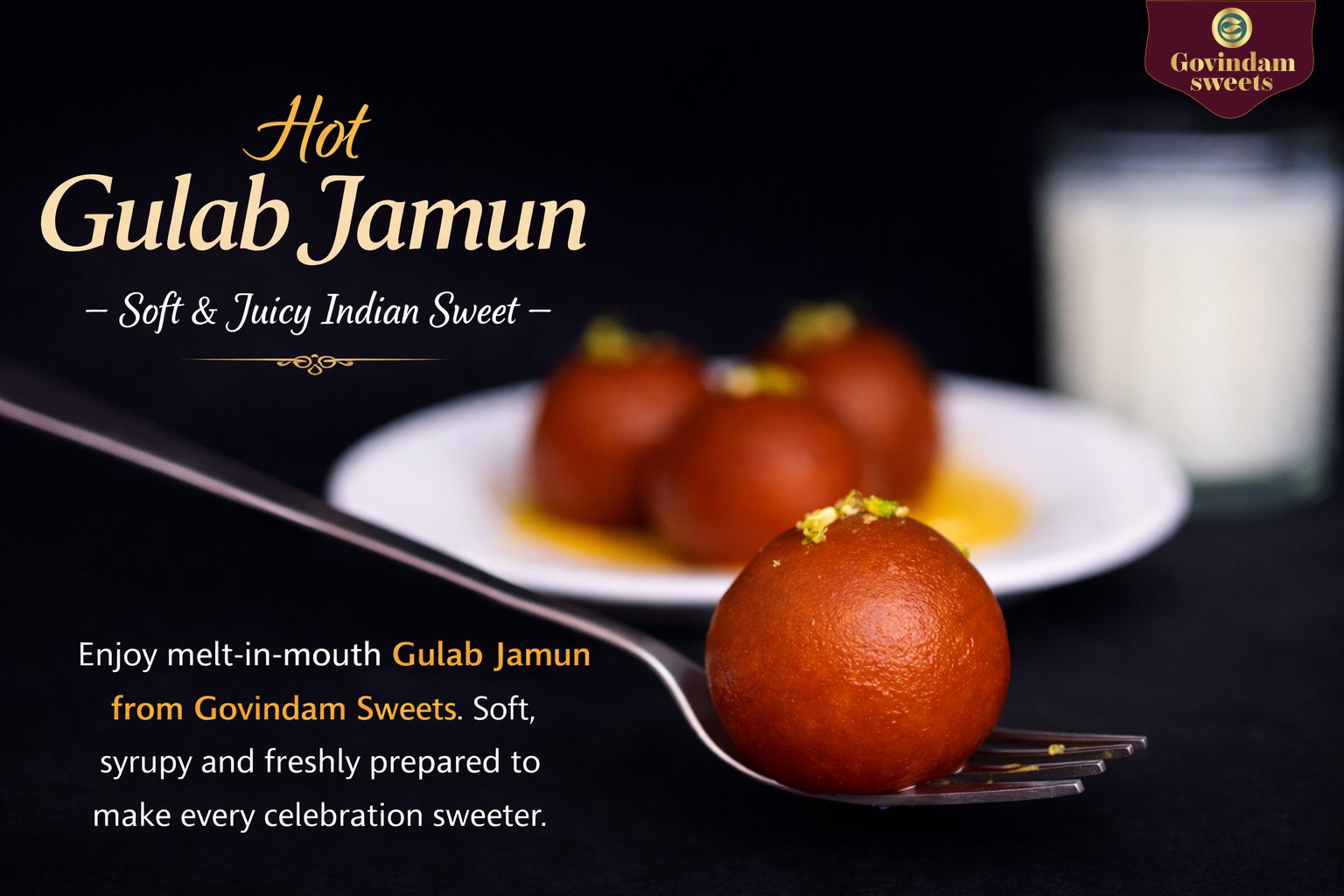
India’s most universally cherished brown, syrup-soaked sweet — is prepared fresh daily at Govindam Sweets using pure khoya, fine flour, and rose-cardamom sugar syrup. Each ball of authentic Gulab Jamun is hand-shaped, deep-fried to perfect golden-brown, and soaked until soft throughout. Available year-round at Gangori Bazaar, Pink City, Jaipur.
What Is Gulab Jamun? — History, Name & Cultural Significance
Gulab Jamun (also written as Gulab Jamun, गुलाब जामुन in Hindi) is a round, deep-fried Indian sweet made from a soft dough of pure khoya (reduced milk solids), a small quantity of fine flour, and a binding agent — fried to a deep, even golden-brown and then soaked in a warm sugar syrup fragrant with rose water, cardamom, and sometimes saffron. The name is evocative: “Gulab” means rose — a reference to the rose water-flavoured syrup — and “Jamun” refers to the Indian black plum, which the fried sweet resembles in size and colour.




Origins — Persian and Mughal Culinary Heritage
Food historians trace Gulab Jamun’s lineage to Persian and Central Asian fried dough sweets that entered the Indian subcontinent through Mughal court cuisine. The technique of soaking fried dough in flavoured syrup — luqmat al qadi in Arabic culinary tradition — found its Indian expression in khoya-based dough, producing a richer, more dairy-forward sweet that became central to the Indian mithai canon. By the time of the Mughal courts, Gulab Jamun was well established as a celebratory sweet across North India.
In Rajasthan, where dairy traditions run exceptionally deep and pure khoya production has always been a point of regional pride, Gulab Jamun became inseparable from celebration culture. Every major feast, wedding, religious ceremony, and family gathering in Jaipur historically included it as a non-negotiable sweet component.



Amla Chunda
Price range: ₹299.00 through ₹650.00
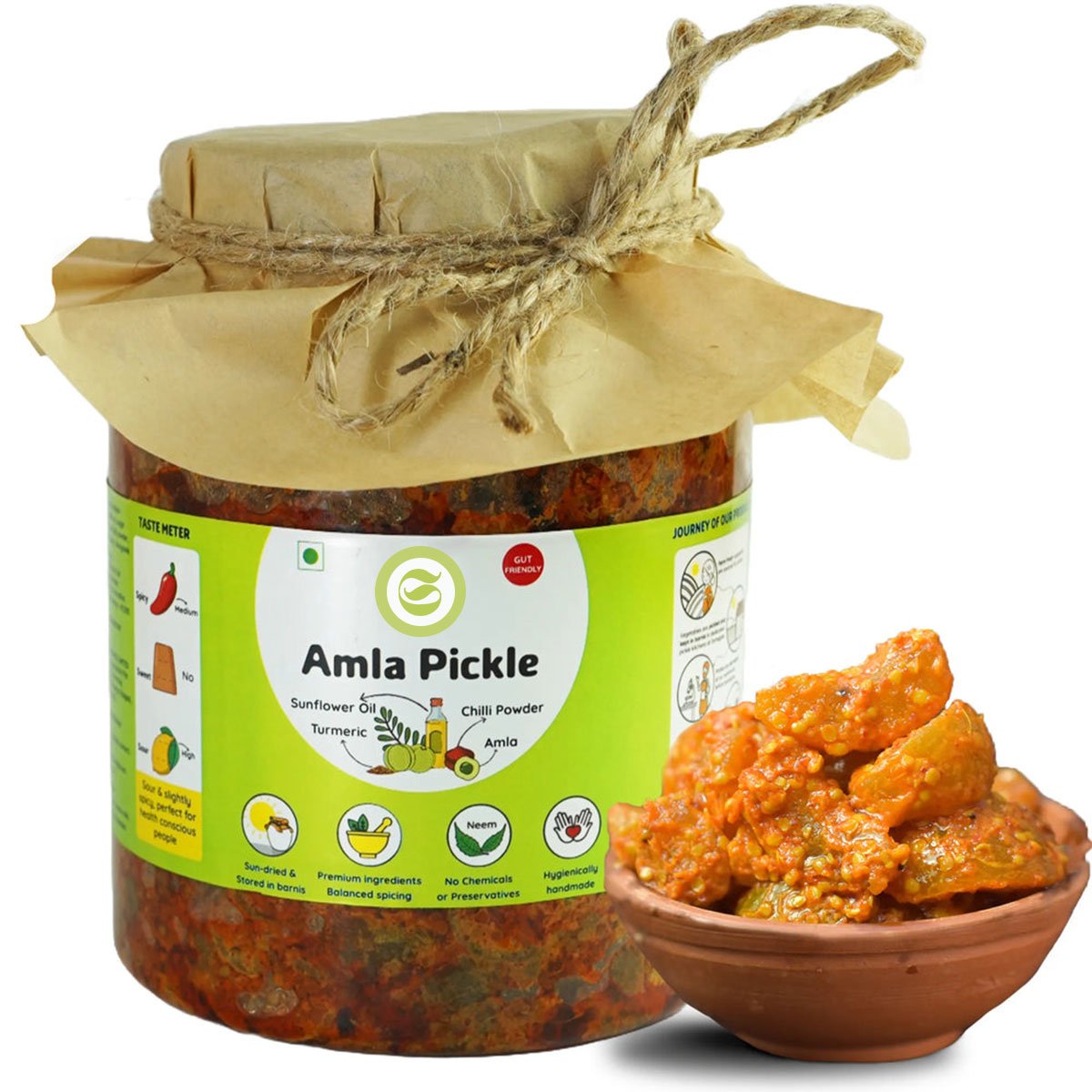
Amla Pickle
Price range: ₹299.00 through ₹650.00
Anardana Goli
Original price was: ₹200.00.₹150.00Current price is: ₹150.00.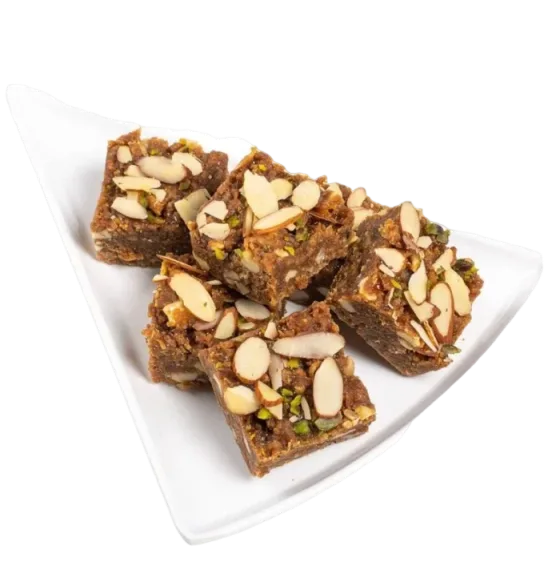
Authentic Dodha Barfi – Traditional Milk Sweet Delight
Original price was: ₹650.00.₹500.00Current price is: ₹500.00.
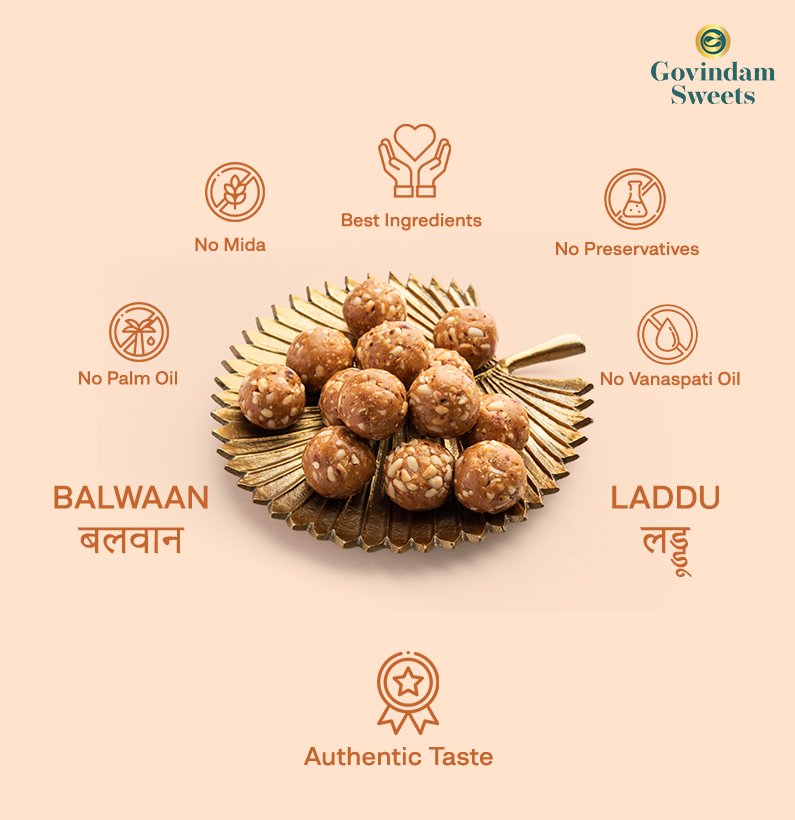
Balwan Laddu
Price range: ₹500.00 through ₹1,000.00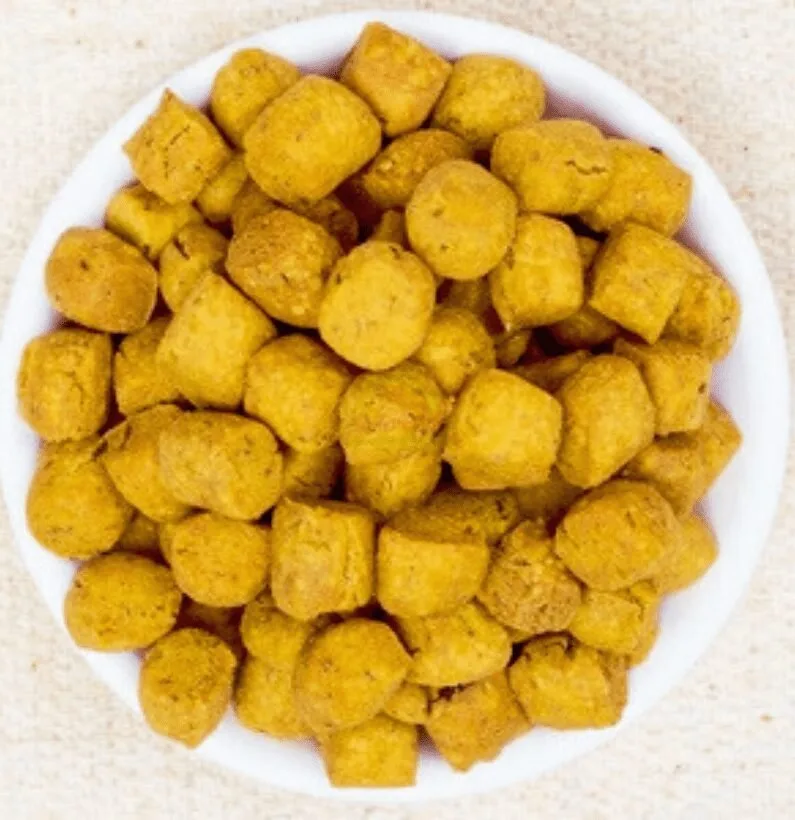
Besan Gatta
Original price was: ₹400.00.₹340.00Current price is: ₹340.00.
Besan Laddu
Price range: ₹270.00 through ₹540.00
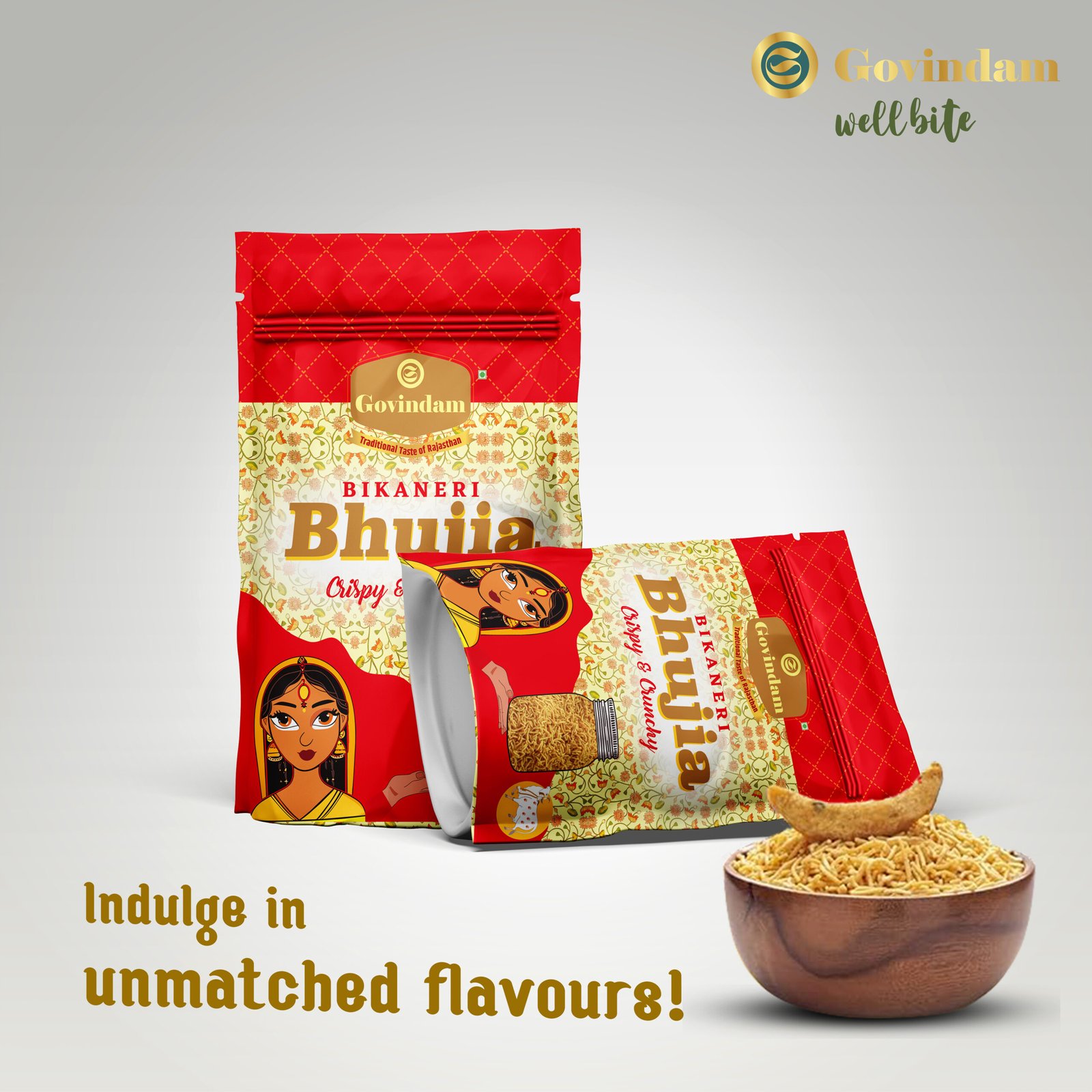
Bikaneri Bhujia
Price range: ₹180.00 through ₹360.00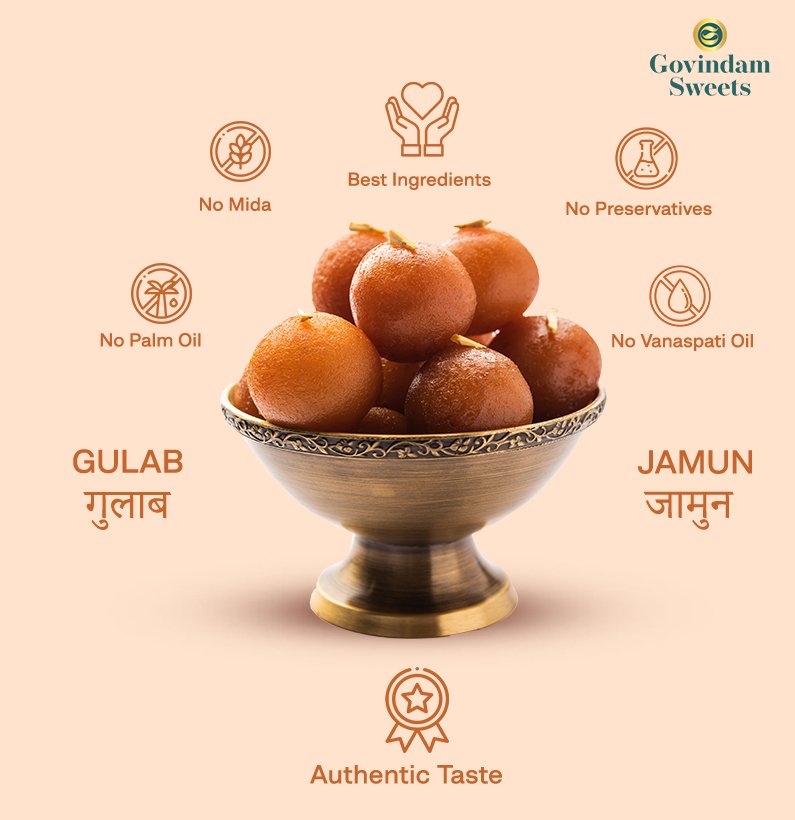
Black Gulab Jamun
Price range: ₹260.00 through ₹540.00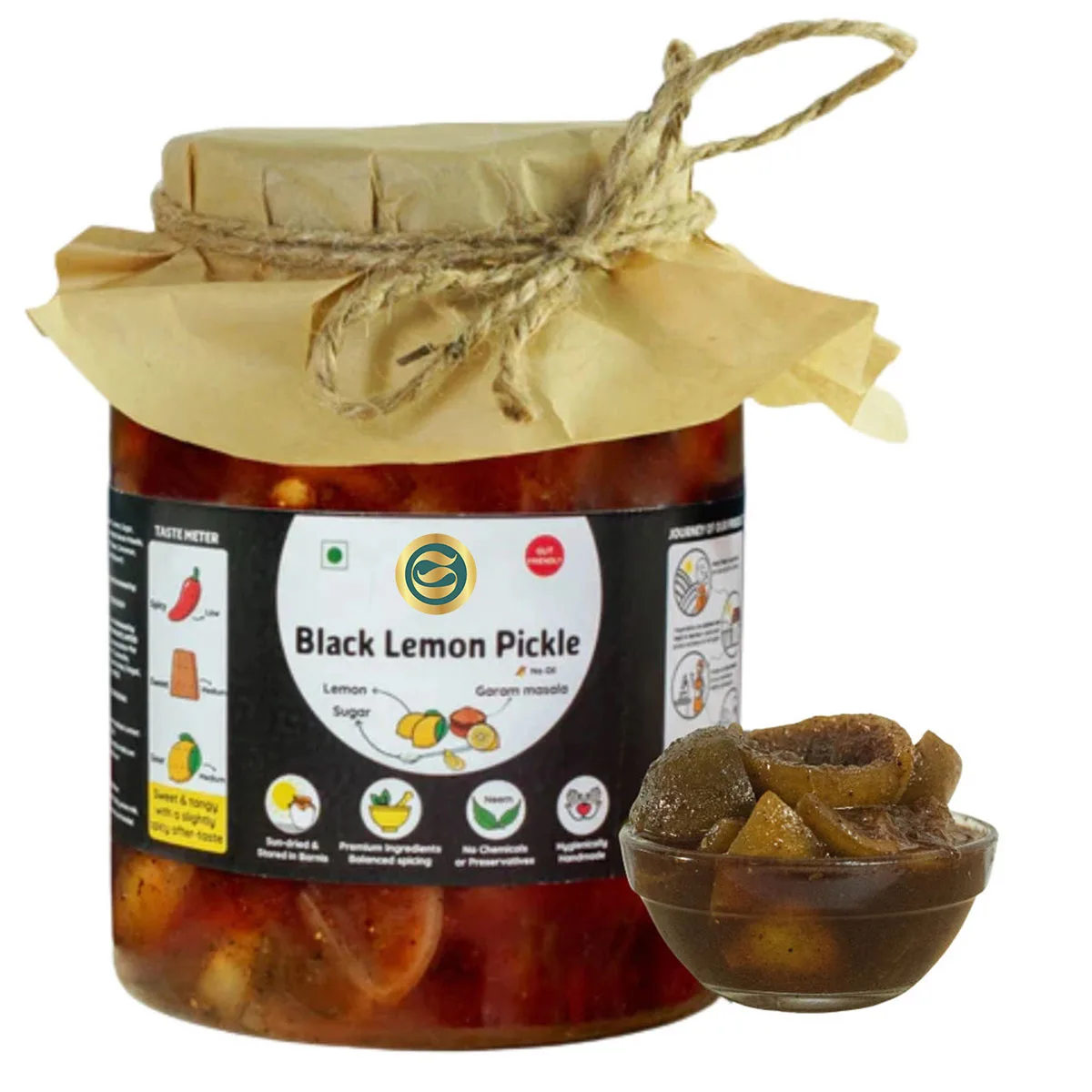
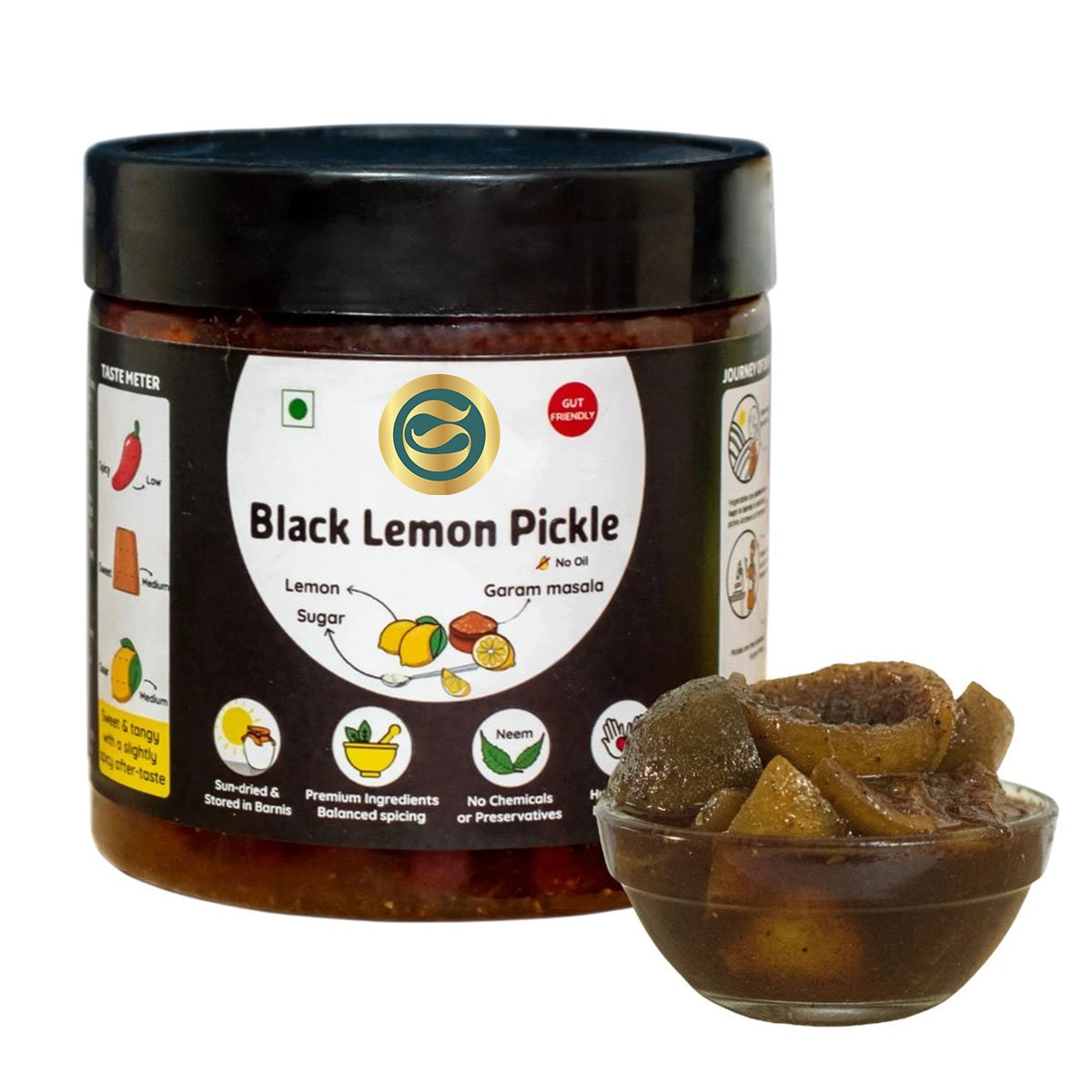
Black Lemon Pickle
Price range: ₹299.00 through ₹650.00Gulab Jamun Across India’s Celebrations
Few Indian sweets cross cultural, religious, and regional boundaries as completely as Gulab Jamun. It is served at Hindu weddings, Sikh langar meals, Eid celebrations, and Christmas parties simultaneously. It transcends occasion — appropriate for births, deaths, festivals, business inaugurations, and ordinary Tuesday evenings with equal cultural validity.
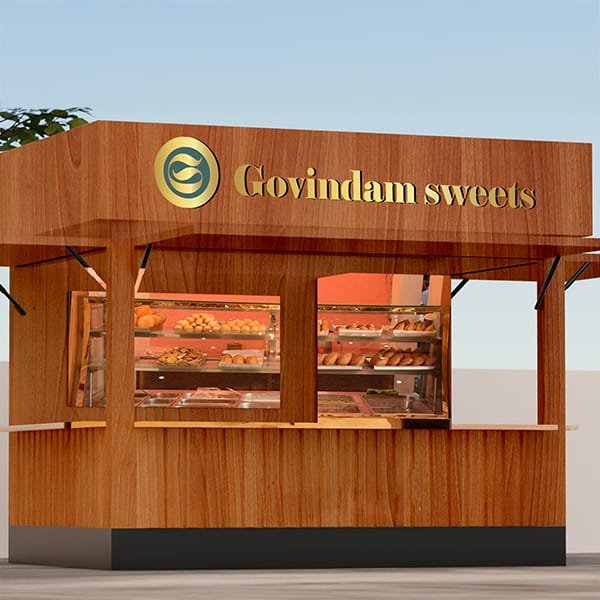
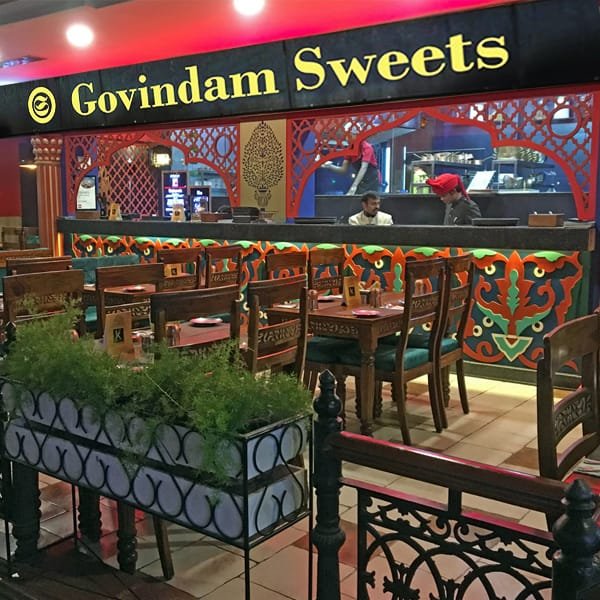
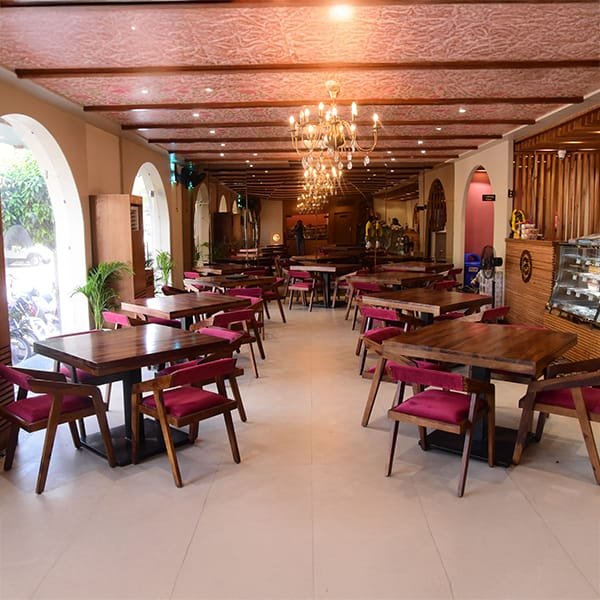
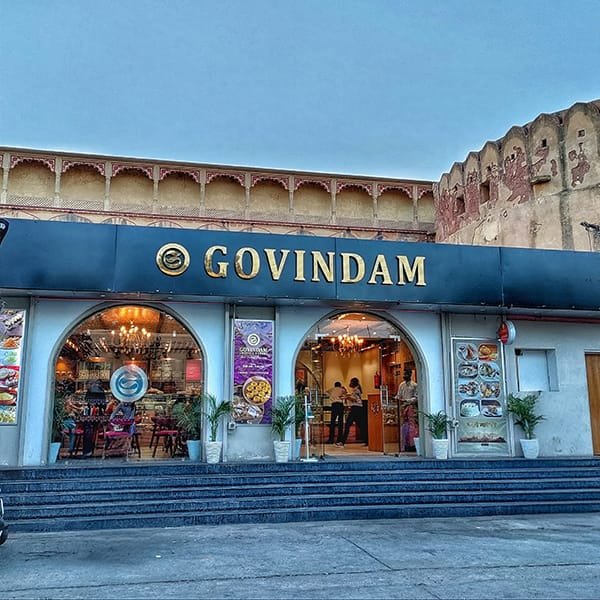
Govindam Sweets, in Gangori Bazaar near Govind Dev Ji Temple, is positioned at the heart of Jaipur’s celebration culture — a location that has supplied the city’s most significant occasions with traditional mithai for generations.

5 Signs of Authentic Gulab Jamun Before You Buy
Quick Answer: Authentic Gulab Jamun made from pure khoya is uniformly dark golden-brown, soft throughout, syrup-soaked to the centre, fragrant with rose and cardamom, and bounces gently when pressed. These five signs distinguish real Gulab Jamun from inferior alternatives before you take a single bite.
Sign 1 — Colour: The Uniform Golden-Brown Standard
Authentic pure khoya Gulab Jamun achieves an even, deep golden-brown to dark brown colour all the way around the ball — no pale patches, no burned black spots, no uneven streaking. This consistent colour is the direct result of slow, patient frying in clean oil at the correct temperature. Balls fried too quickly in overly hot oil burn on the outside while staying raw inside. Balls fried in degraded, reused oil look dark but develop an acrid, stale aftertaste. Pale, unevenly coloured Gulab Jamun is a reliable sign of rushed preparation or poor temperature control.
Sign 2 — Texture: Soft All the Way Through
Press a Gulab Jamun gently with two fingers. Authentic soft Gulab Jamun offers a gentle, uniform resistance and springs back slowly — it should be soft throughout, not hard in the centre. A hard centre means the dough was too dense, the frying oil too hot (cooking the exterior before the interior set), or the syrup soaking time was insufficient. Squeeze gently — a small amount of syrup should appear at the surface, confirming even soaking throughout.
Sign 3 — The Rose-Cardamom Syrup Aroma
Real Gulab Jamun announces itself with the fragrance of rose water and green cardamom before you reach the counter. The syrup should be warm, fragrant, and clearly rose-forward with a cardamom finish. Flat-smelling, sugar-only syrup signals a shortcut formula — rose water and cardamom were skipped to reduce cost. Missing this fragrance is a direct sign that “Gulab” (rose) in the name was never honoured in the preparation.
Sign 4 — Syrup Penetration to the Centre
Break or cut a Gulab Jamun in half. The cross-section should be uniformly moist — dark, glistening, and evenly syrup-saturated from edge to centre. A dry, pale interior with only the outer few millimetres syrup-soaked means insufficient soaking time. The full melt-in-mouth quality that defines authentic Indian Gulab Jamun requires the syrup to reach every part of the ball — and this requires patience that commercial production often skips.
Sign 5 — Same-Day Freshness
Ask when the batch was fried and soaked. Fresh Gulab Jamun — fried within the last few hours and properly soaked — has a warmth and fragrance that stale batches lack entirely. The texture of fresh Gulab Jamun is noticeably more yielding and moist than a version that has been sitting in syrup for 24+ hours at room temperature. A shop that cannot tell you when the batch was made is giving you your answer through their silence.
How Gulab Jamun Is Made at Govindam Sweets — Step-by-Step
The preparation of authentic pure khoya Gulab Jamun is a five-stage process where each stage contributes an irreplaceable element to the final eating experience. Shortcuts at any stage produce detectable failures — and Govindam’s halwais follow each step correctly, every morning.
Step 1 — Pure Khoya Preparation
Everything begins with pure khoya (mawa) — milk reduced over slow heat until most of the water content has evaporated, leaving thick, semi-solid milk solids rich in dairy fat and protein. Govindam sources or prepares fresh khoya daily. Fresh khoya has a clean milky-sweet aroma and a pliable, slightly granular texture. Stored, aged, or adulterated khoya has a sour or fermented smell that cannot be masked and transfers directly to the finished Gulab Jamun flavour. The quality commitment begins here — before the dough is even formed.
Step 2 — Dough Preparation
The fresh khoya is crumbled and combined with a small, precise quantity of fine flour (maida), a pinch of baking soda, and optionally a small amount of ghee or cream to adjust fat content and texture. The ratio of khoya to flour is critical — too much flour produces dense, bread-like Gulab Jamun that absorbs syrup poorly. Too little flour means the ball cannot hold its shape during frying. Govindam’s halwais work the dough until it is smooth, pliable, and slightly sticky — with no cracks forming when a small test ball is rolled.
Step 3 — Shaping Each Ball
The dough is divided into portions of consistent weight — ensuring every Gulab Jamun is the same size for uniform frying. Each portion is rolled between the palms into a smooth, crack-free ball. Surface cracks are inspected and smoothed before frying — any crack in the raw ball will open under heat and cause the Gulab Jamun to break apart in the oil. Govindam’s halwais roll each ball with slow, even pressure to achieve surface smoothness without overworking the dough.
Step 4 — Slow Frying at Controlled Temperature
The shaped balls are lowered carefully into warm (not hot) oil or ghee and fried over a consistently low to medium-low flame. This is the most patience-dependent stage. Gulab Jamun must be fried slowly — typically 8–12 minutes per batch — while being gently moved and turned to ensure even browning on all sides. High-heat frying browns the exterior in 2–3 minutes but leaves the centre undercooked and dense, producing a Gulab Jamun that is soft outside and hard inside. Slow frying is non-negotiable for the melt-in-mouth quality that defines authentic traditional Gulab Jamun sweet.
Step 5 — Rose-Cardamom Syrup Soaking
The fried Gulab Jamun balls are transferred directly from the oil into warm sugar syrup fragrant with rose water and green cardamom. The syrup must be at the correct concentration — too thin and the balls become waterlogged; too thick and the syrup does not penetrate. The balls soak for a minimum of 1–2 hours, during which the sugar syrup slowly diffuses through the entire ball. Govindam’s halwais taste-test each batch for syrup penetration before display — and the result is the uniform melt-in-mouth softness that fresh pure khoya Gulab Jamun should always deliver.
Gulab Jamun Varieties & Comparison Guide 2026
Quick Answer: Govindam Sweets offers four Gulab Jamun variants — Classic, Kesar (Saffron), Dry Fruit Stuffed, and Mini Gulab Jamun. Each uses pure khoya as the base but varies in size, stuffing, syrup flavouring, and occasion suitability. The table below helps you choose instantly.
Gulab Jamun Varieties Comparison Table
| Variety | Syrup / Feature | Size | Best For | Shelf Life | Options |
|---|---|---|---|---|---|
| Classic Gulab Jamun | Rose-cardamom syrup | Standard | Daily, puja, any occasion | 2–3 days room temp; 7 days refrigerated | 250gm, 500gm, 1kg |
| Kesar Gulab Jamun | Saffron-rose-cardamom syrup | Standard | Diwali, premium gifting | 2–3 days room temp; 6 days refrigerated | 500gm, 1kg, hamper |
| Dry Fruit Stuffed | Rose syrup + cashew-pistachio centre | Standard | Weddings, premium occasions | 2–3 days room temp; 5–6 days refrigerated | 500gm, 1kg, custom |
| Mini Gulab Jamun | Rose-cardamom syrup | Bite-sized | Party service, bulk events, kids | 2 days room temp; 5 days refrigerated | 500gm, 1kg, bulk |
Classic Gulab Jamun — The Timeless Standard
Classic Gulab Jamun is the undiluted original — pure khoya dough fried to even golden-brown and soaked in rose-cardamom sugar syrup. No additions, no garnish, no variations. The eating experience is defined entirely by the quality of the khoya and the patience of the frying. This is the version that honestly reveals whether a sweet shop is working with real khoya and correct technique.
For daily purchases, puja offerings, and general occasion mithai, Classic Gulab Jamun available from the Festival Special collection is the most reliable, universally appropriate choice in Govindam’s lineup.
Kesar Gulab Jamun — The Festive Upgrade
Kesar Gulab Jamun incorporates saffron into the sugar syrup, adding a warm golden tint and a distinctively aromatic depth to the classic rose-cardamom base. The saffron aroma layers beautifully over the frying notes of the khoya — creating a flavour complexity that makes this variant the natural choice for Diwali gifting, premium occasion mithai boxes, and any situation where an elevated version of the classic is needed.
This variant is available in Govindam’s Festival Special seasonal collection with premium presentation packaging during Diwali and other major festival windows.
Dry Fruit Stuffed Gulab Jamun — The Wedding Statement
Dry Fruit Stuffed Gulab Jamun takes the classic base and fills the centre of each ball with a small quantity of finely chopped cashews and pistachios before shaping and frying. When you bite through the outer soft layer and reach the centre, the crunch of the dry fruit filling provides an unexpected textural contrast that elevates the entire experience. This variant is the most impressive version to serve — and the most effort-intensive to produce correctly, as the stuffing must be perfectly centred to prevent it from escaping during frying.
Combined with Balwan Laddu in a curated Govindam Sweets wedding mithai hamper, Dry Fruit Stuffed Gulab Jamun creates a premium gift box representing Rajasthan’s complete celebration sweet tradition.
Mini Gulab Jamun — The Event and Gifting Favourite
Mini Gulab Jamun uses the same pure khoya dough and rose-cardamom syrup formula as the classic variant but in a bite-sized format — approximately half the standard size. This format is ideal for wedding receptions and party buffets (guests can take multiple pieces without feeling indulgent), bulk event catering, children’s celebrations, and corporate gifting boxes where variety and portioning matter more than individual piece size.
Why Govindam Sweets Makes Jaipur’s Best Gulab Jamun
Quick Answer: Pure khoya sourced or prepared fresh daily, slow frying at correct temperature for 8–12 minutes per batch, and rose-cardamom syrup prepared from real rose water and green cardamom — these three non-negotiable standards separate Govindam Sweets from commercial alternatives. No shortcuts. No powder substitutes. No stored-batch shortcuts.
Founded by Rajendra Singh Tanwar (Rayali), Govindam Sweets operates from J.D.A. Market, Gangori Bazaar — directly adjacent to the sacred Govind Dev Ji Temple in Jaipur’s Pink City. This heritage location places the shop at the centre of Jaipur’s oldest and most concentrated sweet-making district, surrounded by generations of halwai craft tradition.
The Pure Khoya Standard That Cannot Be Compromised
The single most important factor separating authentic Gulab Jamun from commercial alternatives is the use of pure, fresh khoya. Govindam Sweets uses fresh khoya in every batch. No milk powder substitutes, no instant mawa mixes, and no artificial binding agents. Fresh pure khoya produces Gulab Jamun that melts completely and cleanly in the mouth — the distinct characteristic that justifies its name and its reputation across India.
The absence of this commitment in commercial production is the precise reason most supermarket and packaged Gulab Jamun tastes fundamentally different from the version at a quality sweet shop. The ingredient choice is the product.
Slow Frying — The Step That Cannot Be Rushed
Gulab Jamun fried correctly at low-medium temperature for 8–12 minutes and Gulab Jamun fried quickly at high temperature for 2–3 minutes look identical on the outside. They taste completely different. Govindam’s halwais commit to the correct frying time for every batch — a discipline that is increasingly rare in commercial production environments where speed determines profitability. Every Gulab Jamun in the display was treated to the same patience that the original recipe demands.
Third-Party Recognition
Govindam Sweets carries consistent high ratings on Justdial’s verified platform with a substantial customer review base specifically noting mithai freshness and traditional preparation standards. Slurrp’s editorial coverage of Jaipur’s recommended sweet destinations includes Govindam among its picks. Wanderlog’s travel community features first-person reviews noting the Gulab Jamun quality alongside the shop’s signature Ghewar and Laddu offerings.
Best Occasions to Buy and Gift Gulab Jamun
Quick Answer: Gulab Jamun is India’s most cross-culturally appropriate mithai — genuinely suitable for Hindu, Muslim, Sikh, and Christian celebrations simultaneously. Its universal popularity makes it the single safest gifting choice across communities, occasions, and age groups.
Diwali — The Non-Negotiable Festival Sweet
Diwali is Gulab Jamun’s highest-volume season across India. It appears on every Diwali mithai tray, in every gifting box, and at every family gathering during the festival window. Govindam’s Kesar Gulab Jamun is the premium Diwali-specific choice — available in the Festival Special collection with seasonal gift packaging from two weeks before Diwali. Advance orders are essential, as demand far exceeds daily production capacity during the peak Diwali week.
Eid — The Cross-Community Sweet Exchange
Gulab Jamun is one of the most frequently exchanged sweets during Eid celebrations in Jaipur and across North India — a reflection of the sweet’s deep Mughal culinary heritage and its universal acceptance across communities. Its purely dairy-and-grain composition (the syrup and dough contain no pork derivatives) makes it an appropriate cross-community gift. Govindam Sweets handles Eid bulk orders with advance notice.
Weddings and Reception Buffets
Gulab Jamun is the most consistently present dessert sweet at Indian weddings — served warm at reception buffets, included in mithai boxes for guests, and distributed at pre-wedding ceremonies. Mini Gulab Jamun is particularly popular for reception buffet service — the bite-sized format encourages guests to try it without hesitation. For custom wedding mithai boxes, Dry Fruit Stuffed Gulab Jamun is the premium choice.
Religious Occasions and Temple Prasad
Classic Gulab Jamun — made from pure khoya and syrup with no non-sattvic ingredients — is a widely accepted prasad sweet for temple distribution and religious occasion gifting across Hindu traditions. Govindam Sweets receives regular bulk prasad orders from families observing significant puja events, housewarming ceremonies, and annual religious occasions throughout Jaipur.
Nutritional Value of Pure Khoya Gulab Jamun
Quick Answer: Pure khoya Gulab Jamun provides significant dairy nutrition from the khoya base — complete dairy protein, fat-soluble vitamins, calcium, and phosphorus. The primary caloric components are fat (from khoya) and carbohydrates (from sugar syrup). In moderate portions, it provides real nutritional value alongside its considerable indulgence.
What Pure Khoya Contributes
Khoya is reduced full-fat milk — milk that has had most of its water content evaporated, concentrating its dairy fat, protein, calcium, and phosphorus. Research on full-fat Indian dairy products consistently documents high concentrations of fat-soluble vitamins A, D, E, and K in pure milk products. A 2025 study in npj Science of Food on buffalo dairy composition confirmed the presence and quantification of these fat-soluble vitamins alongside butyric acid and conjugated linoleic acid (CLA) in reduced milk solid products — confirming that pure dairy khoya carries genuine nutritional density, not empty calories.
The Key Nutritional Distinction: Pure Khoya vs Powder Substitutes
The nutritional profile described above applies exclusively to Gulab Jamun made from pure full-fat khoya. Products made from skimmed milk powder, partially skimmed dairy solids, or non-dairy substitutes carry a significantly reduced fat-soluble vitamin profile and a fundamentally different fatty acid composition. The health-adjacent traditional value of Gulab Jamun as a celebration sweet is tied directly to the pure khoya — not to any version of the sweet made with substitutes.
Ayurvedic Context
Classical Ayurvedic dietary texts classify fried milk-solid preparations as energy-dense, strength-building foods — appropriate for festive occasions, celebration meals, and post-activity nutrition. Gulab Jamun’s combination of concentrated dairy fat (from khoya), simple carbohydrates (from sugar syrup), and the warming quality of cardamom positions it within Ayurvedic nutritional traditions as a suitable celebration food for all constitutions in moderate portions.
Note: All nutritional information is for general educational purposes. This is not medical advice. Individuals with diabetes, cardiovascular conditions, or specific dietary requirements should consult a qualified nutritionist or physician before consuming fried sugar-syrup sweets.
Gulab Jamun Gifting Guide — Festivals, Weddings & Corporate
Quick Answer: Classic Gulab Jamun in 500gm–1kg presentation boxes is the most universally accepted festival gift. Kesar Gulab Jamun is the top premium choice for Diwali and high-value occasions. Dry Fruit Stuffed is the wedding and premium event standard. Mini Gulab Jamun works best for bulk event service and corporate multi-item gifting boxes.
Festival Gifting (Diwali, Holi, Eid, Navratri)
For Diwali gifting, Kesar Gulab Jamun in 1kg premium packaging from the Festival Special collection is the recommended first choice. For Holi and Eid, Classic Gulab Jamun in 500gm presentation boxes is the reliable universal option. Combined with a Balwan Laddu in a Govindam curated hamper, Gulab Jamun anchors a complete traditional Rajasthani mithai gift that covers every taste preference and cultural expectation.
Wedding Season Gifting (October–February)
For wedding mithai tables, Dry Fruit Stuffed Gulab Jamun in individually portioned serving dishes creates a premium presentation. For guest return gift boxes, Classic or Kesar Gulab Jamun in 500gm branded boxes pairs with a dry laddu variant for a complete two-sweet gift that travels well. The combination of a syrup-based sweet and a dry sweet in one box satisfies guests who have different preferences and accounts for the shelf-life difference between the two types.
Corporate Gifting
For corporate Diwali hampers, Kesar Gulab Jamun in insulated, branded packaging is the premium choice. Logistics planning is critical — Gulab Jamun’s 7-day refrigerated shelf life requires insulated delivery with a maximum 2-day transit window. Contact Govindam Sweets for corporate order volume pricing, custom packaging specifications, and delivery logistics guidance at least 3 weeks before Diwali.
Shop Now to browse the current collection, or call +91-7976304072 for bulk and custom orders.
Shelf Life, Storage & Serving Guide
Quick Answer: Classic Gulab Jamun stays fresh 2–3 days at room temperature submerged in syrup in a covered container. Refrigerated in an airtight container with syrup, it keeps for 7 days. Never freeze. Always serve at room temperature or warm — never serve cold directly from the refrigerator.
Complete Shelf Life Reference Table
| Variant | Room Temperature | Refrigerated in Syrup | Key Notes |
|---|---|---|---|
| Classic Gulab Jamun | 2–3 days in covered container | 7 days airtight | Best within first 6 hours warm |
| Kesar Gulab Jamun | 2–3 days | 6 days | Saffron aroma diminishes after day 4 |
| Dry Fruit Stuffed | 2–3 days | 5–6 days | Dry fruit filling slightly reduces shelf life |
| Mini Gulab Jamun | 2 days | 5 days | Smaller size absorbs syrup faster; check daily |
Critical Storage Rules
Always store Gulab Jamun fully submerged in its syrup. The sugar syrup is both flavouring and preservation medium — balls stored without syrup dry out, harden, and lose their texture within hours. Use an airtight steel or glass container (never plastic for warm sweets). Ensure all balls remain completely covered by syrup at all times.
Refrigerate after purchase if not consuming same day. Gulab Jamun at room temperature in Rajasthan’s climate (especially April–October) deteriorates rapidly after 24 hours. Refrigeration extends shelf life significantly while maintaining texture and flavour.
Never freeze Gulab Jamun. Ice crystal formation during freezing ruptures the soft dough structure irreversibly. Defrosted Gulab Jamun is grainy, dense, and excessively sweet from syrup concentration changes. There is no correct way to freeze and restore Gulab Jamun.
Serving temperature — the experience difference. Gulab Jamun served warm (30–40°C) is softer, more fragrant, and more yielding — the rose and cardamom aromas are at full intensity. Gulab Jamun served at room temperature is slightly firmer and denser. Gulab Jamun served cold from the refrigerator is significantly denser and the aroma is muted. Remove from refrigerator 30 minutes before serving and warm gently in a pan or microwave (15–20 seconds) for best results.
How to Order Gulab Jamun from Govindam Sweets
Quick Answer: Walk-in purchase gives maximum freshness for same-day consumption. Pre-order by phone 24–48 hours before for premium variants and larger quantities. Corporate and wedding bulk orders require minimum 5–7 days advance notice with specific variant, quantity, and packaging requirements.
Walk-In Purchase (Recommended for Same-Day Freshness)
Visit Govindam Sweets any day during operating hours. Classic and Kesar Gulab Jamun are available fresh daily. Dry Fruit Stuffed and seasonal variants — confirm availability by calling ahead. Arriving before noon guarantees full selection. During Diwali peak week, morning visits (before 11am) are strongly recommended as premium variants sell out quickly.
Phone and WhatsApp Pre-Orders
Call or WhatsApp +91-7976304072 with your variant, quantity, size, and required date. Standard orders: 24–48 hours advance notice. Festival season orders: 5–7 days minimum. Wedding and corporate bulk: 7–14 days minimum depending on volume and packaging requirements.
Email Orders
Send complete requirements to info@govindam.co.in — variant, quantity, size, required collection or delivery date, any custom packaging specifications. Same business day response with availability confirmation and pricing details.
Online Browsing and Franchise Information
Browse the complete sweet collection at www.govindam.co.in or explore the Sweets Shop Franchise page if you are interested in bringing Govindam’s traditional mithai to your city through a franchise partnership.
Visit Govindam Sweets — Store Details
Name: Govindam Sweets Founder: Rajendra Singh Tanwar (Rayali) Address: Near Govind Dev Ji Temple, Gangori Bazaar, J.D.A. Market, Pink City, Jaipur, Rajasthan – 302003 Phone / WhatsApp: +91-7976304072 Email: info@govindam.co.in Website: www.govindam.co.in Navigation: 200 metres from the East Gate of Govind Dev Ji Temple | 5 minutes walk from City Palace | 10 minutes by auto-rickshaw from Hawa Mahal | Located in J.D.A. Market, Gangori Bazaar — Jaipur’s historic sweet-making district Third-Party Recognition: Featured in Slurrp’s Jaipur sweet destination editorial | Highly rated on Justdial with 500+ verified customer reviews | Recommended by Wanderlog travellers specifically noting freshness and traditional preparation FSSAI Certified: Valid FSSAI food safety licence — contact shop for licence number verification
Frequently Asked Questions
Q: What is the difference between Gulab Jamun and Kala Jamun?
Gulab Jamun is fried to a standard golden-brown and soaked in rose-cardamom sugar syrup — soft, sweet, and moderately dark. Kala Jamun is fried much longer until nearly black outside and has a slightly caramelised, more intense flavour. Both use pure khoya dough, but the extended frying of Kala Jamun creates a denser exterior and a more complex, slightly bitter-sweet flavour note that distinguishes it completely from the standard soft variety.
Q: Does Govindam Sweets use pure khoya for all Gulab Jamun variants?
Yes. Every Gulab Jamun variant at Govindam Sweets — Classic, Kesar, Dry Fruit Stuffed, and Mini — uses pure, fresh khoya as the primary ingredient. No milk powder substitutes, instant mawa mixes, or artificial binding agents are used at any stage. Fresh pure khoya is sourced or prepared daily — this is the non-negotiable foundation of Govindam’s Gulab Jamun quality standard.
Q: How long does Gulab Jamun stay fresh and what is the best way to store it?
Classic Gulab Jamun stays fresh 2–3 days at room temperature in a covered container fully submerged in its syrup. Refrigerated in an airtight container with syrup, it keeps for up to 7 days. Never remove Gulab Jamun from its syrup for storage, and never freeze it — both permanently alter the texture. Remove from refrigerator 30 minutes before serving and warm gently for the best eating experience.
Q: Can I order bulk Gulab Jamun for a wedding reception or corporate event?
Absolutely. Govindam Sweets handles bulk orders for wedding receptions, corporate events, and large gatherings with custom quantities, variant combinations, and packaging. Contact +91-7976304072 or email info@govindam.co.in at least 7–14 days before your event. Volume pricing is available for orders above specified quantities — discuss directly with the team for current rates and logistics options.
Q: Is Gulab Jamun suitable as prasad for religious occasions and temple offerings?
Yes. Classic Gulab Jamun made from pure khoya and rose-cardamom syrup contains no onion, garlic, or non-sattvic ingredients — making it appropriate for Hindu puja prasad, temple distribution, and religious occasion gifting. Govindam Sweets receives regular prasad orders for housewarming ceremonies, religious pujas, and Navratri events from families throughout Jaipur and surrounding areas.
Q: What makes Gulab Jamun from Govindam Sweets different from packaged or ready-made versions?
Packaged Gulab Jamun uses milk powder substitutes, preservatives, stabilisers, and higher syrup sugar concentrations to achieve a shelf life of months. The texture is invariably denser, the melt-quality absent, and the rose-cardamom aroma artificial. Govindam Sweets prepares Gulab Jamun fresh every morning from pure khoya, with real rose water and green cardamom in the syrup — producing a melt-in-mouth quality and natural fragrance that preserved versions cannot replicate by design.
Q: What is the best Gulab Jamun variant for a Diwali gift box?
For premium Diwali gifting, Kesar Gulab Jamun from the Festival Special collection is the top choice — the saffron-rose-cardamom syrup combination creates a gift that feels distinctly festive and premium. Available in 1kg presentation boxes with custom branding for corporate orders. Contact +91-7976304072 to discuss Diwali advance orders and packaging requirements.
Q: Can Gulab Jamun be served both warm and cold?
Yes — both are traditional serving styles with different experiences. Warm Gulab Jamun (30–40°C) is softer, more fragrant, and delivers the full rose-cardamom aroma at maximum intensity. Cold Gulab Jamun (from the refrigerator) is firmer, denser, and sweeter in flavour. For the classic melt-in-mouth experience, warm service is recommended. For a denser, more intensely sweet experience, cold service is an equally valid and enjoyed option across different regions of India.
Conclusion — The Gulab Jamun Worth Every Occasion
Every Gulab Jamun tells the story of the khoya it was made from, the temperature it was fried at, and the patience of the syrup soaking that followed. When pure khoya, slow frying, and real rose-cardamom syrup come together in the correct proportions — the result is one of the genuinely irreplaceable experiences in Indian mithai. No shortcut version, packaged alternative, or instant-mix product has ever honestly competed with it.
Govindam Sweets prepares authentic Gulab Jamun fresh every morning near Govind Dev Ji Temple in Gangori Bazaar, Jaipur — pure khoya, correct frying, real rose water, and the skill of master halwais who have made this sweet thousands of times. Whether you need Classic for today, Kesar for Diwali, Dry Fruit Stuffed for a wedding, or Mini for a reception — Govindam is ready.
Shop Now or contact the team directly to place your order.
Contact Govindam Sweets
📍 Address: Near Govind Dev Ji Temple, Gangori Bazaar, J.D.A. Market, Pink City, Jaipur, Rajasthan – 302003 📞 Phone / WhatsApp: +91-7976304072 📧 Email: info@govindam.co.in 🌐 Website: www.govindam.co.in