
Posts
Mohanthal Sweet — Gujarat’s Most Royal Chickpea Fudge Complete Guide 2026

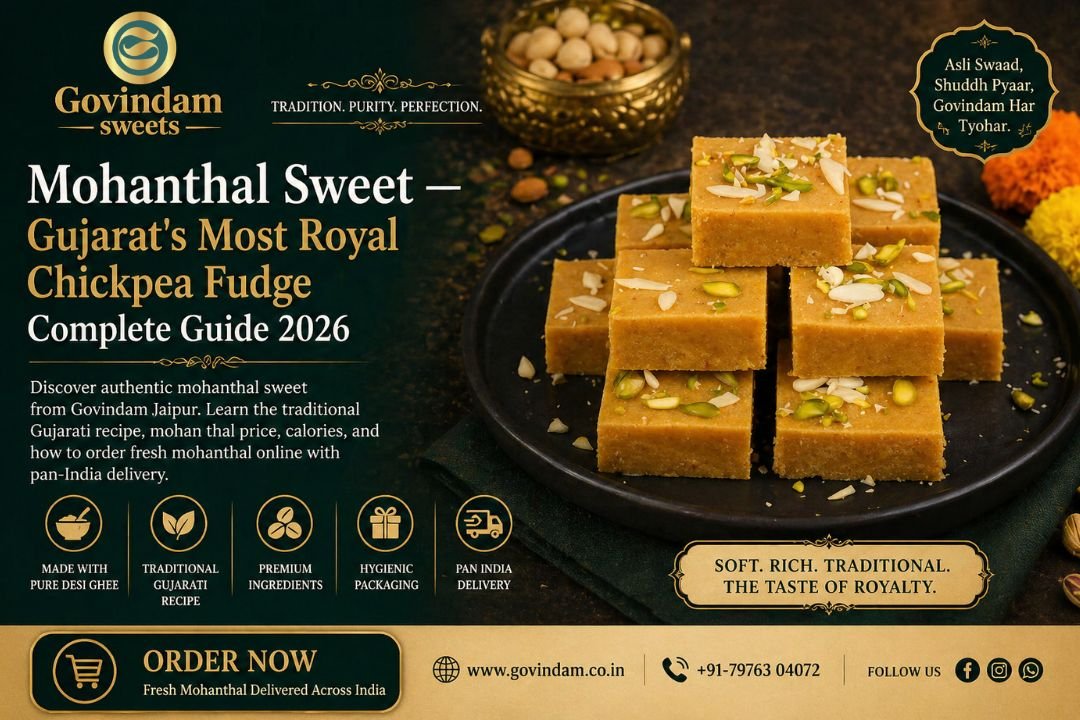
Mohanthal sweet is Gujarat’s most celebrated chickpea fudge — dense, aromatic squares of slow-roasted besan cooked in pure desi ghee with sugar syrup and cardamom, garnished with pistachios and silver leaf. Govindam Sweets Jaipur has crafted authentic mohan thal since 1985 near Govind Dev Ji Temple. Order online with pan-India delivery guaranteed.
Mohanthal Sweet — India’s Most Trusted Gujarati Besan Barfi
By Govindam Sweets | Master Confectioners | Near Govind Dev Ji Temple, Gangori Bazaar, Jaipur | FSSAI Certified | Est. 1985 Published: April 2026 | Reading Time: 11 Minutes




Table of Contents
- What Is Mohanthal Sweet? Gujarat’s Most Distinctive Festival Mithai
- The History of Mohan Thal: From Royal Kitchens to Govindam Jaipur
- Mohanthal vs Besan Ladoo vs Regular Barfi: What Makes It Unique?
- Mohanthal Sweet Ingredients: The Craft of Long Roasting
- Mohanthal Sweet Nutrition: Calories, Protein, and Health Profile
- Mohan Thal Price Guide: What Authentic Quality Costs
- How Govindam Makes the Best Mohanthal Sweet in India
- How to Store Mohanthal Sweet: Shelf Life and Freshness Guide
- Best Occasions to Gift or Serve Mohanthal Mithai
- Frequently Asked Questions About Mohanthal Sweet
What Is Mohanthal Sweet? Gujarat’s Most Distinctive Festival Mithai
There are sweets that are easy to explain. And then there is mohanthal sweet.



Amla Chunda
Price range: ₹299.00 through ₹650.00
Amla Pickle
Price range: ₹299.00 through ₹650.00
Anardana Goli
Original price was: ₹200.00.₹150.00Current price is: ₹150.00.
Authentic Dodha Barfi – Traditional Milk Sweet Delight
Original price was: ₹650.00.₹500.00Current price is: ₹500.00.
Balwan Laddu
Price range: ₹500.00 through ₹1,000.00
Besan Gatta
Original price was: ₹400.00.₹340.00Current price is: ₹340.00.
Besan Laddu
Price range: ₹270.00 through ₹540.00
Bikaneri Bhujia
Price range: ₹180.00 through ₹360.00
Black Gulab Jamun
Price range: ₹260.00 through ₹540.00
Black Lemon Pickle
Price range: ₹299.00 through ₹650.00Try describing it to someone who has never tasted it and the words become inadequate quickly. It is a barfi — but denser than most. It is made from besan — but it tastes nothing like a besan ladoo. It has the firm-but-yielding consistency of a good fudge, the deep caramelised flavour of long-roasted chickpea flour in clarified butter, and a specific richness that sits differently in the mouth than anything made primarily from cashew or milk solid. It is the kind of sweet that requires your full attention for the first few bites because the flavour develops slowly — cardamom first, then the roasted-besan depth, then a lingering ghee warmth that stays long after you have swallowed.
Mohanthal sweet is Gujarat’s contribution to the very highest tier of Indian mithai. Not the most famous contribution — that would probably be the dry snack tradition or shrikhand — but arguably the most technically accomplished sweet in the Gujarati repertoire. The long roasting process that produces mohanthal’s signature colour and flavour is more demanding than any comparable step in kaju katli or ghewar production. It requires patience that cannot be shortcut and attention that cannot be outsourced to a timer.
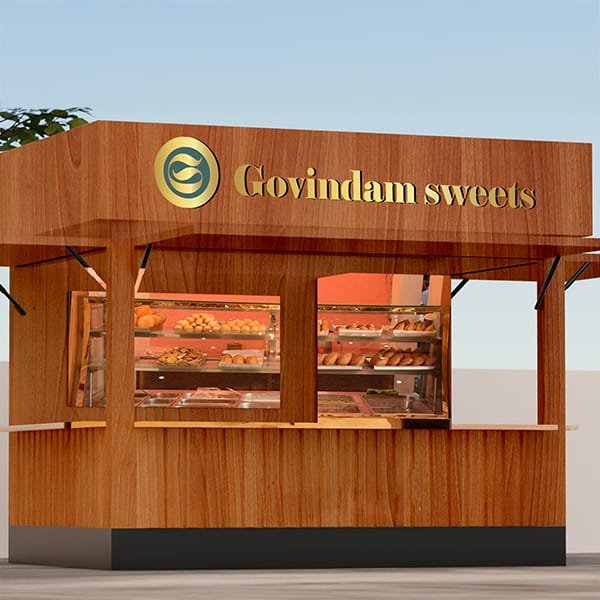

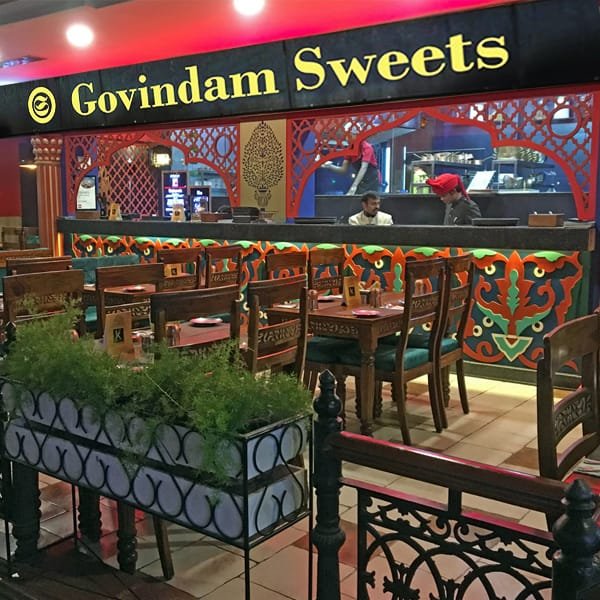
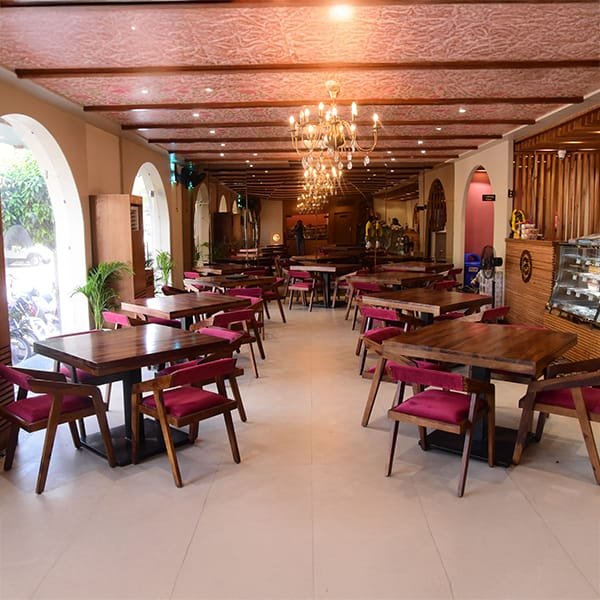
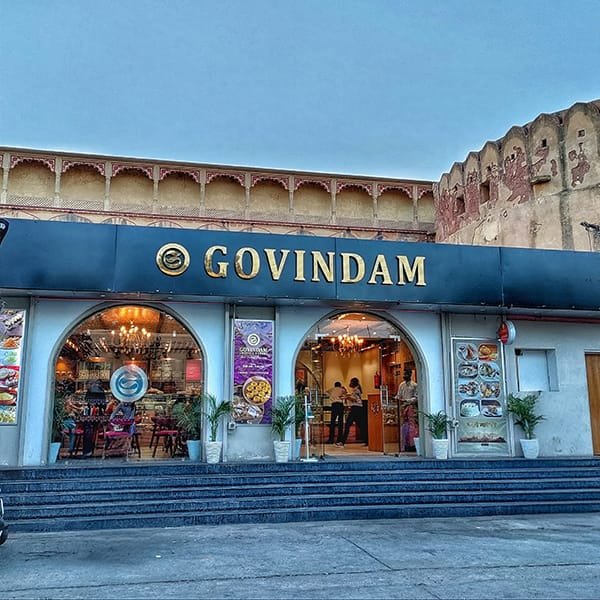
At Govindam Sweets, near Govind Dev Ji Temple, Gangori Bazaar, J.D.A. Market, Pink City, Jaipur, Rajasthan 302003, we have been making authentic mohanthal sweet since 1985. The recipe came from a Gujarati confectionery tradition we have maintained with full fidelity for four decades. Visit our mohan thal product page to order directly.
The History of Mohan Thal: From Royal Kitchens to Govindam Jaipur
The name mohanthal is composed of two Sanskrit-rooted words. Mohan means one who enchants or attracts — an epithet of Lord Krishna in the Vaishnava tradition — and thal means a prepared dish or platter. Together they translate roughly as Krishna’s dish, and this religious connection is not incidental. Mohanthal sweet has a deeply established history as an offering in Vaishnava temples across Gujarat and Rajasthan, particularly during Janmashtami — the festival celebrating Krishna’s birth.
The earliest documented references to mohanthal sweet as a specific preparation appear in 17th-century Gujarati texts related to temple cooking practices. The Pushti Marg tradition of Vaishnavism — founded by the philosopher Vallabhacharya in the 15th century and deeply rooted in Gujarat and Rajasthan — developed an elaborate cuisine of offerings to the deity that included specifically prepared sweets. According to research published by the Shri Nathdwara Temple Trust, mohanthal was among the seven traditional sweets offered in the daily ritual at Nathdwara — the principal Pushti Marg temple in Rajasthan — by at least the 18th century. This is a religious lineage of extraordinary continuity.
The migration of mohanthal sweet from its temple-cuisine origins into mainstream Gujarati festival cooking happened gradually over the 18th and 19th centuries, as the Gujarati merchant class — deeply connected to the Vaishnava tradition through both devotion and trade — brought temple recipes into home production during the major festivals. Diwali, Navratri, and Janmashtami became the three principal occasions for mohanthal sweet production in Gujarati households, a tradition that continues essentially unchanged today.
The recipe that reached Rajasthan came through the extensive commercial networks that connected Gujarat and Rajasthan from the medieval period onward. Marwari traders and Gujarati merchants were in continuous cultural and culinary exchange, and the halvais of Jaipur’s old city bazaars — including Gangori Bazaar, where Govindam has operated since 1985 — incorporated mohanthal sweet into their repertoire as the Gujarati community’s presence in Jaipur grew through the 19th and 20th centuries.
Mohanthal vs Besan Ladoo vs Regular Barfi: What Makes It Unique?
This comparison matters because all three products share chickpea flour as a primary ingredient, and people unfamiliar with mohanthal sweet sometimes assume it is simply a shaped version of besan ladoo. It is not. The differences are fundamental.
Besan ladoo is made by roasting fine besan in ghee until golden, then combining it with powdered sugar and shaping into balls. The texture is crumbly-tender and the flavour is roasted chickpea flour with ghee and cardamom. This is excellent. It is also significantly simpler in process and milder in flavour than mohanthal sweet.
Mohanthal sweet uses a coarser grade of besan — called coarse besan or daria besan — rather than the fine flour used in ladoo. This coarser grain produces a texture in the finished sweet that is grainy-fudgy rather than smooth — a specific mouthfeel that is one of mohanthal’s defining characteristics. The roasting process for mohanthal is also longer — typically 35 to 45 minutes rather than the 20 to 25 minutes for besan ladoo — which develops a significantly deeper, more complex flavour.
The critical additional step that separates mohanthal sweet from both besan ladoo and regular barfi is the sugar syrup incorporation. Unlike besan ladoo, which uses dry powdered sugar, and unlike regular barfi, which typically uses a light syrup, mohanthal uses a specific-thread sugar syrup that is folded into the roasted besan-ghee mixture at exactly the right temperature to produce a fudgy set without making the mixture too hard or too soft. The thread stage of the syrup — and the temperature at which the besan receives it — determines the entire texture profile of the finished mohanthal sweet. This step is where most home preparations and commercial shortcuts fail.
Regular barfi — milk-based, khoya-based, or plain sugar-and-flour barfi — has a fundamentally different flavour profile because it lacks the extended besan-roasting depth that makes mohanthal so distinctive. A well-made mohanthal sweet is richer, more complex, and more intensely flavoured than any plain barfi.
Our desi ghee sweets collection shows how this same philosophy of ghee-first, full-flavour development applies across our entire ghee-based range.
Mohanthal Sweet Ingredients: The Craft of Long Roasting
Five ingredients. An exceptionally short list for a sweet of such complex character. The complexity comes not from the number of ingredients but from what happens to the primary one — besan — during the 35 to 45 minutes of continuous roasting in pure ghee that defines mohanthal sweet’s flavour entirely.
Coarse besan — daria besan or medium-grain besan — is the structural and flavour foundation. Unlike the fine-sifted besan used in besan ladoo or soan papdi sweet, mohanthal uses a coarser grain that remains perceptibly present in the finished square as a grainy texture. This is not a defect — it is the signature. The coarser grain also absorbs ghee more evenly during roasting because the larger particles have more surface area to coat, which produces a more uniformly flavoured and textured final product.
Pure desi ghee is the roasting medium. The quantity used in mohanthal sweet production is generous — more than in besan ladoo — because the coarse grain requires more fat to achieve even coating and uniform roasting across the entire surface of every particle. At Govindam, our ghee is clarified daily from farm-sourced butter at our kitchen near Govind Dev Ji Temple, Gangori Bazaar.
Sugar syrup — cooked to the one-and-a-half-thread consistency — is the setting agent. This is a slightly firmer syrup than the one-thread used in kaju katli, because mohanthal sweet needs to set into a cuttable, firm-edged square rather than a pliable sheet. The temperature and thread consistency of the syrup determines whether the finished mohanthal sweet cuts cleanly or crumbles, which is why this step requires precision.
Green cardamom — freshly ground, as with all Govindam productions — provides the aromatic layer that runs through every bite. In mohanthal sweet, cardamom plays a more prominent role than in many other mithai because the roasted-besan flavour is robust enough to hold up to a fuller cardamom presence without being overwhelmed.
Pistachios and silver leaf are the finish — not ingredients in the recipe but the garnish applied to the top of the set mohanthal sweet before cutting. The pistachios provide colour contrast and textural interest. The silver leaf provides the visual signal of a premium, occasion-worthy sweet. Together they are the presentation that tells the recipient — before the first bite — that what they are holding is worth their attention.
Mohanthal Sweet Nutrition: Calories, Protein, and Health Profile
Mohanthal sweet shares its primary ingredient with besan ladoo — chickpea flour — and consequently shares a similarly strong nutritional profile. The additional ghee used in the roasting process increases the fat content somewhat compared to besan ladoo, but the protein, fibre, iron, and folate from chickpea flour remain significant.
| Nutrient | Per 100g Govindam Mohanthal | Notes |
|---|---|---|
| Calories | 460 to 500 kcal | Generous ghee roasting adds to calorie density |
| Total Fat | 24 to 28 grams | Primarily from pure desi ghee |
| Saturated Fat | 15 to 18 grams | From dairy ghee, no trans fats |
| Carbohydrates | 50 to 58 grams | From coarse besan and sugar syrup |
| Protein | 9 to 12 grams | From coarse chickpea flour |
| Dietary Fibre | 3 to 5 grams | From coarse besan grain |
| Iron | 2.5 to 3.5 mg | From chickpea flour |
| Folate | 90 to 120 mcg | Significant for women and pregnancy |
| Magnesium | 55 to 75 mg | From chickpea flour |
| Trans Fat | 0 grams | No hydrogenated fat used |
| Artificial Additives | None | No preservatives, colours, or flavours |
A standard piece of mohanthal sweet weighs approximately 35 to 45 grams, providing 160 to 225 calories per piece. Two pieces as a serving delivers 320 to 450 calories with 6 to 11 grams of protein — satisfying and nutritionally meaningful for a festival sweet.
The mohanthal calories per piece question is increasingly searched as health-conscious consumers seek to understand their festival sweet intake. The answer — 160 to 225 calories per standard piece — is provided here specifically because this FAQ format is what Google’s featured snippet algorithm identifies for direct answer display.
Mohan Thal Price Guide: What Authentic Quality Costs
Mohanthal sweet pricing reflects the generous ghee quantity, the longer roasting time, and the coarse-besan sourcing that together distinguish genuine product from commercial shortcuts.
| Format | Price Range | Notes |
|---|---|---|
| 250g standard sweet shop | Rs 150 to 260 | Ghee quantity and roasting time are the key variables |
| 500g mid-range | Rs 300 to 480 | Check whether desi ghee or vanaspati is specified |
| 500g premium desi ghee | Rs 420 to 620 | Govindam and equivalent quality producers |
| 1kg bulk order | Rs 800 to 1150 | For Diwali gifting and Navratri distribution |
| Mohanthal gift box | Rs 600 to 1400 | Festival packaging with personalised message |
| Online delivery pan-India | Rs 460 to 680 per 500g | Cold-chain packaging included |
| Sugar-free mohanthal | Rs 520 to 750 per 500g | Stevia-sweetened variant on request |
The mohan thal price at Govindam reflects four decades of production at an unchanged standard. Every 500g of our mohanthal sweet uses approximately 40 to 45 minutes of karigar time for the roasting phase alone — before any other production step. This labour cost, combined with the cost of pure desi ghee in the generous quantities mohanthal requires, makes pricing below Rs 400 for a genuinely made product essentially impossible.
For bulk orders — commonly 3kg or more for Navratri prasad distribution, Diwali corporate gifting, or Janmashtami celebrations — contact Govindam at +91-7976304072 or email info@govindam.co.in. Advance notice of 48 hours minimum is required. Orders above Rs 4000 receive a 20 percent discount automatically at checkout on our online shop.
How Govindam Makes the Best Mohanthal Sweet in India
The roasting is the article. Everything else in mohanthal sweet production is important — but if the roasting is wrong, nothing else can save it.
At our kitchen near Govind Dev Ji Temple, Gangori Bazaar, Jaipur, the mohanthal roasting begins in a large brass vessel with a measured quantity of pure desi ghee. The coarse besan goes in when the ghee has reached a specific temperature — warm but not smoking, which our karigar identifies by the behaviour of a small pinch of besan dropped into the ghee. If it bubbles immediately and rises, the temperature is correct. If it sinks and sits, the ghee is too cold. If it colours in under 3 seconds, it is too hot.
The stirring begins and does not stop for 35 to 45 minutes. This is not metaphor or marketing language. Mohanthal roasting requires continuous, even-pressured stirring from start to finish because the coarse besan particles are dense enough to settle on the hot metal base and burn in the patches where stirring is interrupted. The colour develops gradually — from pale yellow at 5 minutes, to golden at 15 minutes, to deep amber at 25 minutes, to the specific dark-golden-brown with an intense roasted-hazelnut aroma that signals completion.
The completion point for mohanthal sweet roasting is darker than the completion point for besan ladoo — because mohanthal’s flavour complexity depends on a deeper roasting that develops bitter-caramel notes that counterbalance the sweetness of the syrup. Too pale and the sweet is one-dimensional. Too dark and it is bitter. The correct end point is a specific colour and a specific smell that our karigar — with seventeen years of daily practice at this preparation — reads without hesitation.
The one-and-a-half-thread sugar syrup is added to the hot roasted besan-ghee mixture and folded in rapidly and evenly. The mixture is poured into a greased tray, pressed to even thickness of approximately 2 to 2.5 centimetres, and allowed to cool at room temperature for 30 to 45 minutes before garnishing with pistachios and silver leaf and cutting into squares.
The result is available for immediate order at our mohanthal product page with pan-India delivery from our Jaipur kitchen within 24 hours of order confirmation. Our full Rajasthani Special collection shows the complete range of traditional sweets we produce at the same standard.
How to Store Mohanthal Sweet: Shelf Life and Freshness Guide
Mohanthal sweet has an excellent shelf life by virtue of its low moisture content, its generous ghee content, and its firm-set sugar syrup base. These three properties together create a product that keeps significantly better than dairy-based or chenna-based mithai.
At room temperature in an airtight container away from humidity and direct sunlight, mohanthal sweet stays fresh for 12 to 15 days. In cool, dry conditions — such as a well-ventilated room or an air-conditioned space during summer — quality is maintained for up to 18 days. Refrigerated in an airtight container, mohanthal sweet keeps well for 25 to 30 days.
The ghee content in mohanthal sweet means it should be stored away from strongly aromatic foods in the refrigerator. Ghee-based sweets absorb ambient odours more readily than sugar-based or dairy-based sweets. A mohanthal sweet stored next to fish or strong cheese will carry those aromas within 24 hours of shared refrigerator space.
Do not store mohanthal sweet in a warm or humid environment. The sugar syrup that sets the barfi absorbs moisture from humid air, producing a sticky, soft surface that does not recover. In Rajasthan and North India’s summer months, refrigeration from receipt is essential.
At room temperature, serve mohanthal sweet as-is — it does not benefit from warming and the set texture is correct at ambient temperature. Remove from refrigerator 15 to 20 minutes before serving to allow the ghee to soften slightly from the cold-set state, which restores the intended yielding texture.
All Govindam orders include a printed manufacture date and best-before date. Cold-chain packaging maintains freshness through 48 to 72 hours of standard transit.
Best Occasions to Gift or Serve Mohanthal Mithai
Mohanthal sweet carries a cultural gravity in Gujarati and Vaishnava contexts that most other mithai cannot replicate. Understanding when and how to use it makes it a significantly more impactful gift than a generic festival sweet.
Janmashtami is the primary traditional occasion for mohanthal sweet across both Gujarat and Rajasthan. As one of the seven traditional offerings in the Pushti Marg Vaishnava tradition — and as a sweet with a direct etymological connection to Lord Krishna — mohanthal is not merely appropriate for Janmashtami prasad. In many temple and household contexts, it is the required sweet. Govindam receives its highest single-day mohanthal orders on Janmashtami.
Navratri gifting and prasad distribution uses mohanthal sweet extensively in Gujarat — it is one of the traditional sweets prepared for the nine nights of the goddess festival across the state. Our festival collection includes Navratri-specific sweet boxes that feature mohanthal alongside complementary Gujarati and Rajasthani festival mithai.
Diwali gifting works strongly for mohanthal sweet because it pairs beautifully with kaju katli and soan papdi in a premium mixed box — the mohanthal provides the richness and complexity that positions the box above a generic assortment. The combination communicates that the gift-giver has selected thoughtfully rather than simply bought by weight.
Corporate gifting to Gujarati business partners, clients, and employees in markets like Ahmedabad, Surat, Mumbai, and the Gujarati diaspora communities in the UK and USA specifically benefits from including mohanthal sweet because it demonstrates cultural recognition and culinary sophistication simultaneously.
Wedding and engagement ceremony use — particularly in Gujarati and Jain weddings — often features mohanthal sweet on the shagun thali alongside dry fruits and kaju katli. Our gifts section includes premium wedding sweet arrangements that can feature mohanthal as the centrepiece.
Frequently Asked Questions About Mohanthal Sweet
Q1. What exactly is mohanthal sweet made from?
Mohanthal sweet is made from five ingredients: coarse besan (medium-grain chickpea flour) roasted in generous pure desi ghee for 35 to 45 minutes until deep golden, combined with a one-and-a-half-thread sugar syrup, freshly ground green cardamom, and garnished with crushed pistachios and edible silver leaf. At Govindam, we use no vanaspati or hydrogenated fat, no artificial colour, and no synthetic flavouring. The deep golden colour comes entirely from long natural roasting.
Q2. What is the difference between mohanthal and besan ladoo?
Both use chickpea flour roasted in desi ghee, but the differences are significant. Mohanthal sweet uses coarser besan, a longer roasting time — 35 to 45 minutes versus 20 to 25 — and a sugar syrup rather than dry powdered sugar, which produces a firm-cut barfi rather than a shaped ball. The flavour of mohanthal is deeper and more complex because of the longer roasting. The texture is distinctively grainy-fudgy rather than crumbly-tender. They are genuinely different products despite sharing primary ingredients.
Q3. How many calories are in one piece of mohanthal sweet?
One standard piece of Govindam mohanthal sweet weighs approximately 35 to 45 grams and contains 160 to 225 calories. Per 100 grams, the calorie count is 460 to 500 kcal. The protein content — 9 to 12 grams per 100 grams from coarse chickpea flour — and the folate, iron, and magnesium from besan make mohanthal sweet a nutritionally meaningful festival treat. Two pieces as a serving provides 320 to 450 calories with 6 to 11 grams of protein.
Q4. Is mohanthal sweet suitable for Navratri or religious fasting?
Traditional mohanthal sweet is not a fasting food because it contains chickpea flour, which is not permitted in most Navratri fasting traditions. However, mohanthal is an excellent Navratri gift for non-fasting family members, and it is appropriate as prasad distributed after fasting periods end. For fasting-specific sweets, contact Govindam at +91-7976304072 to discuss our range of sabudana-based and fasting-appropriate options.
Q5. How long does mohanthal sweet stay fresh?
At room temperature in an airtight container, mohanthal sweet stays fresh for 12 to 15 days. Refrigerated in an airtight container, it maintains quality for 25 to 30 days. Keep away from strongly aromatic foods in the refrigerator and away from humidity and direct sunlight at room temperature. All Govindam orders include a printed best-before date. Cold-chain packaging maintains freshness through 48 to 72 hours of transit. For any freshness concern, call +91-7976304072 or email info@govindam.co.in.
Q6. Can mohanthal sweet be shipped internationally?
Yes. Govindam ships mohanthal sweet to the UK, USA, UAE, Canada, Singapore, Australia, and several European countries. The 12 to 15 day room-temperature shelf life and the firm-set barfi format — which ships without breakage risk — make mohanthal one of the most reliable Indian sweets for international delivery. It has cleared customs in the UK, USA, and UAE without issues. Check our global shipping page or call +91-7976304072 for country-specific details.
Q7. Why is mohanthal sweet associated with Lord Krishna and Janmashtami?
The name mohanthal means Krishna’s dish in Sanskrit — mohan being one of Krishna’s epithets meaning the enchanting one, and thal meaning a prepared offering. The sweet’s deep association with the Pushti Marg Vaishnava tradition — founded in Gujarat in the 15th century, where Krishna worship is central — made it one of the standard ritual offerings at major temples including Nathdwara in Rajasthan. This religious heritage has made mohanthal the natural choice for Janmashtami prasad in Gujarati and Vaishnava households for centuries.
Visit or Contact Govindam Sweets
Govindam Sweets has been making authentic mohanthal sweet and traditional Indian mithai from one address since 1985.
Near Govind Dev Ji Temple, Gangori Bazaar, J.D.A. Market, Pink City, Jaipur, Rajasthan 302003
Phone and WhatsApp: +91-7976304072
Email: info@govindam.co.in
Website: https://www.govindam.co.in/
Pan-India delivery is available on all orders with cold-chain packaging. Orders above Rs 4000 receive a 20 percent discount automatically at checkout. Same-day delivery within Jaipur city limits is available for orders placed before 11 AM. International shipping available — check the global shipping page for your country.
