
Posts
Kalakand Sweet: Premium Authentic Mithai Guide 2026

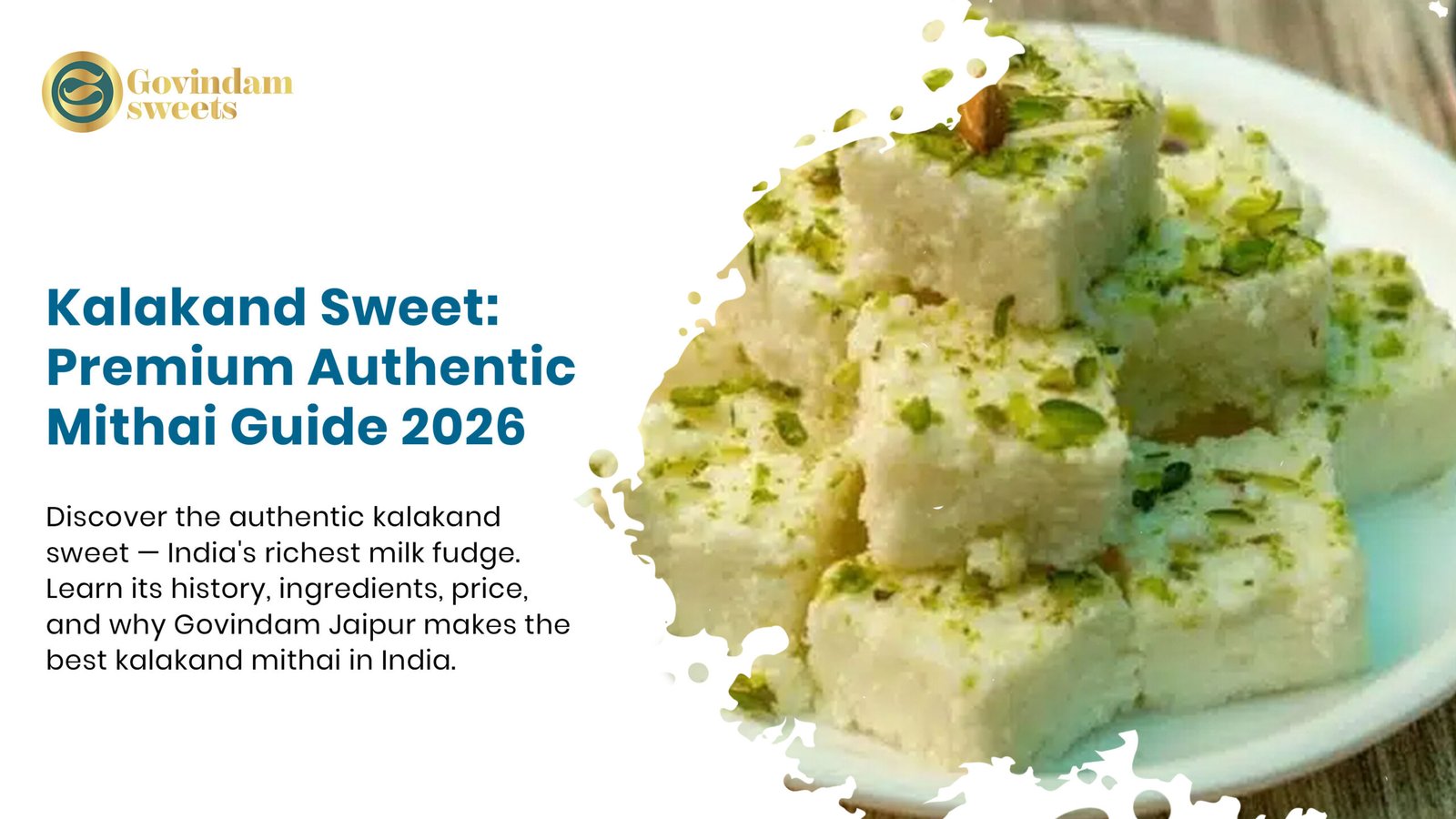
Kalakand sweet is India’s most beloved milk fudge — a dense, grainy, cardamom-laced confection made by slowly cooking full-fat milk and fresh paneer for hours. Govindam Sweets Jaipur crafts authentic kalakand using farm-fresh milk, pure desi ghee, and time-honoured recipes.
Kalakand Sweet — India’s Most Trusted Milk Mithai
By Govindam Sweets | Master Confectioners, Jaipur, Rajasthan | FSSAI Certified | Est. 1985 Published: April 2026 | Updated: April 2026 | Reading Time: 11 Minutes

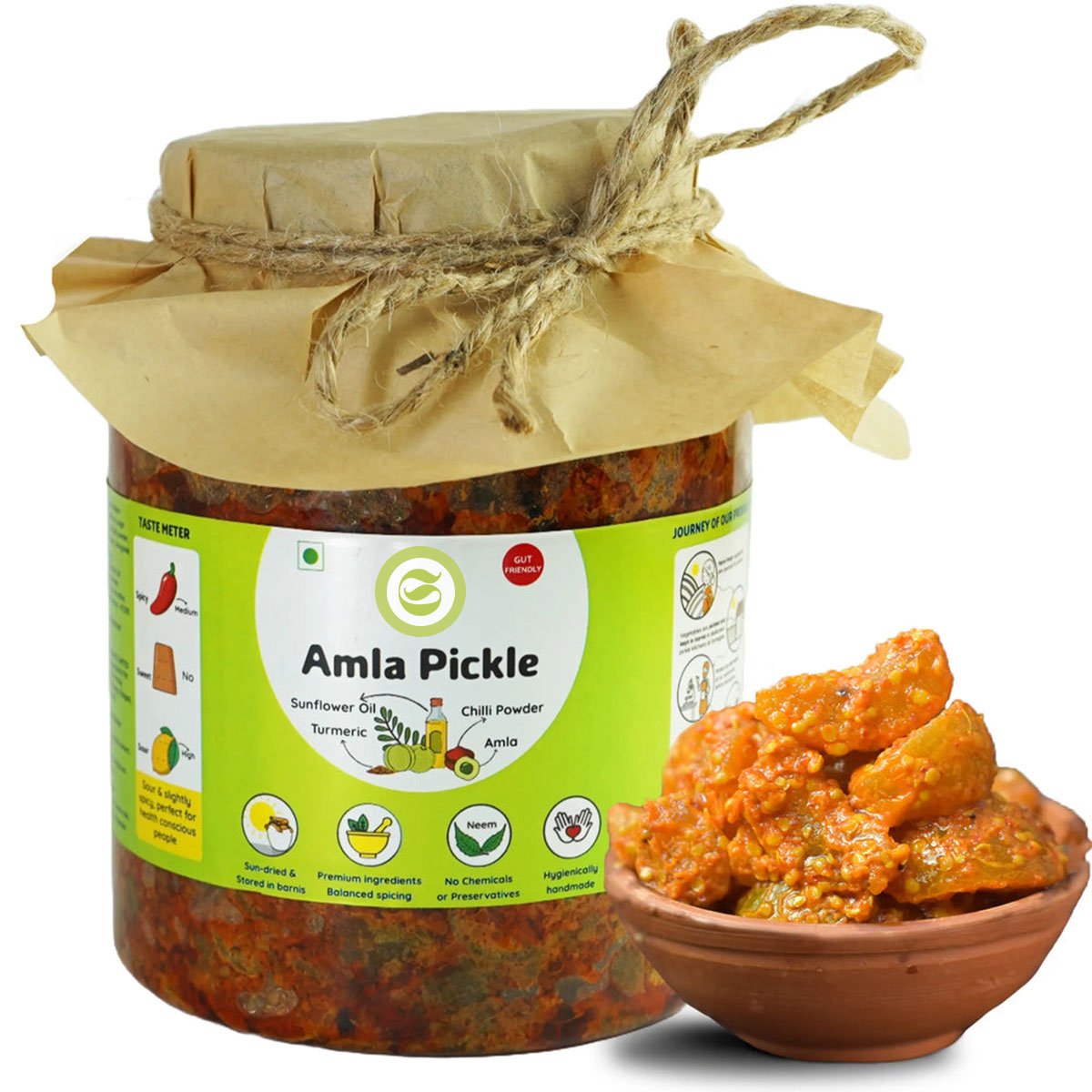
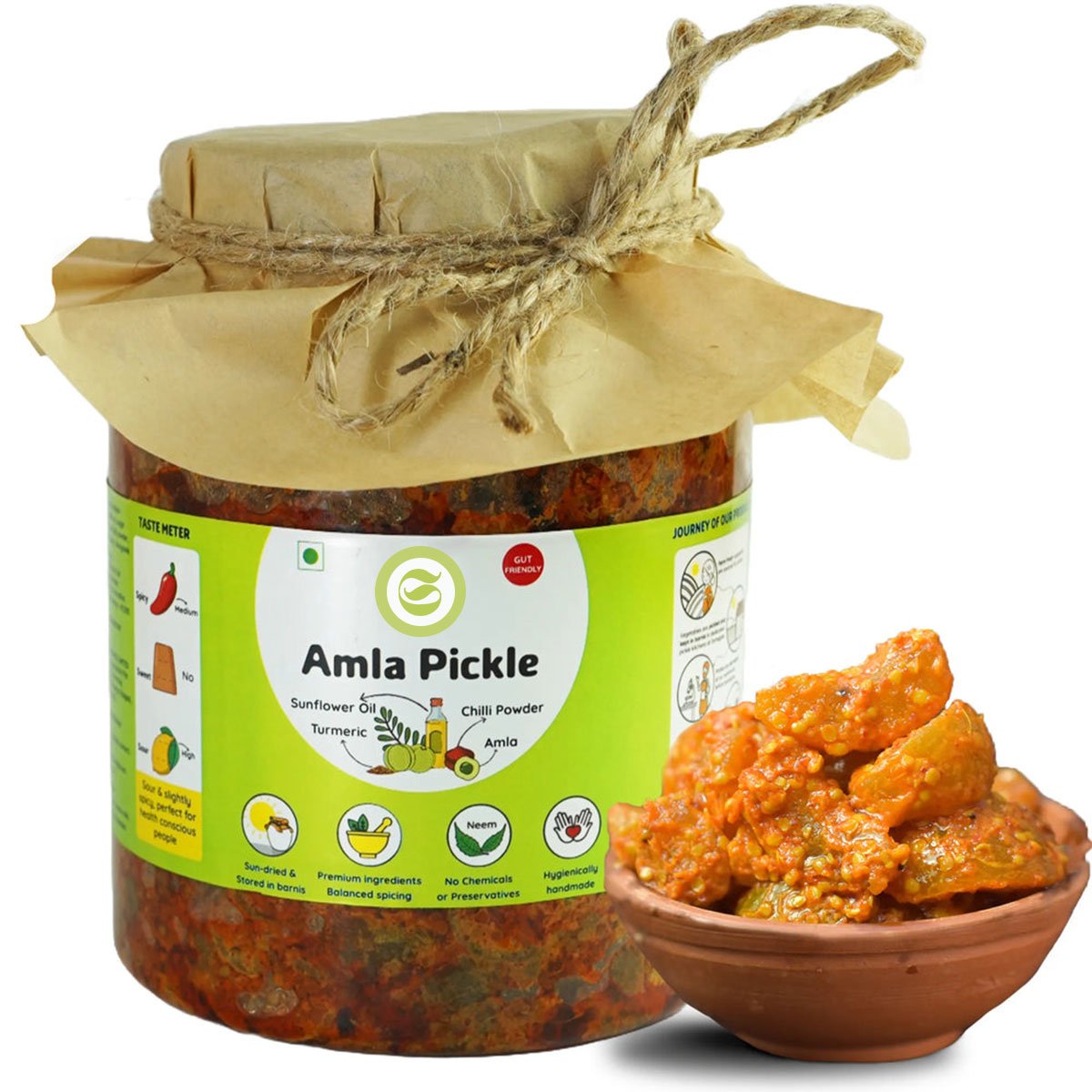
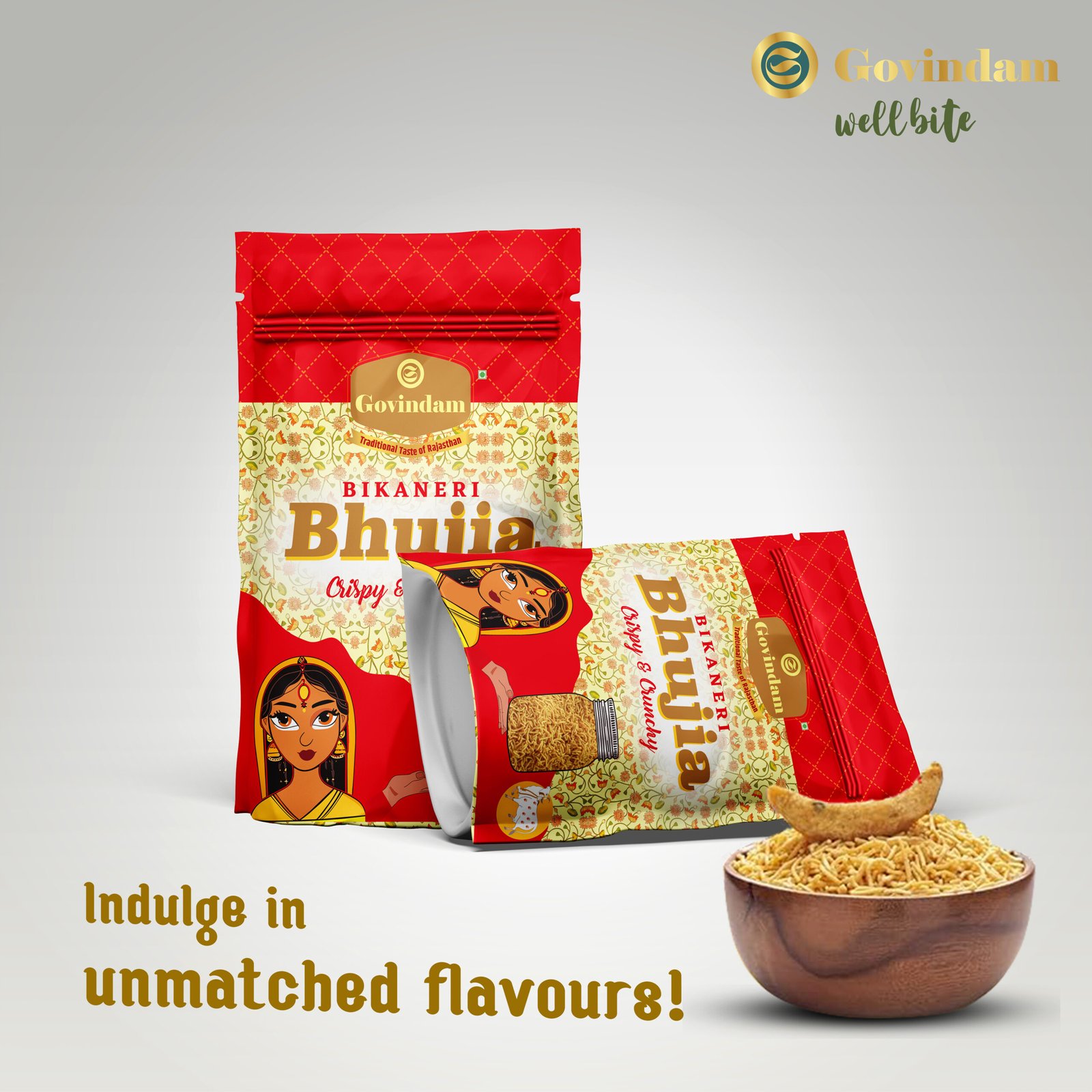
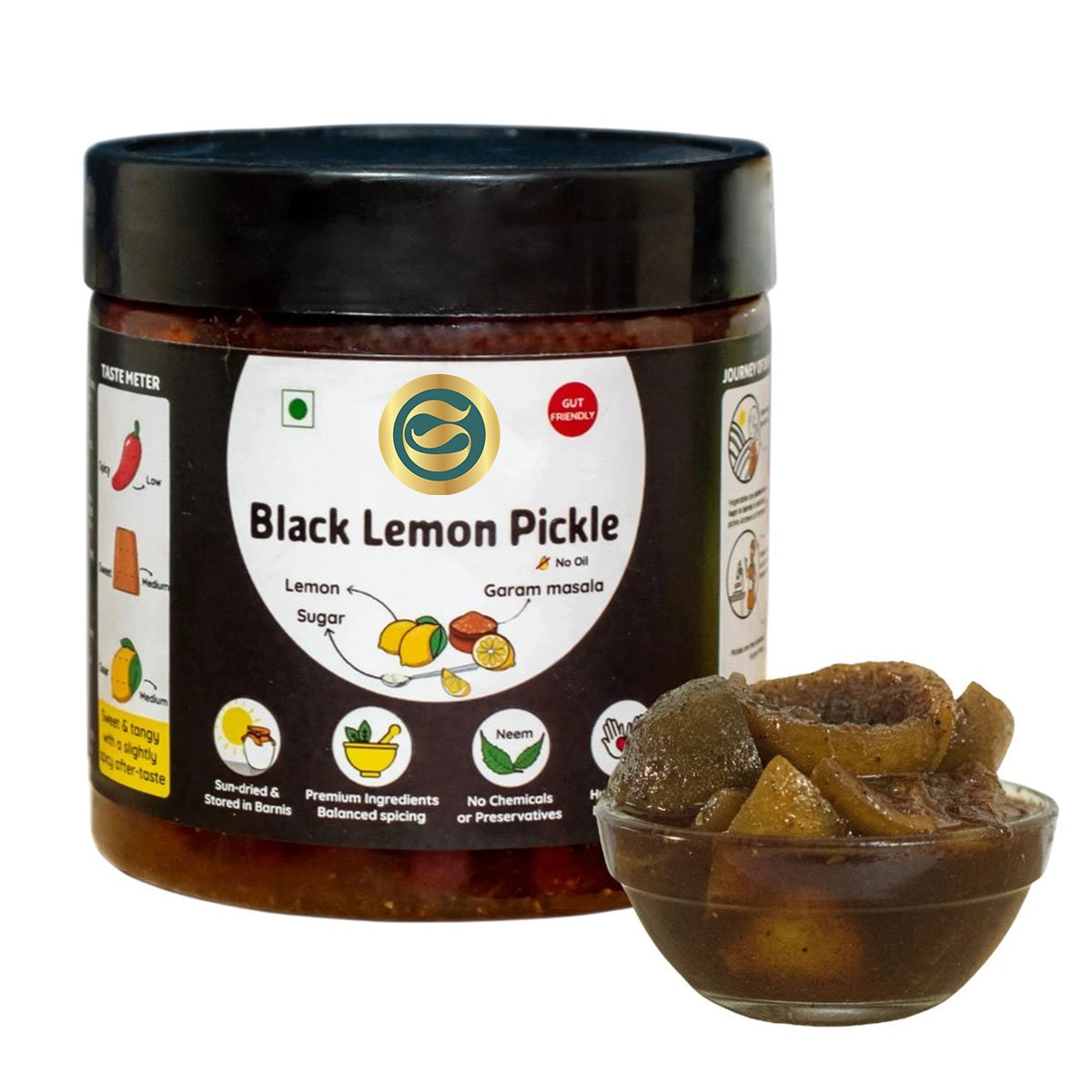



Table of Contents
- What Is Kalakand Sweet? The Story Behind India’s Favourite Milk Fudge
- The History and Origin of Kalakand Mithai
- What Makes Authentic Kalakand Different from Regular Barfi?
- Kalakand Sweet Ingredients: What Goes Inside Every Piece
- Kalakand Nutrition: Calories, Protein, and Health Value
- Kalakand Sweet Price Guide: What to Expect Online and Offline
- How Govindam Jaipur Makes the Best Kalakand in India
- How to Store Kalakand Sweet: Shelf Life and Freshness Tips
- Best Occasions to Gift or Serve Kalakand Mithai
- Frequently Asked Questions About Kalakand Sweet
What Is Kalakand Sweet? The Story Behind India’s Favourite Milk Fudge
There is a moment every Indian knows. A silver-wrapped box appears on the table. Someone lifts the lid. The room smells of cardamom and warm milk. And before anyone says a word, everyone already knows — this is a good day.
That box, more often than not, holds kalakand sweet.



Amla Chunda
Price range: ₹299.00 through ₹650.00
Amla Pickle
Price range: ₹299.00 through ₹650.00
Anardana Goli
Original price was: ₹200.00.₹150.00Current price is: ₹150.00.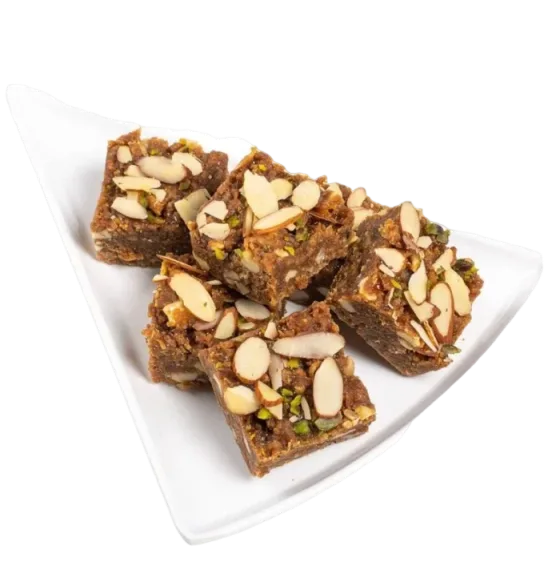
Authentic Dodha Barfi – Traditional Milk Sweet Delight
Original price was: ₹650.00.₹500.00Current price is: ₹500.00.
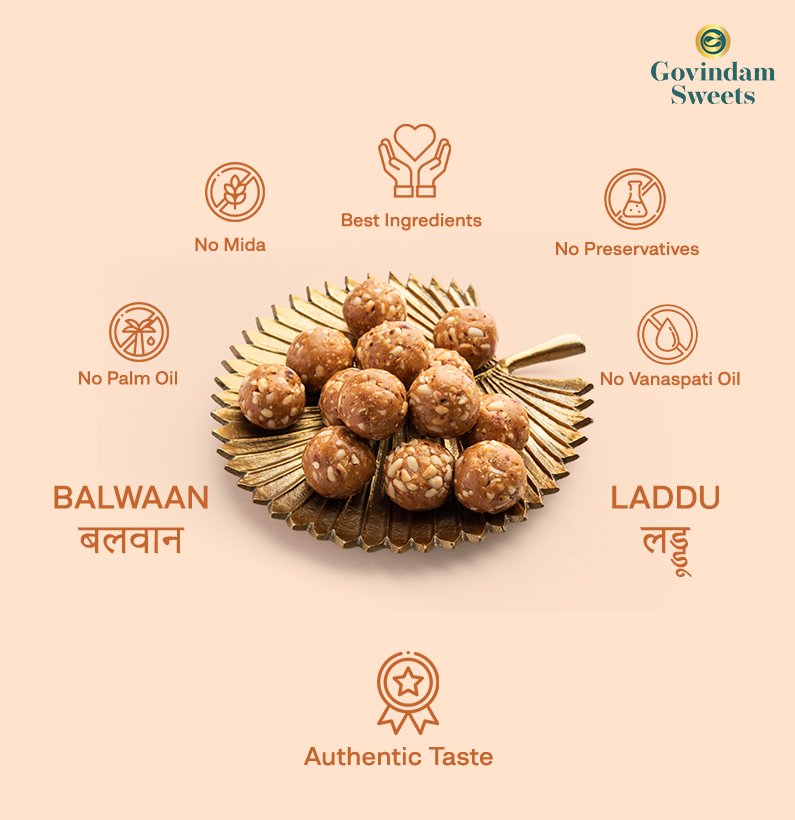
Balwan Laddu
Price range: ₹500.00 through ₹1,000.00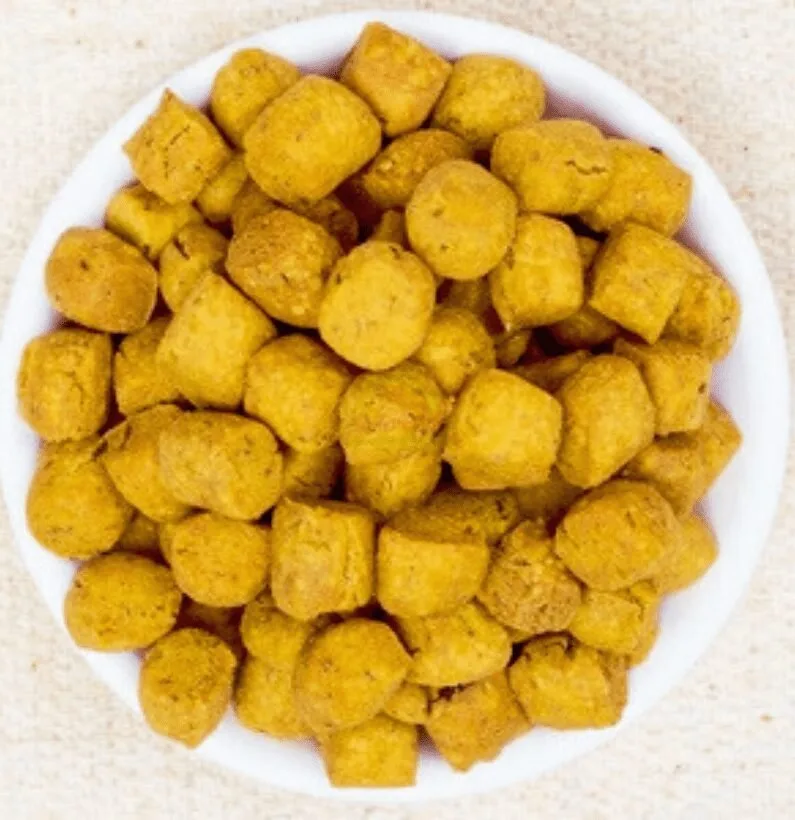
Besan Gatta
Original price was: ₹400.00.₹340.00Current price is: ₹340.00.
Besan Laddu
Price range: ₹270.00 through ₹540.00
Bikaneri Bhujia
Price range: ₹180.00 through ₹360.00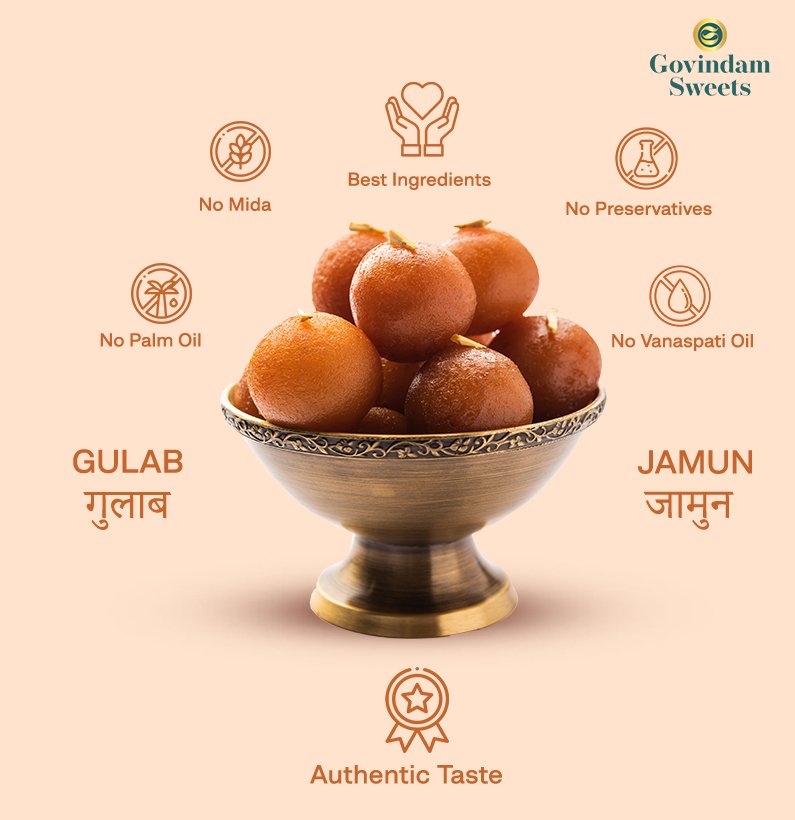
Black Gulab Jamun
Price range: ₹260.00 through ₹540.00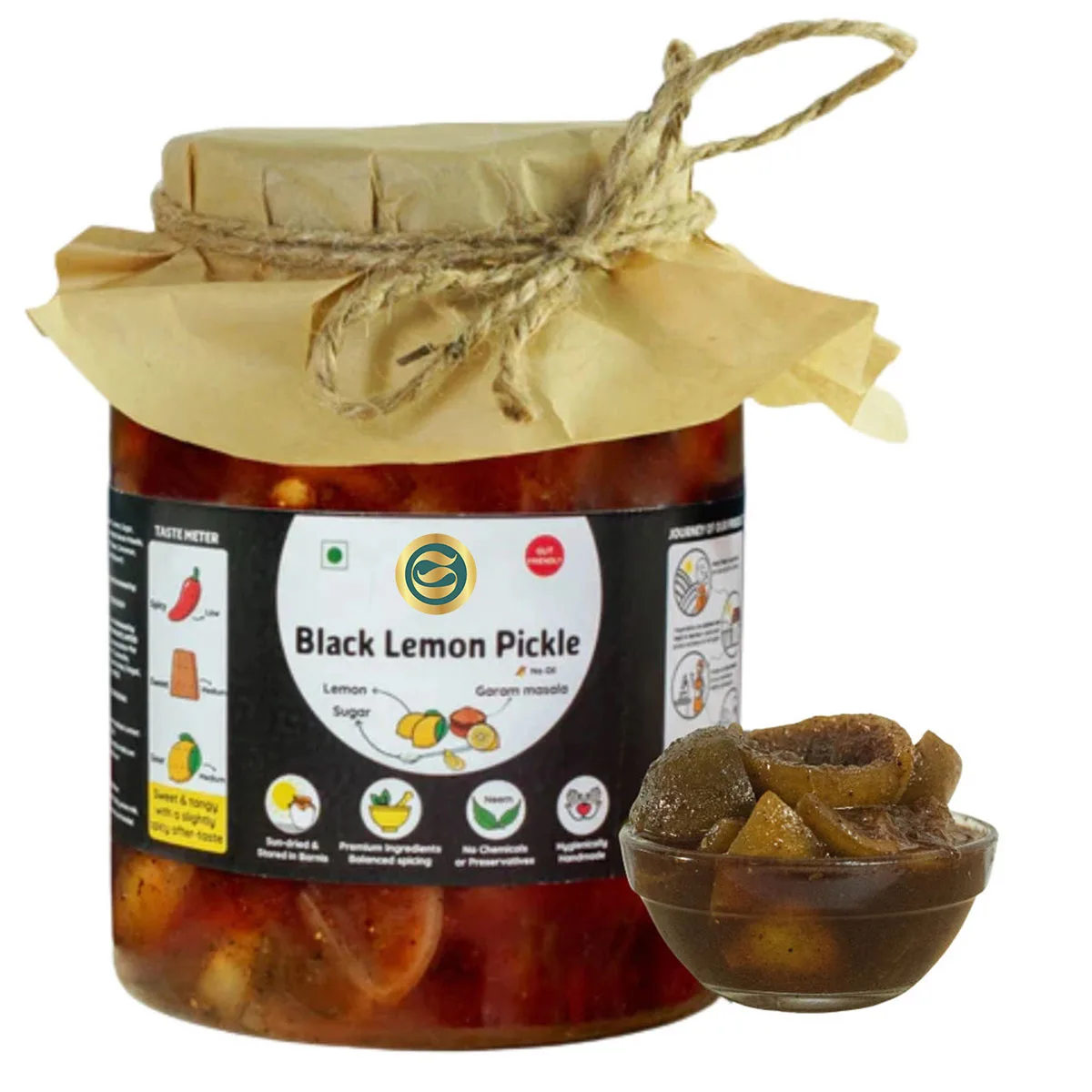
Black Lemon Pickle
Price range: ₹299.00 through ₹650.00Kalakand sweet is one of India’s most widely cherished milk-based mithai — a dense, slightly grainy, pale-ivory fudge made by reducing full-fat milk and fresh paneer together for hours over a slow flame until the mixture sets into soft, moist squares. It is not as firm as regular barfi. Not as wet as rasgulla. It sits in its own category entirely — somewhere between a set custard and a milk cake, with a richness that feels both indulgent and somehow deeply familiar.
Most Indians encounter kalakand sweet for the first time at a relative’s house during Diwali or Eid. That first bite tends to be decisive. Either you become a lifelong kalakand person — or you are wrong. The texture does not politely sit in the background. The cardamom does not whisper. This is a mithai with a personality.
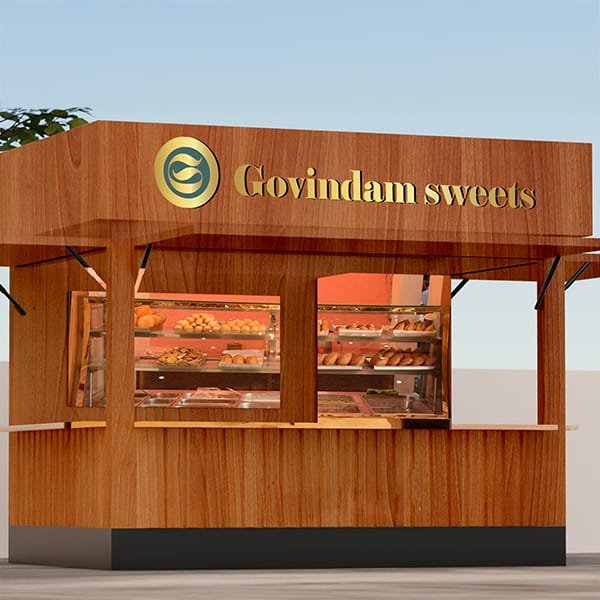

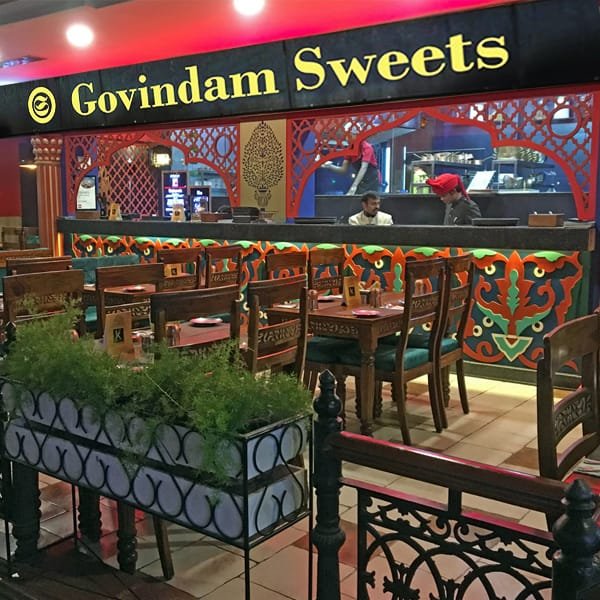
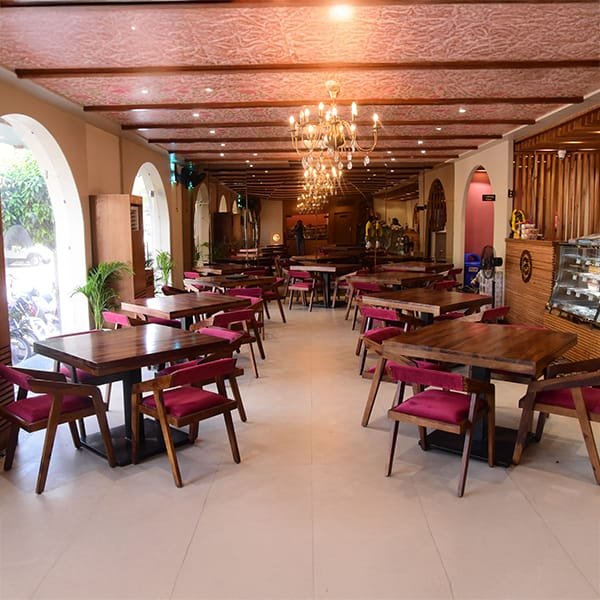
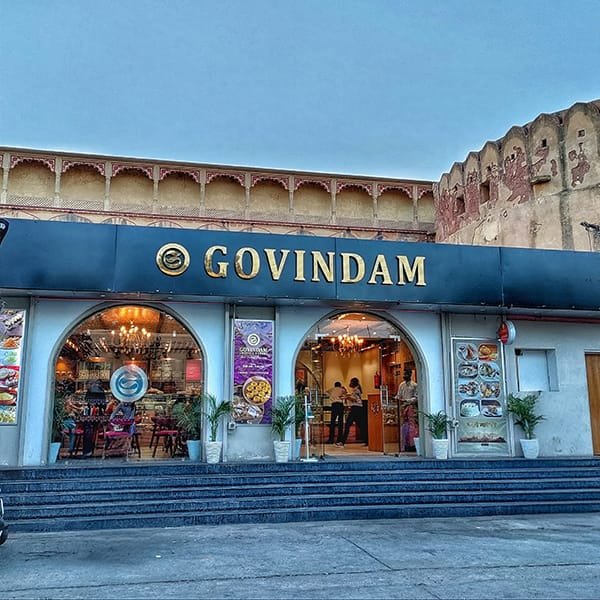
At Govindam Sweets Jaipur, we have been making authentic kalakand mithai since 1985. The recipe has not changed. The milk comes from the same cooperative dairy it has always come from. And the karigar who oversees the kalakand batch still checks the set by pressing his thumb gently into the surface — the same test his teacher used forty years ago. No instrument invented since has improved on that judgement. Browse our full sweets collection to see the range we craft with the same care.
The History and Origin of Kalakand Mithai
The origin of kalakand sweet is traced with remarkable confidence to the town of Alwar in Rajasthan — specifically to a halwai named Baba Thakur Das, who is credited with creating this particular form of milk-set confection in the early 1940s. The story goes that he was experimenting with the proportion of chenna to boiled milk in his existing barfi recipes, and the particular ratio he arrived at produced something that set softer, stayed moister, and had a grainy texture that none of his existing recipes could match.
The name itself comes from a mix of Hindi influences. Some food historians link kala to the darkening of the milk solids during prolonged cooking, while others suggest it derives from the Urdu word for caramelised. Either way, the name stuck. And from Alwar, kalakand spread.
By the 1960s, every major city in North India had at least one shop making its own version of kalakand mithai. Jaipur, Agra, Mathura, Varanasi, Delhi — each region adopted the recipe and adjusted it slightly to match local milk quality, local sugar preferences, and local festive traditions. The Rajasthani version tends to be slightly denser and more cardamom-forward. The UP variant is sometimes set with a little saffron. The Punjab version can run slightly sweeter. But all of them trace their lineage back to that original Alwar experiment.
According to the Food Safety and Standards Authority of India (FSSAI), milk-based confectionery including kalakand sweet must meet specific minimum milk solid content standards — a regulation designed to protect consumers from adulterated products made with vegetable fat substitutes or skimmed milk powder instead of full-fat fresh milk. Genuine kalakand cannot be rushed and cannot be faked. It is either made right or it does not taste right. There is no middle ground.
What Makes Authentic Kalakand Different from Regular Barfi?
This is the question people do not know they need to ask until they have eaten bad kalakand once. Then they understand immediately.
Regular milk barfi is made by cooking khoya — pre-reduced milk solids — with sugar. Khoya is a starting material. Authentic kalakand sweet, by contrast, is made by cooking full-fat fresh milk and fresh acid-set chenna together from scratch. This means the reduction happens in the same vessel, at the same time, creating a unified texture that khoya-based barfi can never replicate.
The difference shows up in four specific ways:
Texture. Authentic kalakand has a slightly granular, pull-apart texture. Each square gives a little resistance and then yields cleanly. Khoya-based imitations tend to be either too smooth (rubbery) or too dry (crumbly), but they never have that distinctive grain.
Moisture. A proper kalakand mithai piece should feel slightly damp to the touch — not wet, not oily, but alive with the natural moisture of reduced fresh milk. If it feels dry and powdery, the milk was over-reduced or powder was used.
Smell. Fresh-milk kalakand smells of warm dairy with a clean cardamom note. If the smell is flat or vaguely synthetic, the milk base was not fresh.
Colour. Genuine kalakand is off-white to pale ivory, never brilliant white. The natural caramelisation of milk sugars during long cooking creates a cream tone. Bright white kalakand has almost certainly been made with artificially whitened ingredients.
At Govindam, we use only full-fat milk reduced fresh daily. Our mawa sweets collection and desi ghee sweets range follow the same standard — no shortcuts, no substitutions.
Kalakand Sweet Ingredients: What Goes Inside Every Piece
The ingredient list for a genuine kalakand sweet is among the shortest in all of Indian confectionery. Five ingredients. That is all. The craft is entirely in the technique.
Full-fat fresh milk is the foundation. The higher the fat content, the richer the final set. At Govindam, we use milk with a minimum 6% fat content from Rajasthani dairy cooperatives. The milk is not homogenised — because homogenisation changes the protein structure in ways that affect how chenna forms and how the final grain develops.
Fresh chenna is the second element. Made by adding food-grade acid (citric acid or lime juice) to hot milk to cause curdling, the chenna is drained and lightly pressed before being added back to the reducing milk. The ratio of chenna to liquid milk determines the final density of the kalakand mithai — this ratio is where most imitations fail.
Pure cane sugar is added at a specific stage in the cooking process — not too early (which prevents proper reduction) and not too late (which prevents proper integration). The sugar level in kalakand is deliberately moderate — the sweetness should complement the milk flavour, not overwhelm it.
Green cardamom — freshly ground, not pre-powdered. The difference in aroma between freshly ground and pre-ground cardamom is significant enough that at Govindam, the cardamom is ground each morning for that day’s production only.
Chopped pistachios or silver leaf are the finishing garnish — optional depending on variant, but the pistachios add a colour contrast and a textural counterpoint that elevates the visual presentation of the final kalakand sweet considerably.
That is the complete list. No preservatives. No artificial colour. No vegetable fat. No milk powder. This is why shelf life for authentic kalakand is 4–5 days refrigerated — not weeks. Anything claiming shelf-stable kalakand for a month is not made from fresh milk.
Kalakand Nutrition: Calories, Protein, and Health Value
Mithai is not health food. Anyone who tells you otherwise is selling something. But kalakand sweet does have a more respectable nutritional profile than most people realise — particularly compared to deep-fried or synthetic-fat-based sweets.
| Nutrient | Per 100g (Govindam Kalakand) | Notes |
|---|---|---|
| Calories | 310–340 kcal | Lower than most barfi variants |
| Protein | 8–10g | From fresh milk and chenna |
| Fat | 14–17g | Predominantly saturated from dairy |
| Carbohydrates | 35–40g | Primarily sucrose and lactose |
| Calcium | 280–320mg | ~28–32% of daily requirement |
| Phosphorus | 180–210mg | Supports bone density |
| No trans fats | 0g | No hydrogenated fat used |
| No artificial additives | 0 | No preservatives or colours |
The protein content from fresh chenna makes kalakand mithai a more nutritionally dense sweet than many of its competitors. Calcium and phosphorus are genuine benefits — particularly relevant for growing children and older adults whose calcium absorption from other sources may be declining. Post-workout recovery is not the intended use, obviously. But as an occasional treat that also delivers meaningful micronutrients, kalakand is among the better choices in the mithai category.
It is worth noting — and this is important — that calorie values vary significantly based on serving size. A standard piece of Govindam kalakand weighs approximately 35–40g. Which means one piece is approximately 120–135 calories. Manageable. Satisfying. Worth every one.
Kalakand Sweet Price Guide: What to Expect Online and Offline
Pricing for kalakand sweet varies substantially across India based on quality of ingredients, production method, and whether the shop is selling mass-produced or fresh-made product.
| Format | Price Range | Notes |
|---|---|---|
| 250g — standard sweet shop | ₹120–200 | Quality varies widely |
| 500g — mid-range branded | ₹250–450 | Check freshness date carefully |
| 500g — premium fresh-made | ₹399–550 | Govindam and equivalent quality shops |
| 1kg — bulk order | ₹700–1,000 | For gifting or large families |
| Online delivery (pan-India) | ₹450–650 per 500g | Includes cold-chain packaging |
| Kalakand cake (festive variant) | ₹800–1,400 | Layer cake format for celebrations |
The kalakand sweet price at Govindam reflects the actual cost of using farm-fresh full-fat milk and daily production — we do not offset quality to reduce price. What we do offset is wastage: by producing to order rather than maintaining shelf inventory, we eliminate the waste margin that conventional sweet shops build into their pricing.
For bulk orders above 2kg — commonly required for weddings, corporate events, or festive gifting — contact our team for pricing. Orders above ₹4,000 receive a 20% discount automatically at checkout on Govindam’s online shop.
How Govindam Jaipur Makes the Best Kalakand in India
Let us be direct about something. Every sweet shop in India claims its kalakand is the best. Most of them are wrong. The difference between average and exceptional kalakand sweet comes down to three decisions that happen before the milk even touches the flame.
Decision one: the milk. Govindam sources full-fat milk daily from a dairy cooperative serving farms within 80km of Jaipur. The milk is collected in the early morning, chilled, and arrives at our kitchen by 5 AM. The same-morning freshness of the milk is the single biggest variable in final quality. We have tried — and rejected — ultra-processed milk, reconstituted milk, and standardised milk. None produces the same grain or aroma as same-morning raw farm milk.
Decision two: no powder. Milk powder — skimmed, full-fat, or blended — is the industry shortcut. It is cheaper, shelf-stable, and produces a consistent result. It also produces a flat, synthetic taste that anyone who has eaten genuine kalakand mithai can identify immediately. We have never used milk powder in any product. We will not.
Decision three: time. Reducing full-fat milk and fresh chenna together to the correct consistency takes between two and three hours of continuous stirring over medium heat. Industrial processes can achieve similar texture in thirty minutes using additives and modified starches. The flavour difference — the caramelised depth that comes only from long, patient cooking — is not replicable by any shortcut. Our karigars stir. For three hours. Every batch.
The result is the kalakand sweet that Jaipur residents have been buying since 1985. The same product now ships to Mumbai, Bengaluru, Delhi, London, and Dubai through our global shipping service — in cold-chain packaging that maintains freshness for the full transit duration.
How to Store Kalakand Sweet: Shelf Life and Freshness Tips
Authentic kalakand sweet made from fresh milk has a natural shelf life of 4–5 days when refrigerated. This is not a deficiency — it is proof of quality. Any product claiming to be kalakand with a 15–30 day shelf life at room temperature is either loaded with preservatives or not made from fresh milk.
Refrigerator storage: Place the kalakand in an airtight container. Keep it away from strongly aromatic foods — fresh milk solids absorb odours easily. Consume within 4–5 days of receipt.
Do not freeze: Freezing breaks the emulsion structure of the milk proteins in kalakand mithai and causes a grainy, wet texture upon thawing that bears no resemblance to the original product. We specifically advise against this. The texture simply does not survive.
Room temperature: In cool weather (under 20°C), kalakand can be kept at room temperature for up to 24 hours. In Rajasthan’s summer months — and much of India’s warm seasons — refrigeration from day one is mandatory.
Recognising spoilage: Fresh kalakand sweet smells clean and milky with cardamom. If it develops a sour edge or any off-odour, it has turned. Do not consume it. The turnaround is fast — a day past optimal is noticeable. Two days past optimal is unmistakable.
All Govindam orders include a printed manufacture date and best-before date on every package. Our cold-chain packaging is designed for 48–72 hours of transit without refrigeration — sufficient for pan-India delivery in standard conditions.
Best Occasions to Gift or Serve Kalakand Mithai
Kalakand sweet occupies a specific cultural position in Indian gifting — it is considered more refined than soan papdi or generic mix barfi, but less formal and expensive than a full kaju katli box. That middle position makes it genuinely versatile.
Diwali and festive gifting. Kalakand is among the five traditional sweets that most North Indian families include in Diwali boxes. Its visual elegance — pale ivory, neatly cut, garnished with pistachios — photographs well and presents beautifully. It pairs naturally with kaju katli and mohanthal in a premium festival assortment. Our festival collection includes curated boxes built around these classic combinations.
Eid and religious celebrations. The dairy richness of kalakand mithai makes it a natural fit for Eid sweets tables, where milky, fragrant confections are traditionally preferred. Many Muslim families across Rajasthan and UP specifically request kalakand for Eid from sweet shops they have used for generations.
Weddings and shagun. Kalakand appears on wedding sweet trays — particularly in North Indian and Rajasthani weddings — because it signals effort and quality without the ostentatiousness of an all-dry-fruit box. It tells the recipient that the giver cares about taste, not just expense.
Corporate gifting. Premium kalakand in a branded box is one of the highest-rated corporate gifting choices in our gifts section. The rationale from corporate buyers is consistent: it is universally enjoyed, vegetarian, and not something the recipient needs to feel guilty about eating.
Everyday home use. And sometimes, you just want a piece of kalakand with your morning chai. There is no occasion required. That is, in fact, the best occasion of all.
Frequently Asked Questions About Kalakand Sweet
Q1. What is the difference between kalakand and milk cake? Yes, they are related but distinct. Milk cake — sometimes called Alwar milk cake — is made entirely from reduced milk with no added chenna, giving it a slightly firmer, more caramel-coloured finish. Kalakand sweet adds fresh chenna to the reducing milk, which creates the characteristic grainy, pull-apart texture and a milder, less caramelised flavour. Both originate from Alwar, but they are two different products.
Q2. How do I know if the kalakand I am buying is authentic? Authentic kalakand sweet should be off-white to pale ivory in colour, slightly moist to touch, and have a granular texture that separates gently when pressed. It should smell clean and milky with fresh cardamom. If it is bright white, perfectly smooth, or has a long room-temperature shelf life (more than 7 days), it is almost certainly not made from fresh milk and chenna — and is likely a khoya-and-milk-powder imitation.
Q3. Can kalakand sweet be shipped across India without spoiling? Yes, absolutely — with the right cold-chain packaging. Govindam ships kalakand pan-India in insulated packaging designed to maintain the correct temperature for 48–72 hours of transit. Every order includes a freshness guarantee — if your kalakand arrives in any condition that does not meet our standard, we replace it immediately at no cost.
Q4. Is kalakand sweet suitable for diabetics? No, not in meaningful quantities. Kalakand contains significant sugar and natural milk sugars (lactose), both of which impact blood glucose levels. For customers managing diabetes, Govindam offers a sugar-free kalakand variant made with stevia — available in our health-focused sweets range. Consult your doctor before incorporating any sweet into a diabetic diet.
Q5. How many calories are in one piece of kalakand? One standard piece of Govindam kalakand weighs approximately 35–40g and contains 120–135 calories. This is relatively moderate for a traditional Indian sweet. The protein content from fresh chenna (approximately 3–4g per piece) and the calcium from dairy make it a more nutritionally complete treat than most fried or grain-based sweets.
Q6. Can I order kalakand from Govindam outside India? Yes. Govindam currently ships to the UK, USA, UAE, Canada, Singapore, Australia, and several European countries. For international orders, we recommend our vacuum-packed kalakand variant — slightly lower moisture content, extended shelf life of 10–12 days, and designed specifically to clear customs in major receiving countries. Check our global shipping page for your country’s specific details.
Q7. What is the best way to serve kalakand sweet? Serve kalakand sweet at room temperature — about 30 minutes out of the refrigerator before serving. Cold kalakand loses some of its aroma and the texture becomes firmer than ideal. At room temperature, the cardamom opens fully, the texture softens to the correct give, and the natural sweetness comes through cleanly without the blunted quality that cold temperature creates. Serve on a silver or white plate — the contrast shows the ivory colour to best advantage.
The Govindam Kalakand Promise
Kalakand sweet is not a complicated thing to make. It is a demanding thing to make well. Two hours of stirring. Fresh milk every morning. Chenna made the same day. Cardamom ground before the batch starts. No powder. No shortcuts. No preservatives.
That is the standard our karigars have maintained since 1985. The same standard that Jaipur residents line up for every morning. The same standard that now reaches you, wherever you are, through our cold-chain delivery network.
Order your authentic kalakand sweet from Govindam today.
Shop Kalakand Now | Explore Gift Hampers | Franchise with Govindam
📞 Call/WhatsApp: +91-7976304072 | 📧 Email: govindamsweetsjaipur@gmail.com | 📍 Visit: beside of Govind dev ji temple, Gangori Bazaar, J.D.A. Market, Pink City, Jaipur, Rajasthan 302003 Website: https://www.govindam.co.in/
